


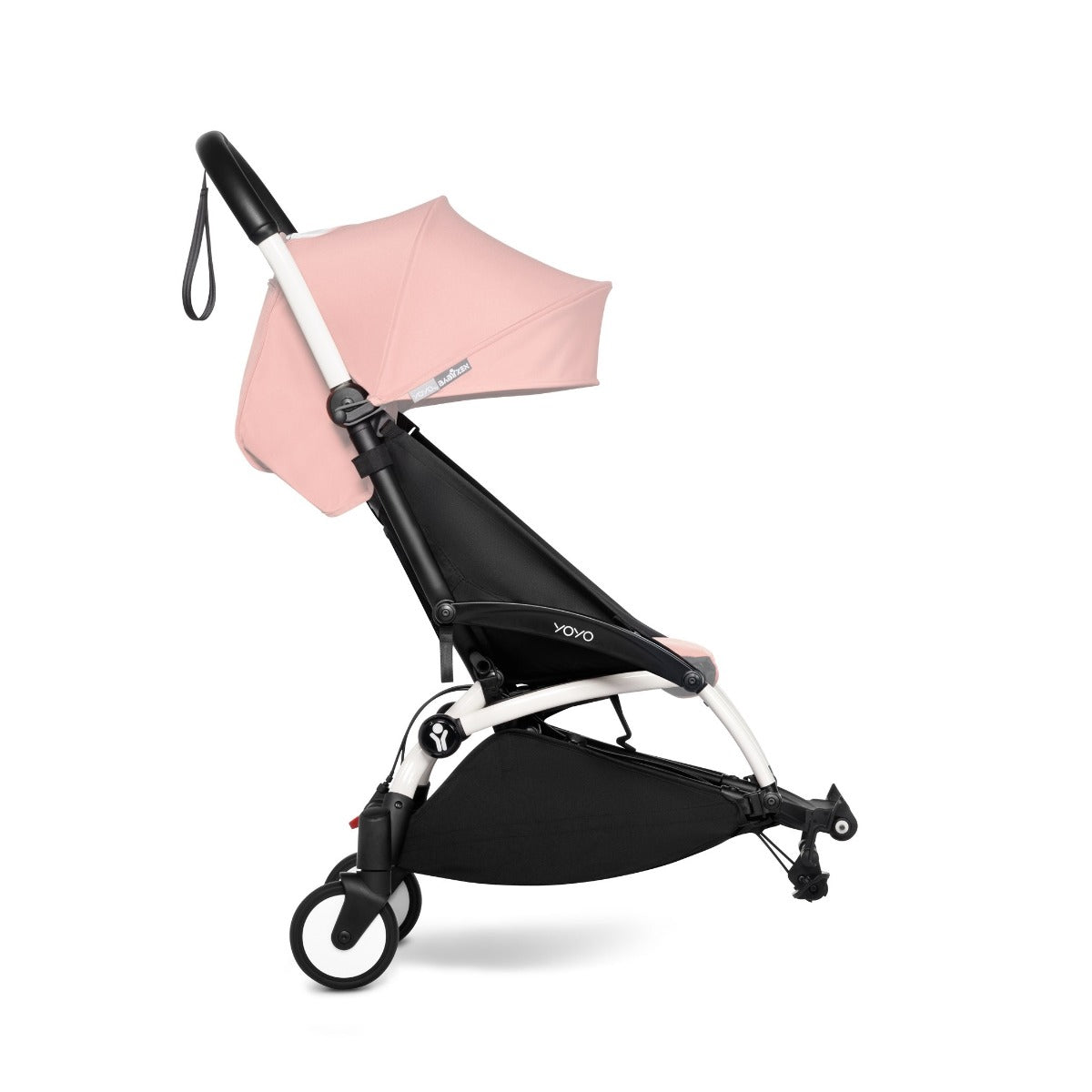
Stokke YOYO Connect Frame
Stokke YOYO Connect Frame
SKU:601801
In stock
Couldn't load pickup availability
Overview
Overview
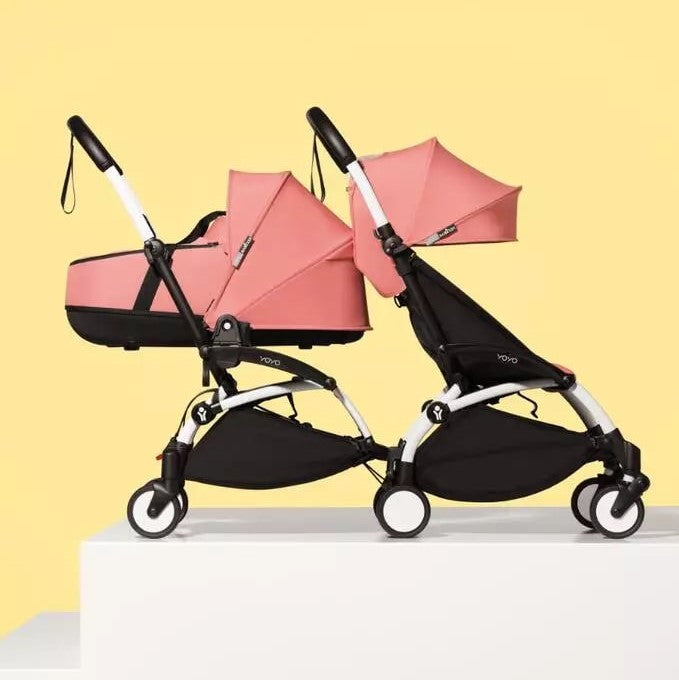
In a Single Click, YOYO² turns into a double stroller with YOYO Connect in White colour, A Unique accessory that hooks onto the back of your stroller.
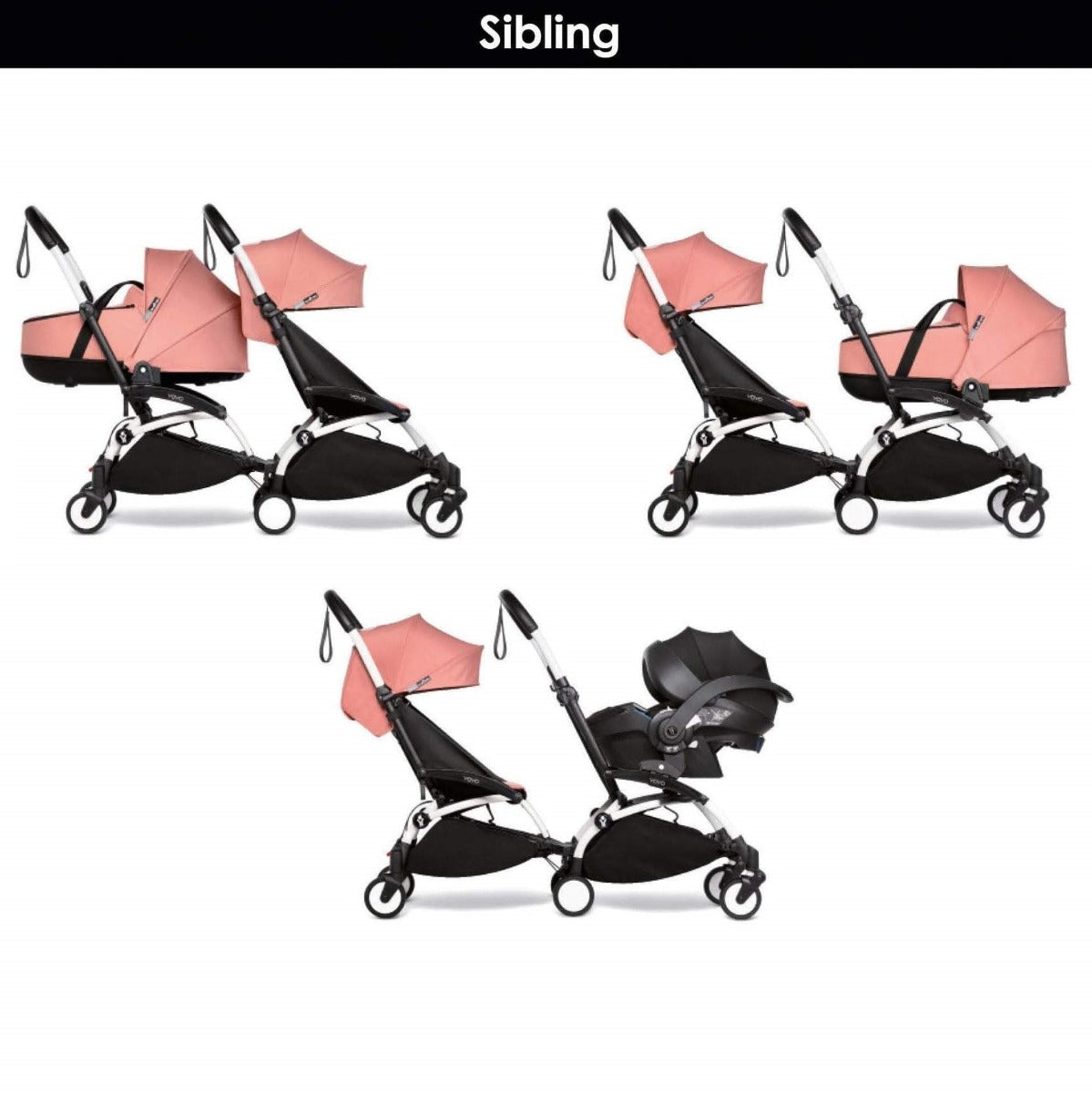
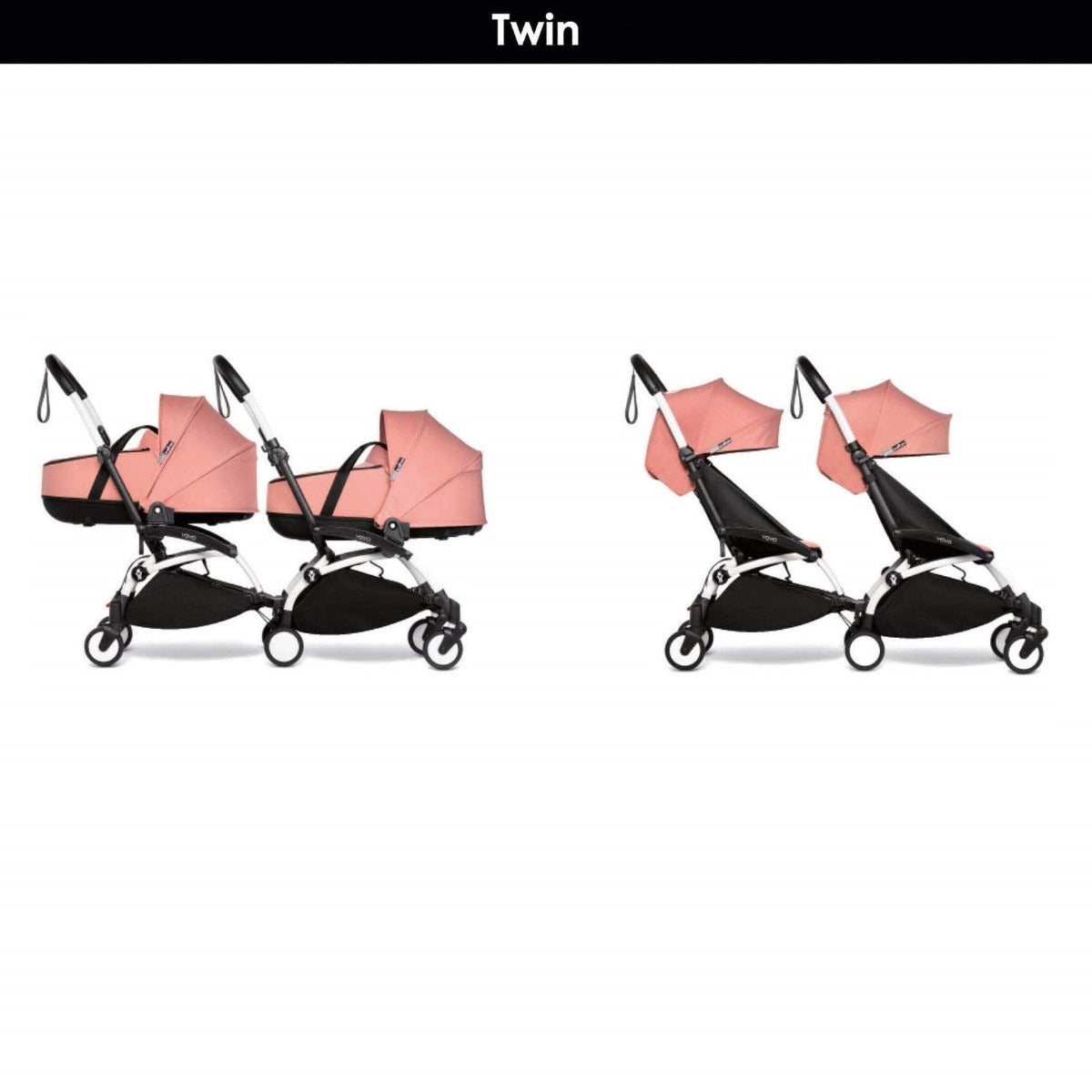
Whether your children have a small age gap or are twins, the stroller comes with up to 5 different possible setups accompanying them from birth to toddler.
Twin Setups: Bassinet & Bassinet | 6+ Pack & 6+ Pack
Sibling Setups: Bassinet & 6+ Pack | 6+ Pack & Bassinet | 6+ Pack & Capsule
YOYO² and YOYO Connect help you sail through your daily activities. Ultra-light and maneuverable, they go up and down the pavements.
Once folded, YOYO Connect is designed to be hooked up to the back of your YOYO².
- No Two-child transport solution is as compact when folded as the YOYO² with YOYO Connect (52x44x24cm). This is the First double stroller accepted as cabin luggage*.
- The same Patented folding system as YOYO².
- 44cm wide, They will get through any door.
- 4 wheel braking.
- Easy access to seats for both children with optimal security.
- Certified for children up to 22kg
- YOYO Connect weighs the same as YOYO².
* Cabin luggage standards may vary depending on the airline, we recommend checking with your carrier for the latest applicable cabin luggage allowance
What's Included
What's Included
User Guide
User Guide
Delivery and Returns
Delivery and Returns
- Delivery: Free within NZ on orders over $130 (excluding bulky items) or $8 standard shipping
- Returns: Accepted within 14 days of receipt with proof of purchase
- Some items are excluded from returns including sale items, hardware, car seats, prams, monitors and personal items - please click here for the full list.
Share this product
Recently Viewed Products
Related Blogs

Stroller Buying Guide: How to pick the right ride for Your Family
Why Choosing the Right Stroller Matters: Essential Tips for New Parents When you have a baby or toddler, a good stroller is essential. It lets you get out of the house and navigate the world with ease. Leaving the house with a newborn can be tricky, so a high-quality, easy-to-use stroller is a lifeline for many new parents. Your stroller is also one of the most expensive baby purchases you’ll make, so it’s important to get it right. You don’t want to invest in a stroller that ends up being too heavy, hard to fold, or difficult to steer. Of course, no one stroller suits every parent. Consider your lifestyle. Will you be navigating bush walks and country paths or be more likely to keep to the footpaths and malls? Before you buy, it’s a good idea to take a look at different models in-store, push them around, fold them down, and open them up to get a feel for how they work. Before you’re overwhelmed by options and terminology - In New Zealand, we tend to use the words pram, stroller, buggy and pushchair interchangeably. Capsule compatibility For new babies, you’ll most likely want a stroller that’s compatible with your capsule car seat. These are particularly handy during the sleepy newborn phase, as they let you move the baby from car to stroller without waking them. Our strollers are compatible with most capsules from well-known brands, such as Maxi Cosi and Nuna. Talk to our in-store team if you want to check on compatibility. Carrycot – or not A detachable carrycot can be incredibly handy in the early stages – from newborn to around 6 months. Lying flat on their back is the best, safest position for newborn baby to be in. If the seat on the stroller you choose has a lie-flat position, a carrycot isn’t essential. But many parents choose them because they simplify life in the first few months. A carrycot attached to your stroller not only allows your baby to sleep comfortably while on the go, it can also be removed and used as a portable bed for a bit of supervised sleep when visiting friends and family. Single vs. Double Strollers: Which is Right for Your Family? When you buy a stroller for your first baby, it can be hard to imagine life with more children. But it’s a good idea to consider your future when making your decision. Some strollers – like the Nuna Demi Next and the Edwards and Co Olive – have the option to add an extra seat for a sibling. If you plan to have two children close in age, this is worth considering. Having twins? Both the Demi next and Olive are tandem strollers, where the seats are not side-by-side but instead tiered. The Nuna Trvl Dubl is a side-by-side option - at just 78 cm wide, its slim profile fits through standard doorways. Another option to consider for an older sibling is a Stroller board that attaches to the back of the stroller. These are great for independent walkers who might tire on a long walk or need a ride to quicken the pace. (Note that these connect to select strollers only.) The right size for your space Strollers come in a range of shapes and sizes. They’re all foldable, but some – like the lightweight Stokke Yoyo – have a more compact fold than others. It even fits in an aeroplane’s overhead locker making it ideal for travel. Travel can be considered a separate stroller category all together – check out our Travel Stroller Blog But even for your everyday stroller, you’ll want to think about storage and transport options. Where will you keep your stroller when you’re at home? How big is the boot of your car? How often will you need to lift it into the car, onto public transport or up stairs? If you can, try the stroller in your boot to see how well it fits. If not, measure the space before you make a decision. How easily the stroller folds is another factor to consider and this is where trying a few models in-store is a good idea. One-hand fold mechanisms are incredibly convenient, especially when your arms are full with a little one. If you think you’ll be lifting your stroller frequently, opt for a lightweight model. Which wheels are best? For a while there, three-wheel strollers seemed to be the only option. Now, four-wheel models are having a resurgence in popularity. Three-wheel strollers are typically thought to be easier to steer, especially with one hand – which can be useful if you’re carrying an upset baby and pushing a pram at the same time. Four-wheel strollers, tend to be more compact, making them easier to manage in shops and cafés. They also tend to fold more neatly for easy storage. Tyre type is another factor to consider - larger wheels with foam-filled or inflatable tyres tend to offer better suspension, which is more comfortable for your baby on rough terrain. Whereas smaller swivelling wheels are easier to manoeuvre around busy places and crowded shops For the best of both worlds, the four-wheeled Nuna Mixx has tough, foam filled tyres and boasts easy one-handed steering. The wheels on the New Nuna Swiv offer something unique – with a 360 degree swivel so you can navigate small spaces with side-to-side ease. Forward or back? Forward-facing or rear-facing? If you’ve never bought a stroller before, it can be hard to know what you’ll prefer. Fortunately, this choice is more about preference than safety or practicality. Newborns are naturally drawn to their parent's faces, and a rear-facing stroller lets you interact and keep an eye on them as you go. Then as they grow up, forward-facing gives them a chance to look out on the world around them. Most everyday strollers we sell have convertible parent-facing/world-facing seats so you have both options in one. Other things to consider Comfort features for your little one - like padded seats, adjustable recline positions and good suspension. How comfortable is the handle height? Adjustable handle height can be good for parents of different heights. Does the stroller offer good storage underneath for your baby essentials, nappy bag, and shopping? Fun and functional extras These days, strollers have a huge range of add-ons and accessories – rain and shade covers, parasols, cup holders, snack trays and compatible nappy bags. Choose what’s best for you As with any big purchase, buying a stroller is about working out what’s most important to you, and finding a model that best fits your needs and budget. If you need help finding the right stroller for your family, you can take our Quiz You can also visit one of our stores, talk to the in-store team and take some of our display models for a spin. Check out our range here.
Learn more
Why Carrycots Are One of Our Best Sellers
Carrycots – Essential or Nice to Have? How a Carrycot can make a new parent’s life easier When preparing for your baby’s arrival, the list of must-have essentials can seem endless—carrycots, capsules, bassinets, and buggies, all competing for your attention. Among these, carrycots often sit in a grey area, leaving parents wondering if they’re truly necessary. However, there are several reasons why carrycots are one of Dimples’ best-sellers, and we’re here to explain why they could make your life a whole lot easier. What is a Carrycot? A carrycot is a lightweight, portable bed designed for babies up to around three to six months old (or about 10kg). Unlike a traditional bassinet or Moses basket, a carrycot attaches to your stroller, making it perfect for sleeping while you’re out and about. Its flat, firm mattress ensures your little one can lie down comfortably, and the design keeps them safe, supported, and relaxed while they nap. As your baby grows, they’ll eventually outgrow the carrycot, but for the first few months, it provides a cosy, familiar space that’s easy to move with you. Why Do You Need One? You’ve likely already invested in a capsule for car trips and a bassinet for naps at home, so you might be wondering where a carrycot fits into the mix. Let’s take a closer look at the benefits it offers: Carrycots vs. Capsules for Sleeping Capsules are often designed to easily attach to your stroller for convenience, allowing you to transfer your sleeping baby from the car to the stroller without waking them up. However, experts caution against leaving your baby in a capsule for extended periods. Babies need to lie flat to keep their airways open, and when they're in a capsule, their heads can flop forward, which could compromise their breathing. A carrycot, however, provides a flat surface for your baby, ensuring proper alignment and safe sleep. While it can be tempting to leave your baby in the capsule for longer outings, a carrycot offers a far safer sleep solution for extended naps or trips to the park. Moving them from capsule to carrycot after a quick car trip helps keep their sleep environment safe and comfortable. Take a Walk While They Snooze One of the perks of a carrycot is the ability to get outside and enjoy some fresh air while your baby naps peacefully. After feeding or playtime, simply attach the carrycot to your stroller, and off you go! The gentle movement of the stroller, combined with the outdoor sounds, is often just the right combination to lull your little one into a restful sleep. Carrycots are designed to be outdoors-friendly, with weatherproof fabrics, adjustable canopies, and compatible rain and sun covers, so your baby stays protected no matter the weather. Even better, when your baby is deep in sleep, you can easily unclip the carrycot from the stroller and bring them inside to continue their nap. That means you get to enjoy a quiet moment to yourself while your baby stays snug and safe. Carrycots vs. Portacots for Overnight Stays When it comes to overnight visits, whether to Grandma’s house or a weekend getaway - a full-sized portacot can be a hassle to pack and set up. A carrycot, on the other hand, is compact and easy to transport, making it the ideal sleep solution for short stays. With a firm mattress and familiar surroundings, your baby is more likely to settle quickly in a carrycot, even in a new environment. Carrying a bulky portacot for a quick trip or family visit can feel like overpacking, especially when you have a simple, lightweight carrycot that does the job just as well. The convenience of clipping it onto your stroller for a walk, and then using it as a portable bed for overnight stays, gives you the best of both worlds. Say Goodbye to the Bassinet A bassinet or Moses basket can take up a fair amount of space in your home, and while they're lovely for the first few months, they’re not always necessary if you have a carrycot. Many parents find that a carrycot serves as both a primary sleep spot at home and a portable solution for outings. Since a carrycot is designed for safe sleep, you can use it as your baby’s designated napping spot - whether at home, in the park, or at a friend’s house. Plus, since it’s only useful for a limited time, you get the most out of it by making it your go-to sleeping solution in those early months. Carrycots vs. Lie-Flat Strollers Many strollers are suitable for newborns, but most require the baby to be strapped in. If your baby is swaddled or sleeping peacefully, it can be a hassle to unstrap them and disrupt their comfort. With a carrycot, you can avoid all those buckles and straps. Simply place your baby in the carrycot, and you’re good to go - no need to worry about disturbing them or removing their swaddle. This makes the carrycot a much easier and more comfortable option for those first few months. What to Look for in a Carrycot Choosing the right carrycot is about more than just size - it’s about convenience, comfort, and safety. Here are some key features to look for: Certified for overnight sleep: If you plan to use the carrycot for naps and nighttime sleep, ensure it’s certified for overnight use. Weatherproof accessories: Look for a carrycot with a generous canopy, plus optional rain and sun covers, especially if you’ll be using it outdoors. Easy to carry: While the carrycot will often be attached to your stroller, you’ll also need to carry it at times. Make sure it has sturdy, comfortable handles that make it easy to transport. Easy care: Babies can be messy, so choose a carrycot with machine-washable components like the mattress cover or liner. Easy to connect: You don’t want to struggle with complicated clips when your baby is having a fussy moment. A carrycot that’s easy to attach and detach from the stroller will save you time and frustration. Compatibility: Ensure the carrycot fits securely on your stroller. The combination of a carrycot and stroller is crucial, as you’ll use it for many months to come. Final Thoughts While not essential for everyone, many parents find it a really useful addition in those early months – giving their baby a safe, flat sleeping space that’s easy to move from stroller to indoors without disturbing precious naps. Whether you’re out for a walk, visiting family, or just needing somewhere for baby to rest during the day, a carrycot can help simplify life a little. If you’re unsure whether a carrycot is the right fit for your family, feel free to get in touch or pop into store – we’re always happy to help you figure out what’s best for you and your baby. We have some amazing bundles to choose from, as well as a range of choices to suit you. Check out Dimples’ range of carrycots here.
Learn more
Pretty Brave Shoes: A Guide to Little Feet
Little feet have a lot of growing and exploring to do! From those first little steps to running, playing and discovering the world, choosing shoes that are comfortable and designed to move with them is an important part of every stage.
Learn more
Baby Swimming Lessons: When to Start & What to Expect
Baby Swimming Lessons: Building Water Confidence from an Early Age Living in New Zealand means water is never far away! We've got beaches, we've got lakes and we've got rivers, not to mention our swimming pools and backyard water play. Learning how to feel confident and safe around water is an important life skill for our Kiwi kids. Introducing your little one to the water from an early age can be a lovely experience for the whole family. Swimming lessons can support coordination, movement and confidence, while also giving parents and caregivers a special opportunity to have fun, connect and learn together. Most importantly, early positive experiences around water can help lay the foundations for lifelong water safety. Water Safety New Zealand says drowning remains a leading cause of death for New Zealand children aged under five, making active supervision and age appropriate water skills incredibly important. Start with water confidence Your baby's first introduction to water doesn't need to happen at a swimming pool. Bath time is a great place to start. Allow your baby to enjoy splashing, kicking and gradually becoming familiar with water around their face and body. As they become more comfortable, trips to the local pool can introduce them to a completely different environment with new sounds, sensations and movements plus a whole lot of fun! The aim at this stage isn't to turn your baby into a swimmer. It's simply about helping them feel happy and secure around water. When can babies start swimming lessons? There isn't one set age that suits every baby or every swimming programme. Some specialist swim schools offer parent and baby classes from around three months, while others begin from six months. The best option is to check the starting age and requirements of your chosen swim school. Finding swimming lessons in New Zealand If you're looking for somewhere to start, there are plenty of great options. Dean Greenwood Swim School has several Auckland locations and offers programmes ranging from babies through to adults. Hilton Brown Swimming offers lessons for babies, children, teenagers and adults across locations in Auckland, Waikato, Hawke's Bay and Manawatū. Their infant programme focuses on water confidence, movement, safety awareness and introducing skills such as floating. Many local leisure centres and community swimming pools also offer learn-to-swim programmes for babies, preschoolers, school aged children and even adults, so it's totally worth checking what is available close to home. What happens at baby swimming lessons? Baby swimming lessons are usually much more about water familiarisation and confidence than traditional swimming. A parent or caregiver will generally get into the pool too, helping baby feel secure while the instructor introduces activities through play, songs and movement. Depending on your baby's age and the programme, lessons may gradually introduce skills such as: Becoming comfortable with water around the face and head Kicking and moving through the water Floating and rolling Breath control and gentle submersion Moving towards or returning to a safe position Learning to feel calm and confident in the pool It's also valuable learning for parents. You'll become more confident handling your baby in the water and learn ways to continue practising positive water experiences together. And remember - swimming lessons build skills and confidence, but they never replace active adult supervision around water. Tips for making swimming lessons easier Give yourself plenty of time Getting yourself and a baby changed can sometimes take longer than the swimming lesson itself! Arrive early enough that you don't need to rush. Family changing rooms are especially helpful, and if your pool allows strollers inside, having somewhere safe for baby to sit while you get changed can make things much easier. Pack for afterwards Swimming can be tiring, particularly for little ones. Have everything ready for a feed or snack afterwards depending on your baby's age. Keep them warm Moving from a warm swimming pool into a cooler changing room or outside air can feel like a big temperature change. Have a cosy towel and dry clothing ready so you can get your little one comfortable quickly. Bring another pair of hands If you're taking more than one child to lessons, another adult can make changing, feeding and getting everyone safely to and from the pool considerably easier. It can totally be done with one caregiver if you're game... but four hands are easier than two. Don't worry if every lesson isn't perfect Some days your baby might love the pool. Other days they may be tired, hungry or simply not interested. That's completely normal. Building water confidence is a gradual process, so keep the experience positive rather than trying to push through when they've had enough. What to pack for baby swimming lessons A little preparation makes getting in and out of the pool much easier. Baby swimwear Start with comfortable baby swimwear and swimming essentials suitable for your little one's age and the type of swimming you'll be doing. Our new Baby Swimwear Collection brings together the swim essentials you need for trips to the pool, beach and summer days by the water. Shop our full range of Baby Swim Essentials here Swim nappies Most pools require babies who aren't toilet trained to wear an appropriate swim nappy, so check your swim school's requirements before your first lesson. A warm towel A soft towel or hooded towel is ideal for wrapping baby up as soon as they leave the water. A change mat Pool changing rooms aren't always the easiest place to change a baby, so having your own change mat can be incredibly useful. The Purely Baby Disposable Change Mats are particularly handy for swimming lessons because you can create a clean changing surface and simply dispose of the mat afterwards. Don't forget Pack a few extra essentials too: Dry clothes Spare nappies Wipes A wet bag or waterproof bag for wet swimwear Milk, a bottle or snacks depending on baby's age Your own swimwear and towel - surprisingly easy to forget! Water safety always comes first Swimming lessons are valuable, but no swimming lesson or floatation device can replace close adult supervision. Water Safety New Zealand recommends keeping babies and young children within arm's reach whenever they're in or around water. This applies everywhere - the swimming pool, beach, bath, paddling pool, lake or river. Stay focused on your child rather than relying on lifeguards, older siblings or floatation toys to supervise them. It's also important to look for potential water hazards around your own home. In New Zealand, residential pools that can hold water to a depth of 400 mm or more are subject to requirements for physical barriers designed to prevent unsupervised access by children under five. Enjoy the water together Learning to swim is a journey, and it begins long before your child is swimming independently. Positive bath times, trips to the pool and regular swimming lessons can all help your little one develop confidence and respect for the water while creating plenty of special memories along the way. Keep it fun, follow their pace and, above all, stay close whenever water is around.
Learn more