
Little ones grow fast – and so do their feet! At Dimples, we know how important it is to choose the right shoes to support your child as they move through each stage of development. The right fit helps protect developing bones, encourages natural movement, and builds confidence as they explore the world around them.
Soft, flexible soles are key for babies and early walkers, helping their feet strengthen while still offering grip and protection. As your child becomes more active, shoes that offer structure, support, and durability become essential. A good pair of shoes should feel like a second skin – allowing little feet to move, flex, and grow without restriction.
That’s why we’re proud to offer a thoughtful range from Pretty Brave – designed in New Zealand with both comfort and development in mind, so you can feel confident your little one is supported every step of the way.
Everyday Styles from Pretty Brave
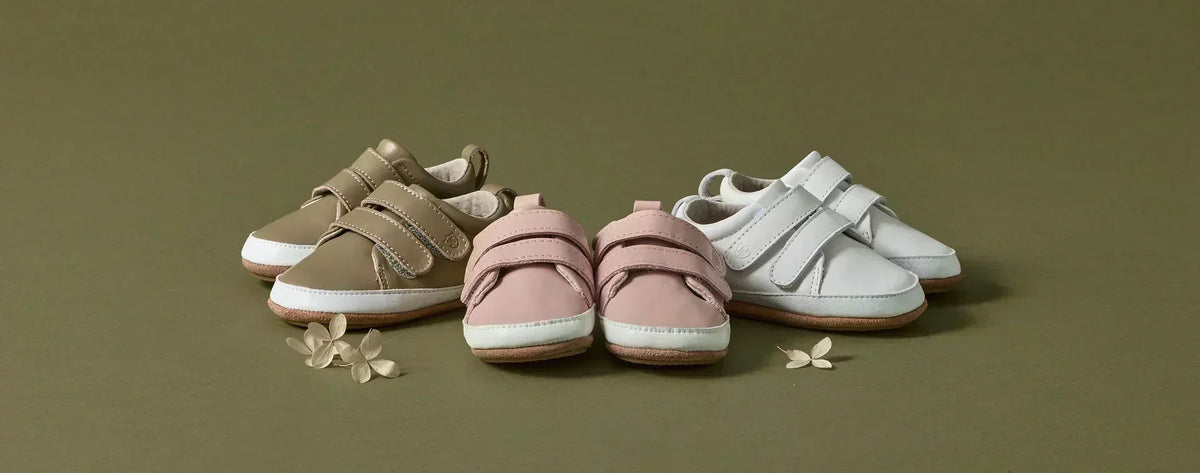
Pretty Brave are made with care, using soft, natural leathers that are gentle on tiny feet. Here are a few of our favourites you’ll love:
Baby Scout A timeless style that goes with everything. These soft leather shoes are easy to dress up or down, and come in two cute shades. A staple that works just as well for special occasions as it does for everyday wear.
Baby Rio Sandal Designed for little ones who need that extra support as they start exploring. With a padded heel, protected toe, and secure fit, the Baby Rio is all about comfort and stability for early walkers. Available in three cute colours.
First Walker Play Sandal This one’s a go-to for all-day wear. The Phoenix features gorgeous leather leaf detailing and is made to suit all foot types. Easy on, easy off with two adjustable Velcro straps – one at the ankle and one across the forefoot – for a fuss-free fit.
Not sure what size to choose? Pretty Brave makes it simple with three thoughtfully designed fit ranges:
Baby Range (0–22 months): Sizes S, M, L, and XL. S & M have a non-slip suede sole, while L & XL come with a flexible rubber sole to support growing feet.
First Walker (1–2.5 years): Created in collaboration with podiatrists, this range supports little ones as they take their first independent steps.
Child Range: For confident walkers, Dimples stocks sizes EU21–EU26 – the perfect mix of function and fashion.
Choosing the Right Bottle & Teat for Your Baby
A Practical Guide to Finding the Right Bottle Feeding Setup
We’ve been helping families for many years now, and a question we are always asked by new parents is “Which is the best baby bottle?” - and while we wish there was a one size fits all answer to this question, the reality is that there isn't one perfect bottle for every baby. The best baby bottle is the one that suits your bub's feeding style, comfort, and stage of development, while also fitting your family's routine and preferences.
Finding the right bottles and teats can sometimes feel overwhelming. With so many options available, from anti colic bottles and wide neck designs to glass, silicone, and plastic bottles… it's natural to wonder which choice is best for your baby.
In this guide, we'll help you understand the different bottle and teat options so you can find a feeding setup that feels right for your baby and your family.
How to Choose the Best Baby Bottle
When comparing baby bottles, start by thinking about your baby's feeding needs rather than focusing on brands or features.
Newborn? Look for slow flow teats and easy to clean bottles – you’ll likely be using up to 12 bottles a day in those very early stages!
Breastfed or mixed feeding? Wide neck bottles and breast shaped teats can help support a natural latch.
Experiencing wind or reflux? Anti-colic bottles will help reduce swallowed air.
Need something practical for everyday use? Lightweight plastic bottles are often a great choice.
Looking for a long term option? Glass bottles are durable and long lasting.
Choosing the Right Bottle MaterialDifferent bottle materials offer different benefits, but there isn't a single right choice.
Bottle Type
Best For
Things to Know
Plastic
Everyday use
Lightweight and practical
Glass
Durability
Easy to clean but heavier
Silicone
Mixed feeding
Soft and flexible
💛 Dimples Tip: Something we often tell parents is not to overthink the bottle material too much. Most babies will adapt well to different bottle types, so it's often more about what works best for your family and feeding routine.
Bottle Shapes at a Glance
Standard Bottles - A simple, reliable option that works well for most babies.
Wide-Neck Bottles - Easier to fill and clean, and often preferred by families combining breast and bottle feeding.
Anti-Colic Bottles - Designed to reduce the amount of air swallowed during feeding.
💛 Something we get asked a lot at Dimples: "Are anti colic bottles really worth it?" For babies who experience wind, gas, or reflux, or even for as a preventative method – yes! We know many parents who have found they make feeding more comfortable and reduce post feed fussiness.
Explore our bottle range here
Explore our Infant and Toddler Formula range here
Best Bottles for Breastfed Babies & Mixed Feeding
Another common question we hear at Dimples is:
"What's the best bottle for a breastfed baby?"
While every baby is different, wide-neck bottles with soft silicone teats are often a great place to start. When introducing a bottle to a breastfed baby, look for:
Wide teats that encourage a natural latch
Slow flow teats that mimic breastfeeding
Soft silicone teats with a familiar feel
Bottles designed to support mixed feeding
Many parents also find paced bottle feeding helpful, as it encourages babies to feed at a rhythm that's closer to breastfeeding. You can learn more about paced bottle feeding here.
Shop bottles suitable for mixed feeding
Choosing the right teat flow can make feeding feel calmer and more comfortable for your baby.
For newborns and younger babies, a slow flow teat is usually the best place to start. This helps milk flow gently and steadily, giving your baby time to feed at their own pace.
As your baby grows and becomes more confident with bottle feeding, they may be ready for a medium or faster flow teat. Age guides can be helpful, but your baby's feeding cues are often the best sign.
The flow may be too fast if your baby is coughing, spluttering, gulping milk, leaking milk from their mouth, or becoming unsettled during feeds.
The flow may be too slow if your baby seems frustrated, takes a very long time to finish a bottle, or often falls asleep before finishing their feed.
💛 Another common questions we are asked: "When should I move up a teat size?" The answer is usually based on your baby's feeding cues rather than just their age alone.
Shop our teat range here
Cleaning, Sterilising & Bottle Care
Keeping bottles and teats clean is a very important part of bottle feeding. Wash bottles and teats thoroughly, replace worn teats when needed, and sterilise bottles up until your baby is approximately 12 months old.
A few simple essentials can make life easier:
Bottle sterilisers
Bottle warmers
Bottle brushes
Drying racks
Feeding bibs
Shop bottle cleaning and sterilising essentials here
Frequently Asked Questions about Bottle Feeding
What bottles are best for newborns?
Most newborns do well with bottles fitted with slow flow teats. Anti-colic designs can also be helpful for babies prone to wind or reflux.
What bottle is best for a breastfed baby?
Wide-neck bottles with soft silicone teats are often a great option for supporting mixed feeding and encouraging a natural latch.
Are anti-colic bottles worth it?
For babies who swallow excess air while feeding, anti-colic bottles may help reduce wind, gas, and feeding discomfort.
How do I know if teat flow is too fast?
Look for coughing, spluttering, milk leaking from the mouth, or your baby struggling to keep up with the flow.
Glass vs plastic baby bottles: which is better?
Both are excellent options. Plastic bottles are lightweight and practical, while glass bottles are durable, easy to clean, and resistant to staining.
Finding the Right Feeding Fit for Your Family
Every baby is different, and finding the best baby bottle often involves a little trial and error.
Trust your baby's cues, be kind to yourself, and remember that there's no single "right" choice. What matters most is finding a feeding setup that feels comfortable for both you and your baby.
💛 A final note from our team: We've helped hundreds of New Zealand families navigate bottle feeding over the years, and if there's one thing we've learned, it's that every feeding journey looks a little different. You're doing a great job.
Shop our full range of baby bottles, teats and feeding essentials
Getting a wriggly toddler into a car seat shouldn’t feel like a workout. That’s why rotating car seats are quickly becoming a go-to for modern parents.
In this blog, we explore how they work and why so many families are making the switch. From extended rear and front facing options to reducing back strain, we’ll help you decide whether a rotating car seat is the right choice for your growing family.
Benefits of a Rotating Car Seat
Easier access in and out of the car - The swivel function turns the seat towards the door, making it easier to get your child in and out of the car without awkward angles. With the seat facing you, it is easier to correctly position and tighten the harness, helping ensure your child is safely secured every time.
Reduced strain on your back - Rotating the seat towards you helps minimise bending, twisting, and reaching, which can help prevent back and shoulder strain, especially with growing toddlers. This also helps parents (or grandparents) recovering from birth, injury, or surgery, or those with limited mobility, who often find rotating seats easier and more comfortable to use.
Rear and front facing options - While your child is young, rear facing car seats are recommended for their safety. Though you want to keep them rear facing as long as possible (according to weight and height restrictions), you will eventually need to switch to forward facing, which is made incredibly easy with the swivel feature. You also have multiple angle options to recline the seat and can change all of these settings without having to re-install the entire seat.
Things to Consider Before Buying
Weight limits - Most (though not all) rotating car seats have a weight limit of 18kgs because of the isofix installation. On average, that’s around four years old, and while many parents are happy to switch to a booster seat after that, others just want one seat that goes all the way. If you’d prefer to buy a single seat with more longevity, a non-rotating option may suit you better. The Nuna Rava Next goes up to 29.4kgs (seven or eight years on average), and the Exec Next has a booster seat conversion, meaning that it lasts right from newborn up to 49.9kgs, around 12 years old!
Space in your car - If you have multiple kids and multiple car seats in the car, having one that rotates might be a bit tricky. Rotating seats generally have a larger base, and the swivel motion itself can be blocked if there are other seats in the way. If you plan on having three seats side by side in the back row, swivelling is a no-go. If you have two seats, then a rotating seat might be a good option depending on how it fits into your car. If you’re not sure, give us a call at our Newmarket or Christchurch stores, and book in a time to try out some options and see what works best.
What Are the Rotating Car Seat Options?
Nuna NEXT System
Built to work together seamlessly, the Nuna NEXT System offers flexibility, longevity, and peace of mind in one refined package. With two different base options (Base Next & Base Curv), two capsules (Pipa Next & Arra Flex), a unique lie-flat car seat (Cari Next), and a toddler seat for good measure (Todl Next), the NEXT System gives you a range of options for travelling in style. The bases come equipped with True Lock™ technology and coloured installation guides for your peace of mind, and one base can be used for all compatible products (keeping you covered for the first four years of baby’s life).
Maxi Cosi Pebble 360 Pro Capsule & Maxi-Cosi Pearl 360
As part of the 360 Pro Family range, the Pebble and Pearl (when on the Family Fix 360 Pro Base) not only rotate 360°, but also slide towards you to eliminate the awkward reaching that usually comes with buckling in a little one. While the Pearl must be attached to the base in order to go in the car, the Pebble can also be seatbelt installed by itself.
Nuna Pruu
If you love the Todl but don’t want to bother with the separate base, the Pruu might be the seat for you. With the same detachable Side Impact Protection, integrated rebound bar, and smart-swivel lock, your little one will be travelling in stylish safety from start to finish. The big difference? The Pruu is one piece, with no separate base, making it a bit heavier to carry around, but super convenient for those who’d rather not bother with the extra pieces.
We also have the new Nuna Pruu Aire with a retractable sun canopy.
Nuna Rylo
A new and popular choice is the Nuna Rylo. This seat has it all: 360° rotation, seat belt installation capability, and premium materials. Certified to the AS/NZS standard, it’s perfect for Trans-Tasman travellers, or anyone who’s after the latest version of Nuna’s award winning technology.
Not sure which seat is right for you? Visit us in Auckland or Christchurch to see them in person. You can also book in a fitting with our team - we’ll help you find the safest, easiest option for your car and your family.
Potty training isn’t just about learning a new skill - it’s a big emotional and developmental milestone. Understanding what’s happening in your child’s mind can transform the experience from a power struggle into a confidence-building journey.

This area is used to describe your product’s details. Tell customers about the look, feel, and style of your product. Add details on color, materials used, sizing, and where it was made.