


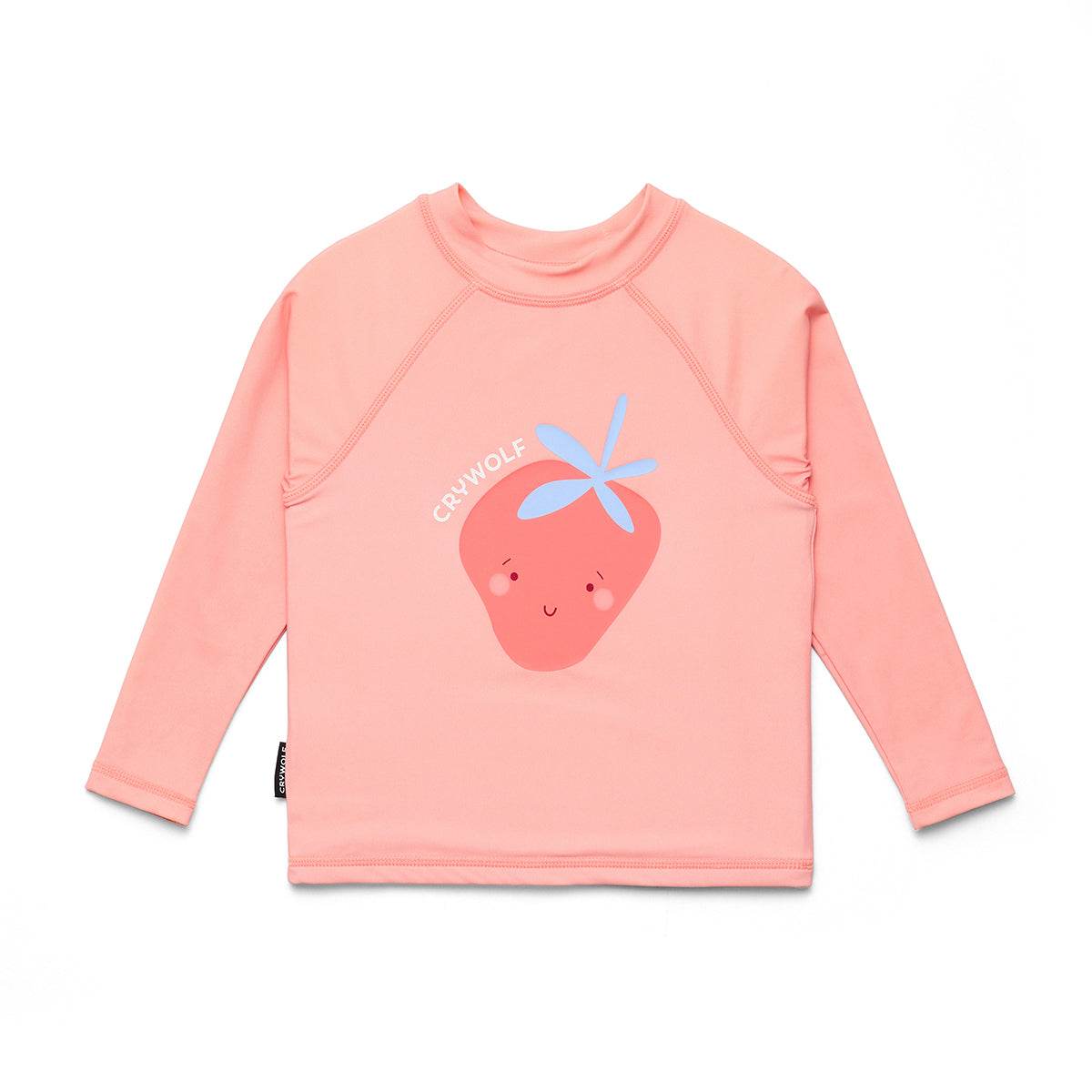
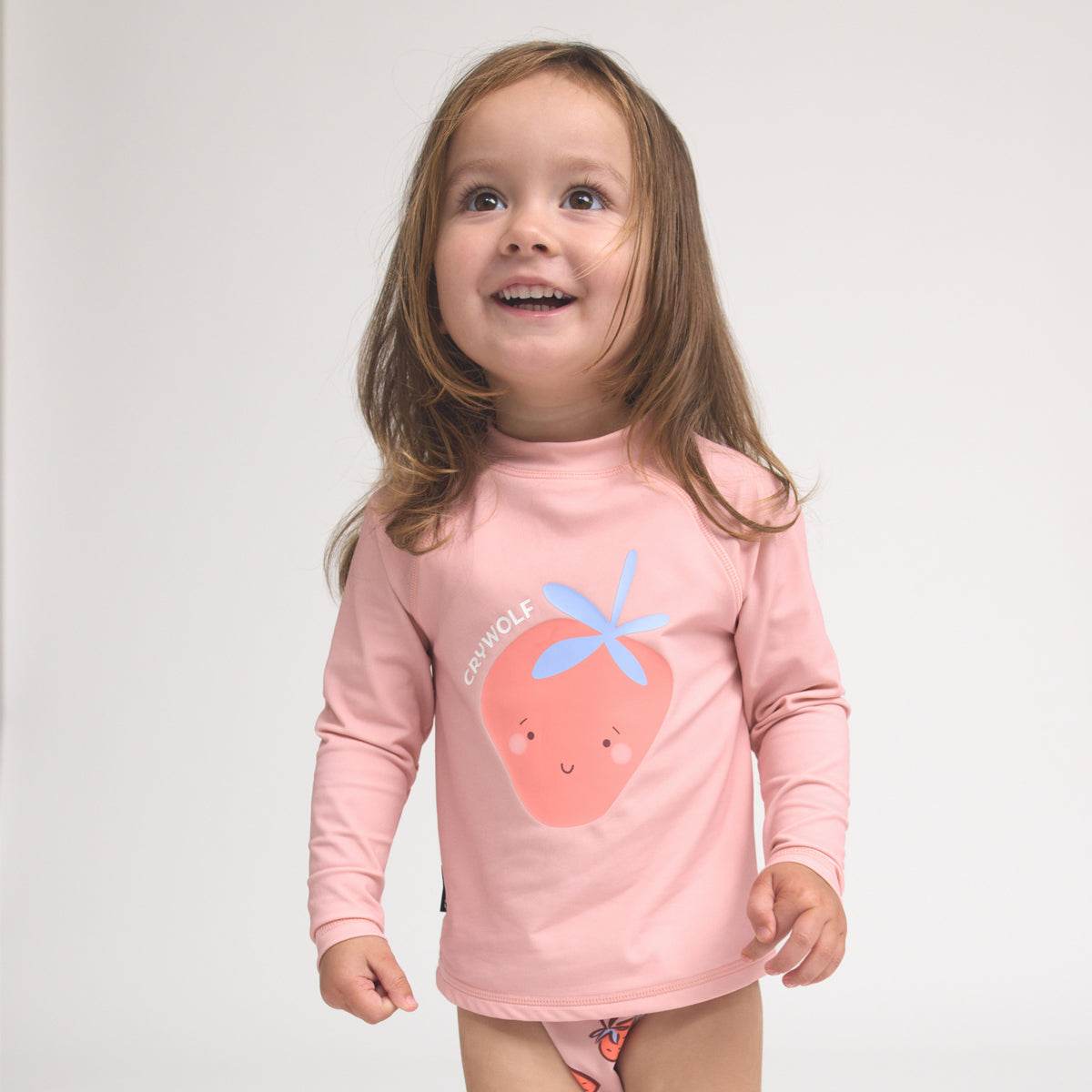
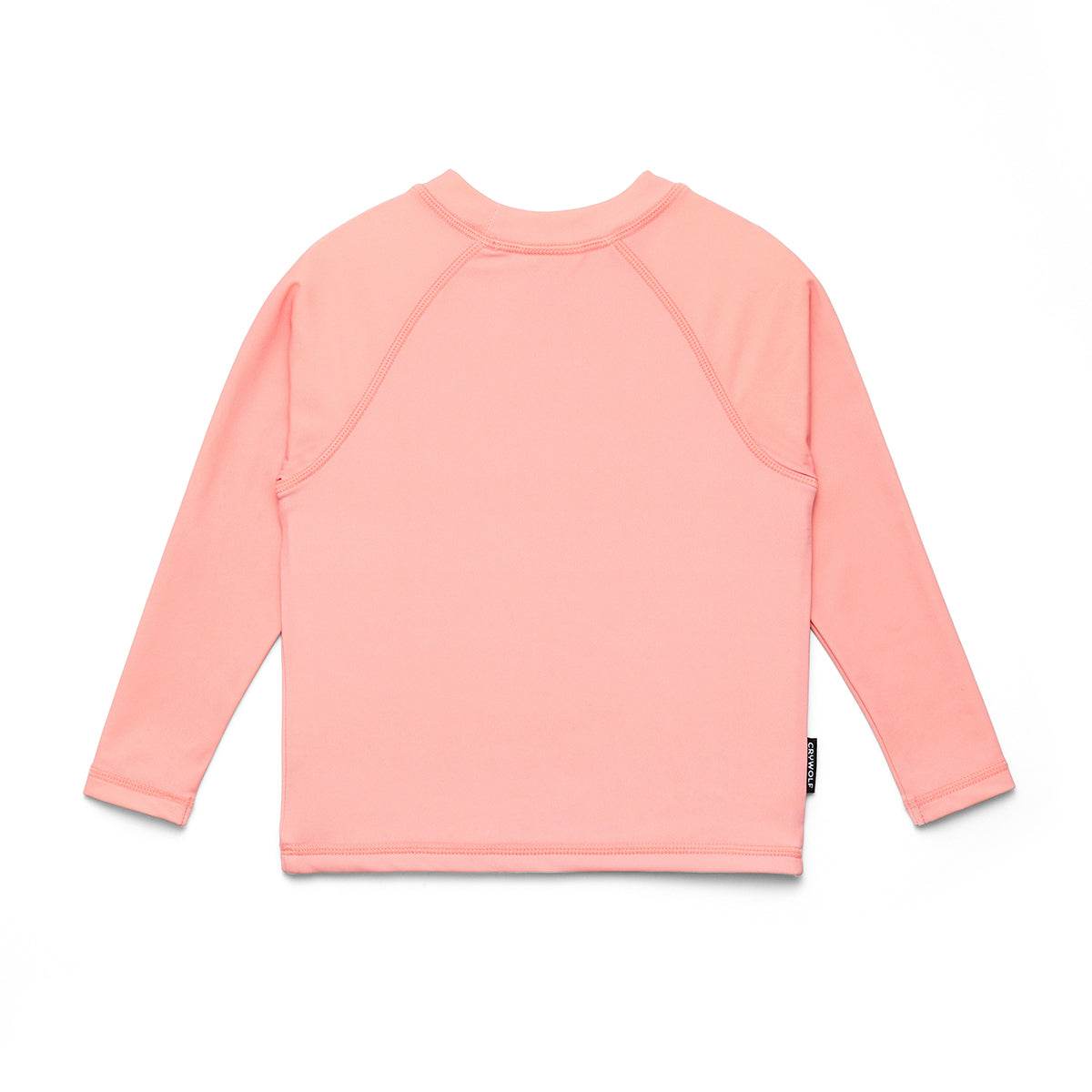
Rash Vest
Rash Vest
SKU:CWBRSUM-2YR
Reusable Swim Nappy
| Size | Length (waist to crotch) | Crotch Width (side to side) |
|---|---|---|
| 0-1 yr | 37 | 14.5 |
| 1-2 yrs | 38 | 15.5 |
Rash Suit
| Size | Length (back neck to crotch) | Chest (arm to arm) | Waist (side to side) | Sleeve (neck to cuff) | Neck Opening (diameter) |
|---|---|---|---|---|---|
| 6-12m | 40 | 25 | 24 | 30 | 13.25 |
| 1 yr | 42 | 26 | 25 | 31.5 | 13.25 |
| 2 yrs | 44 | 27 | 26 | 33 | 13.8 |
| 3 yrs | 46 | 28 | 27 | 34.5 | 14.3 |
Rash Vest
| Size | Body Length (shoulder to hem) | Chest (arm to arm) | hem (side to side) | Neck Opening (side to side) | Sleeve Length (shoulder to cuff) |
|---|---|---|---|---|---|
| 2 yrs | 36.5 | 28 | 27.5 | 13.75 | 38 |
| 3 yrs | 38 | 29 | 28.5 | 14 | 40 |
Board Short
| Size | Wait (side to side) | Length (top to bottom) | Thigh Width (side to side) | Leg Opening (side to side) |
|---|---|---|---|---|
| 1 yr | 22 | 21.5 | 19.5 | 18 |
| 2 yrs | 23 | 23 | 20.25 | 18.5 |
| 3 yrs | 24 | 24.5 | 22 | 19 |
Surf Short
| Size | Wait (side to side) | Length (top to bottom) | Hip (side to side) | Leg Opening (side to side) |
|---|---|---|---|---|
| 1 yr | 22 | 15.5 | 31 | 19.5 |
| 2 yrs | 23 | 16 | 32 | 20 |
| 3 yrs | 24 | 16.5 | 33 | 20.5 |
Play & Explorer Jacket
| Size | Chest (cm) | Hip (cm) | Sleeve (cm) | Length (cm) |
|---|---|---|---|---|
| 6-12m | 33.3 | 34.3 | 22.9 | 35.8 |
| 1 yr | 34.9 | 35.9 | 26.2 | 39.4 |
| 2 yrs | 36.5 | 37.5 | 29.5 | 43 |
| 3 yrs | 38.1 | 39.1 | 32.8 | 46.6 |
Reversible Eco-Puffer Jacket
| Size | Chest (cm) | Hip (cm) | Sleeve (cm) | Length (cm) |
|---|---|---|---|---|
| 1 yr | 35.4 | 35.9 | 26.2 | 39.4 |
| 2 yrs | 36.5 | 37.5 | 29.5 | 43 |
| 3 yrs | 38.1 | 39.1 | 32.8 | 46.6 |
Beach & Aqua Sandals
| EU | 20 | 21 | 22 | 23 | 24 | 25 |
|---|---|---|---|---|---|---|
| US | 4.5 | 5.5 | 6 | 7 | 8 | 8.5 |
| Foot Length (mm) | 134 | 140 | 146 | 152 | 158 | 165 |
| Age | 1YR | 1-2YR | 2YR | 2YR | 2-3YR | 2-3YR |
Rain Boots
| EU | 20 | 21 | 22 | 23 | 24 | 25 |
|---|---|---|---|---|---|---|
| US | 4 | 5 | 6 | 7 | 7.5 | 8.5 |
| Insole Length (cm) | 13.4 | 14 | 14.7 | 15.3 | 16.1 | 165 |
| Height (cm) | 15 | 15 | 15 | 15 | 18 | 18 |
Low stock
Couldn't load pickup availability
Overview
Overview
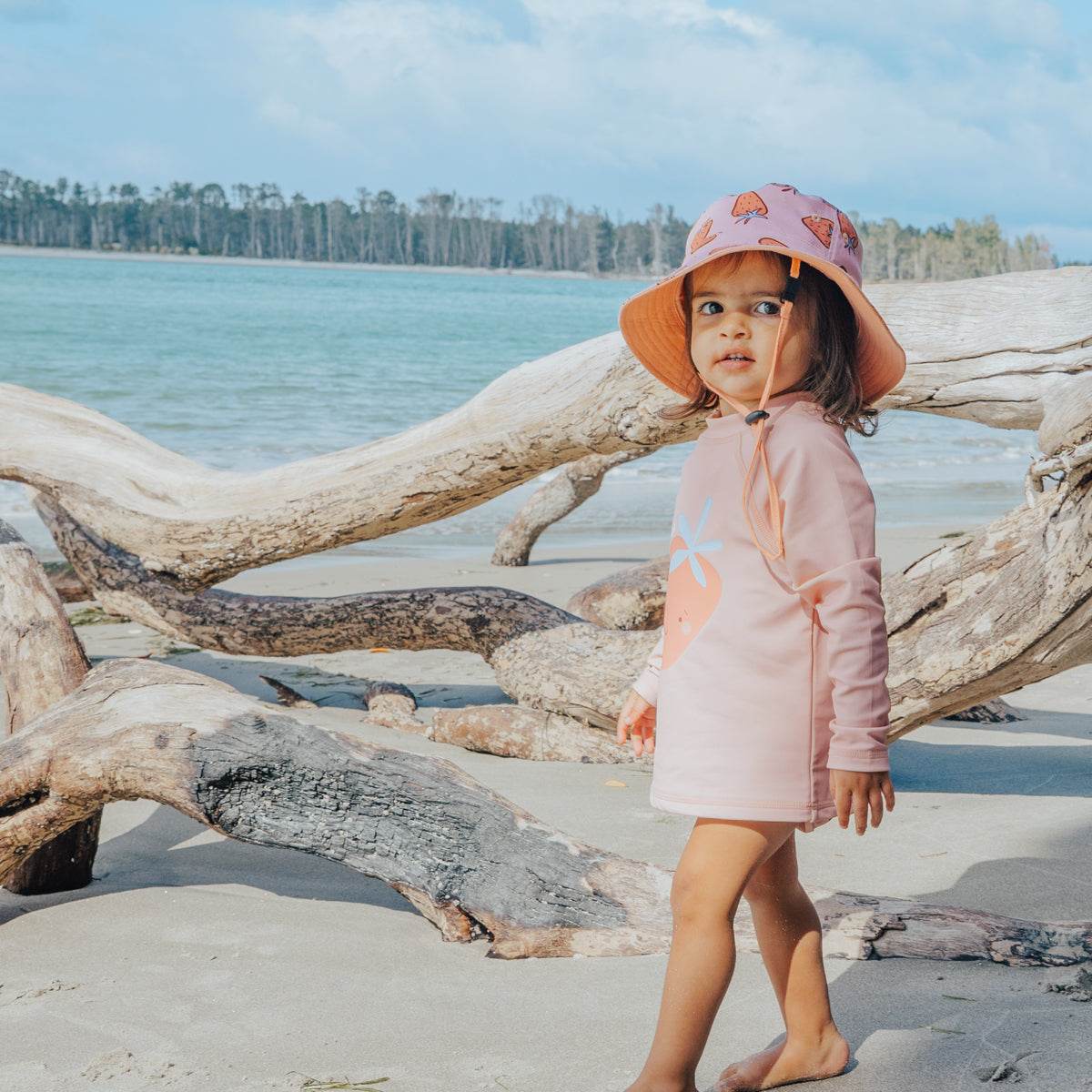
The Crywolf Baby Rash Vest with an excellent sun protection factor of UPF 50+ will ensure little ones stay protected in style.
Crafted with recycled fabrics, the Baby Rash Vest features chlorine-resistant properties, making it perfect for pool or beach.
Fabric Information
Fabric Information
Key Features
Key Features
Fit & Care
Fit & Care
Delivery and Returns
Delivery and Returns
- Delivery: Free within NZ on orders over $130 (excluding bulky items) or $8 standard shipping
- Returns: Accepted within 14 days of receipt with proof of purchase
- Some items are excluded from returns including sale items, hardware, car seats, prams, monitors and personal items - please click here for the full list.
Share this product
Recently viewed products
Related Blogs

Baby Swimming Lessons: When to Start & What to Expect
Baby Swimming Lessons: Building Water Confidence from an Early Age Living in New Zealand means water is never far away! We've got beaches, we've got lakes and we've got rivers, not to mention our swimming pools and backyard water play. Learning how to feel confident and safe around water is an important life skill for our Kiwi kids. Introducing your little one to the water from an early age can be a lovely experience for the whole family. Swimming lessons can support coordination, movement and confidence, while also giving parents and caregivers a special opportunity to have fun, connect and learn together. Most importantly, early positive experiences around water can help lay the foundations for lifelong water safety. Water Safety New Zealand says drowning remains a leading cause of death for New Zealand children aged under five, making active supervision and age appropriate water skills incredibly important. Start with water confidence Your baby's first introduction to water doesn't need to happen at a swimming pool. Bath time is a great place to start. Allow your baby to enjoy splashing, kicking and gradually becoming familiar with water around their face and body. As they become more comfortable, trips to the local pool can introduce them to a completely different environment with new sounds, sensations and movements plus a whole lot of fun! The aim at this stage isn't to turn your baby into a swimmer. It's simply about helping them feel happy and secure around water. When can babies start swimming lessons? There isn't one set age that suits every baby or every swimming programme. Some specialist swim schools offer parent and baby classes from around three months, while others begin from six months. The best option is to check the starting age and requirements of your chosen swim school. Finding swimming lessons in New Zealand If you're looking for somewhere to start, there are plenty of great options. Dean Greenwood Swim School has several Auckland locations and offers programmes ranging from babies through to adults. Hilton Brown Swimming offers lessons for babies, children, teenagers and adults across locations in Auckland, Waikato, Hawke's Bay and Manawatū. Their infant programme focuses on water confidence, movement, safety awareness and introducing skills such as floating. Many local leisure centres and community swimming pools also offer learn-to-swim programmes for babies, preschoolers, school aged children and even adults, so it's totally worth checking what is available close to home. What happens at baby swimming lessons? Baby swimming lessons are usually much more about water familiarisation and confidence than traditional swimming. A parent or caregiver will generally get into the pool too, helping baby feel secure while the instructor introduces activities through play, songs and movement. Depending on your baby's age and the programme, lessons may gradually introduce skills such as: Becoming comfortable with water around the face and head Kicking and moving through the water Floating and rolling Breath control and gentle submersion Moving towards or returning to a safe position Learning to feel calm and confident in the pool It's also valuable learning for parents. You'll become more confident handling your baby in the water and learn ways to continue practising positive water experiences together. And remember - swimming lessons build skills and confidence, but they never replace active adult supervision around water. Tips for making swimming lessons easier Give yourself plenty of time Getting yourself and a baby changed can sometimes take longer than the swimming lesson itself! Arrive early enough that you don't need to rush. Family changing rooms are especially helpful, and if your pool allows strollers inside, having somewhere safe for baby to sit while you get changed can make things much easier. Pack for afterwards Swimming can be tiring, particularly for little ones. Have everything ready for a feed or snack afterwards depending on your baby's age. Keep them warm Moving from a warm swimming pool into a cooler changing room or outside air can feel like a big temperature change. Have a cosy towel and dry clothing ready so you can get your little one comfortable quickly. Bring another pair of hands If you're taking more than one child to lessons, another adult can make changing, feeding and getting everyone safely to and from the pool considerably easier. It can totally be done with one caregiver if you're game... but four hands are easier than two. Don't worry if every lesson isn't perfect Some days your baby might love the pool. Other days they may be tired, hungry or simply not interested. That's completely normal. Building water confidence is a gradual process, so keep the experience positive rather than trying to push through when they've had enough. What to pack for baby swimming lessons A little preparation makes getting in and out of the pool much easier. Baby swimwear Start with comfortable baby swimwear and swimming essentials suitable for your little one's age and the type of swimming you'll be doing. Our new Baby Swimwear Collection brings together the swim essentials you need for trips to the pool, beach and summer days by the water. Shop our full range of Baby Swim Essentials here Swim nappies Most pools require babies who aren't toilet trained to wear an appropriate swim nappy, so check your swim school's requirements before your first lesson. A warm towel A soft towel or hooded towel is ideal for wrapping baby up as soon as they leave the water. A change mat Pool changing rooms aren't always the easiest place to change a baby, so having your own change mat can be incredibly useful. The Purely Baby Disposable Change Mats are particularly handy for swimming lessons because you can create a clean changing surface and simply dispose of the mat afterwards. Don't forget Pack a few extra essentials too: Dry clothes Spare nappies Wipes A wet bag or waterproof bag for wet swimwear Milk, a bottle or snacks depending on baby's age Your own swimwear and towel - surprisingly easy to forget! Water safety always comes first Swimming lessons are valuable, but no swimming lesson or floatation device can replace close adult supervision. Water Safety New Zealand recommends keeping babies and young children within arm's reach whenever they're in or around water. This applies everywhere - the swimming pool, beach, bath, paddling pool, lake or river. Stay focused on your child rather than relying on lifeguards, older siblings or floatation toys to supervise them. It's also important to look for potential water hazards around your own home. In New Zealand, residential pools that can hold water to a depth of 400 mm or more are subject to requirements for physical barriers designed to prevent unsupervised access by children under five. Enjoy the water together Learning to swim is a journey, and it begins long before your child is swimming independently. Positive bath times, trips to the pool and regular swimming lessons can all help your little one develop confidence and respect for the water while creating plenty of special memories along the way. Keep it fun, follow their pace and, above all, stay close whenever water is around.
Learn more
Protection: Sun Safety for little eyes
Many of us had the sun smart Slip, Slop, Slap message drummed into us from childhood. But are you aware of Slip, Slop, Slap, and Wrap? The message is to slip on some clothing and into the shade, slop on sunscreen, slap on a hat, and wrap on sunglasses. Why are sunglasses important for babies and toddlers? Sunglasses are important to protect your eyes and the delicate skin around them. This is especially important for babies and children for whom overexposure to UV radiation can cause a predisposition to eye problems. Just as a baby’s skin is more vulnerable to the sun, their developing eyes also have an increased susceptibility to UV damage. The New Zealand Association of Optometrists (NZAO) says most of the eye damage caused by UV radiation builds up over a long period of time and cannot be reversed. So the sooner you start protecting your little one’s eyes from the sun, the lower their risk will be of ever developing future eye problems. “There is some evidence that daily exposure to UV radiation in very bright sunlight over many years may increase the risk of developing cataracts which cause a gradual clouding of the natural lens of the eye. Exposure may also increase the risk of macular degeneration, an eye condition resulting from damage to the retina.” In NZ and Australia, we have to be particularly careful as our peak summer UV levels are roughly 40% higher than those at comparable latitudes in the Northern Hemisphere. That’s because Earth’s orbit is elliptical, which means the Southern Hemisphere is closer to the sun during our summer. The thickness of the ozone layer is also a factor as is our clearer air quality. How to choose sunglasses for little ones Treat sunglasses as a necessity, not just an accessory. Although they certainly can be a fun fashion accessory and look super cute on babies! You’ll want to find sunglasses that offer 100% UV protection, like the Izipizi range . Polarized lenses are also a bonus as they protect against glare, giving visual comfort. Opting for grey lenses also means they don’t distort but instead respect natural colours Durability is also key with kids' glasses. Izipizi’s ultra-flexible, BPA-free, and hypoallergenic frames are also great for sensitive skin. In addition, straight arms mean they will also adapt to your baby’s growth. Of course, it's easier said than done to keep sunglasses on a wriggly baby every time you head outside! That’s why Izipizi baby and kids sunglasses come with an optional ultra-flexible and adjustable silicone strap. This helps keep glasses on so they don’t get lost. Finding a comfortable fit will also make your little one happier to wear them. IZIPIZI offers three kids sunglass ranges: Baby for 0-9 months (head size 34-41 cm) Kids for 9-36 months (head circumference 40-47 cm) Kids+ for 3-5 years (head size 46-53 cm) Lead by example, if your children see you wearing sunglasses, they’re more likely to want to wear them too! Getting little ones to wear sunglasses not only protects their eyes now and for the future, it helps them develop habits that last for life. Don’t forget those other sun smart rules: Find shade — especially for babies under 6 months. Car sunshades and stroller sun covers are a good investment. Choose a wide-brimmed hat Try to limit your sun exposure between 10 am and 4 pm when the sun's rays are most intense Dress kids in cool clothing with good coverage Use sunscreen daily, even on a cloudy day.
Learn more
Pretty Brave Shoes: A Guide to Little Feet
Little feet have a lot of growing and exploring to do! From those first little steps to running, playing and discovering the world, choosing shoes that are comfortable and designed to move with them is an important part of every stage.
Learn more
Trouble sleeping? Finding The Right Sleep Aid
Sleep Struggles? These Soothers Might Just Save Your Sanity 😴 White noise and gentle sound machines help to mask the everyday background noise that can disturb your little one's rest. Think: older siblings, barking dogs, or the neighbour deciding now’s the time to mow the lawn. These soothing sounds - like a heartbeat, waves, or soft shushing - can create a more consistent, calming sleep environment and help baby settle more easily. Darkness can make a big difference too. A dark room helps reduce visual stimulation and can support your baby’s natural sleep cues, which is especially handy for daytime naps, early bedtimes and those bright summer evenings. If light is sneaking in around curtains or you’re sleeping somewhere unfamiliar, a portable blackout blind can help create a darker, more consistent sleep space wherever you are. We’ve curated a handy Quiz to help you make a decision, plus a small but mighty collection of trusted sleep soothers and calming aids below, that can help take the edge off bedtime - for both you and your baby. Love to Dream Sleep Machine Creating a familiar, calming sound environment is a great way to help signal to baby that it’s time to sleep. The Love to Dream Sleep Machine offers nine soothing sounds, including white, pink and brown noise, rain, shushing and womb sounds, helping to mask everyday household noises that might otherwise disturb naps or nighttime sleep. It even has a clever cry detection feature which automatically starts your chosen sound if baby stirs! It's got a soft red and warm white nightlight function which is super handy for those 3am feeds and changes. Being rechargeable with up to 22 hours of battery life it's perfect for travelling moments too! YogaSleep Nod Sound Machine and Night Light The YogaSleep Nod is the ultimate stay-at-home sleep station, perfect for setting up a consistent, calming bedtime routine in the nursery. It features 20 sleep sounds, including white noise, fan sounds, lullabies, and nature tracks, so you can tailor the soundscape to your baby’s preferences. What makes it a standout? The built-in nightlight, which emits a warm amber glow to create a peaceful sleep space without overstimulating your baby. You can also set sleep timers or run it all night long, ideal for little ones who are easily stirred. Simple, soothing, and super customisable, the Nod helps create the kind of sleep environment you’ll both appreciate. Purflo Total Blackout Blinds Light can make a huge difference to how easily your baby settles, especially for daytime naps, early bedtimes or those bright summer evenings. The Purflo Total Eclipse Portable Blackout Blind helps create a dark, calming sleep environment by blocking out unwanted light, making it easier to keep baby’s sleep space feeling consistent. It easily attaches securely to windows using over 100 suction cups and can be adjusted to suit smaller windows, so it’s handy at home as well as when travelling or staying with family. Even better, it folds neatly into its own storage pocket, making it an easy sleep essential to have on hand. Storytime and Soothing Light for Sweet Dreams Another beautiful way to support your child’s sleep is by building a calming, familiar bedtime routine - and the CloudBox™ helps make that easy. This clever little device plays comforting bedtime stories while gently projecting sleepy visuals onto the ceiling or wall. With a soothing mix of audio and light, it creates a multisensory environment that helps children wind down at the end of the day. You can choose from the preloaded stories or record your own – a lovely way to keep bedtime personal, even when you can’t be there in person. Repeating the same story or image each night can become part of your child’s sleep ritual, providing a sense of security and consistency they can count on. Simple to use and designed for children from birth and up, the CloudBox™ is a thoughtful addition to any nighttime routine – helping little ones feel calm, safe, and ready for sleep. Supporting Sleep, Naturally For many families, Magnesium Rescue has become a much loved part of their wind-down ritual. This gentle, topical formula is made from natural ingredients and can be massaged into your child’s back, tummy, or feet at bedtime. It’s designed to help support a relaxed nervous system – a simple, non-invasive way to encourage calm before sleep. Another lovely option is the Bedtime Bestie - a lightweight magnesium mist infused with calming lavender, designed to support relaxation and make bedtime a little easier. Simply spritz it onto your child’s back or feet as part of your evening routine. It’s a fuss-free way to help little bodies and busy minds slow down – one small spray at a time. Shop Sleep Saviours at Dimples now Whether you’re trying to improve naps, master the bedtime routine, or just desperate for an extra hour of sleep, our range of sound machines and calming sleep aids are here to help. Browse the full collection in-store or online and find the right fit for your baby (and your sleep-deprived self).
Learn more