


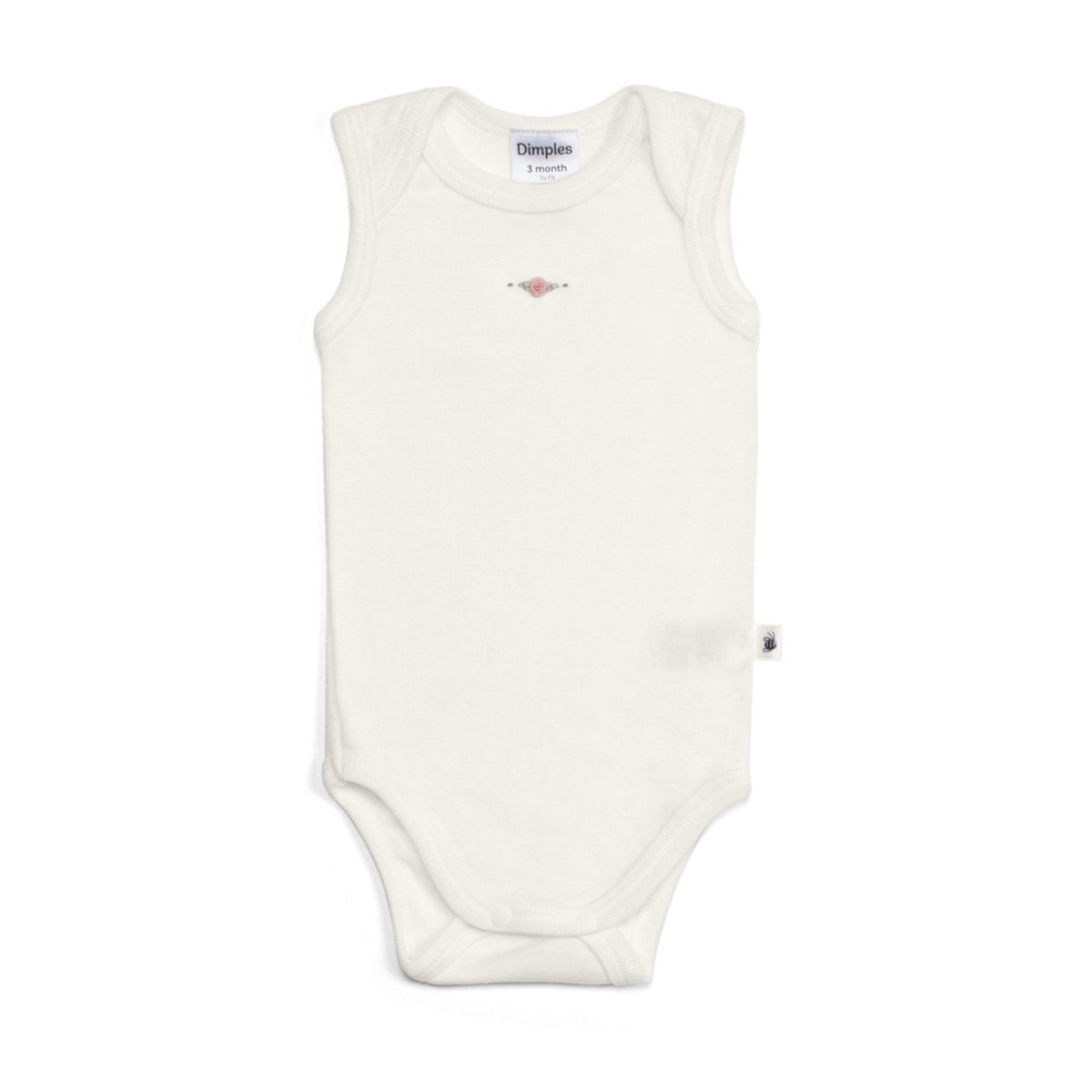
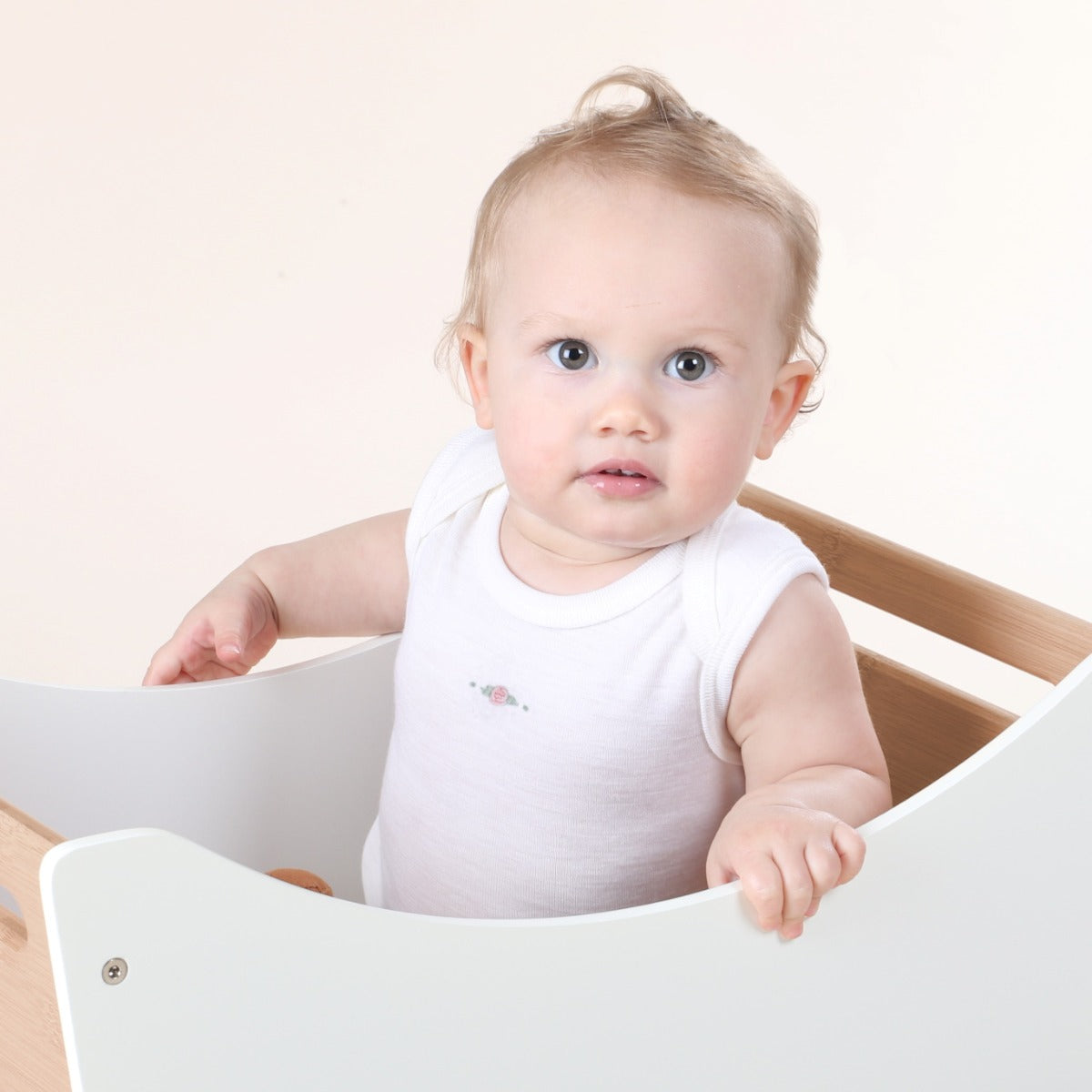
Merino Bodysuit
Merino Bodysuit
SKU:MW33CR-12mth
Clothing Prem to 18 Months
| Size | Age Guide | Weight | Height |
|---|---|---|---|
| Premature | Premature or Small Newborn | Up to 4Kg | Up to 55cm |
| Newborn | 0-3 months | 4-6Kg | Up to 62cm |
| 3 Month | 3-6 months | 6-8Kg | Up to 68cm |
| 6 Month | 6-12 Month | 8-10Kg | Up to 76cm |
| 12 Month | 12-18 Month | 10-12Kg | Up to 84cm |
| 18 Month | 18-24 Month | 12-14Kg | Up to 92cm |
Clothing 2 to 6 Years
| Size | Age Guide | Height | Chest | Waist | Hip |
|---|---|---|---|---|---|
| 2 Year | 2-3 Years | Up to 100 cm | 56 | 51 | 58 |
| 3 Year | 3-4 Years | Up to 105 cm | 58 | 53 | 60 |
| 4 Year | 4-5 Years | Up to 110 cm | 60 | 55 | 62 |
| 5 Year | 5-6 Years | Up to 115 cm | 62 | 57 | 64 |
| 6 Year | 6-7 Years | Up to 120 cm | 64 | 59 | 66 |
Beanie Size Guide
| Size | Head Circumference | Age Guide |
|---|---|---|
| Premature | 31-35 cm | Premature or Small Newborn |
| Newborn | 35-40 cm | Newborn |
| Small | 40-43 cm | 3-6 Months |
| Medium | 43-47 cm | 6-18 Months |
| Large | 47-52 cm | 18-3 Years |
Sunhat Size Guide
| Size | Head Circumference | Age Guide |
|---|---|---|
| Newborn | 37-40 cm | Newborn |
| Small | 40-43 cm | 3-6 Months |
| Medium | 43-46 cm | 6-12 Months |
| Large | 46-49 cm | 12-24 Months |
| Xtra Large | 49-54 cm | 2-4 Years |
Sleep Pods Size Guide
| Size | Weight | Age Guide | Measurement(Back to Hem) |
|---|---|---|---|
| Newborn | 0-6 kgs | 0-3 Months | 60.5 cm |
| Small | 0-8 kgs | 3-6 Months | 66 cm |
Booties Size Guide
| Size | Age Guide |
|---|---|
| Newborn | 0-3 Months |
| Small | 3-6 Months |
| Medium | 6-12 Months |
| Large | 12-18 Months |
In stock
Couldn't load pickup availability
Overview
Overview
Welcome Your Baby with Dimples' Pure, Soft, and Natural Classic Merino Collection.
Introduce your precious little one to the world in style with Dimples' timeless Classic Merino Collection. Our pure and soft Merino wool designs offer year-round comfort, prioritizing your baby's well-being. Crafted with utmost care, these pieces ensure both warmth and safety, as every baby deserves. Capture those unforgettable first photos, accentuated by Dimples' signature hand embroidery, making this collection an essential addition to your baby's wardrobe.
Our sleeveless bodysuits are the ideal choice for your baby's year-round comfort and style. These versatile garments offer full body coverage, providing extra protection from chilly winds.
Perfect for diaper-wearing babies, these bodysuits are not only practical but also incredibly comfortable. Whether you're out and about or just lounging at home, our bodysuits are a fantastic choice. Thanks to their exceptional stretch, dressing your baby is a breeze, and your little one will adore the warmth and coziness they provide.
Fabric Composition - 100% Merino wool 1x1 stretch rib - 220gsm
Made in New Zealand
Fabric Information
Fabric Information
Fit & Care
Fit & Care
Delivery and Returns
Delivery and Returns
- Delivery: Free within NZ on orders over $130 (excluding bulky items) or $8 standard shipping
- Returns: Accepted within 14 days of receipt with proof of purchase
- Some items are excluded from returns including sale items, hardware, car seats, prams, monitors and personal items - please click here for the full list.
Share this product
Recently viewed products
Related Blogs

The Secrets of Dimples Merino, Natures Miracle
Marvellous Merino – and How to Care for It Dimples high-quality Merino is made in New Zealand and designed to last – treat it with love and care and it will stay looking beautiful for years to come. Why Merino? Merino wool truly is nature’s miracle. Its warm, soft, breathable fibres keep your little one comfortable all year round. Because babies take time to develop the ability to regulate their temperature – and can’t tell us if they’re too hot or cold – Merino clothing and sleepwear offer peace of mind. The natural fibres form little pockets of insulating air, keeping warmth in on chilly days and helping release heat when it’s warm. Other wonderful benefits of Merino: Naturally hypoallergenic – gentle on delicate skin and suitable for babies with eczema, allergies, or sensitivities Naturally flame-resistant – without added chemicals Moisture-wicking – absorbs moisture while staying warm and drying quickly Stain-resistant – perfect for little spills and dribbles Keeps its shape – it stretches with your baby, then springs right back after each wash Made to Last Each Dimples Merino garment is lovingly hand-sewn and embroidered by our talented team right here in New Zealand. Crafted with care and attention to detail, these pieces are designed to last – ready to be worn, washed, and passed down through generations. To help your Merino stay soft, beautiful, and in great condition, it just needs a little extra love when it comes to care. How to Wash Merino Always check the garment’s care label first Do not soak – for stubborn stains, we recommend Sard Wonder Soap. Wet the stain in cold water, rub on the soap, agitate gently, then rinse thoroughly Use a wool-approved detergent like Earthwise Wool & Delicates. Dilute the detergent before adding to your washing machine – never pour directly onto the fabric Avoid detergents that contain eco-brighteners or enzymes, which can damage Merino fibres (even some ‘baby’ or ‘eco’ detergents) Use the wool wash cycle on your machine, or hand wash gently in cold water Rinse well, gently squeeze (no twisting), and lay flat to dry in the shade Never bleach, rub, soak or tumble dry. Merino prefers to be air-dried Cool steam iron if needed – and yes, it’s dry cleanable if preferred How to Dry Merino Merino should be air-dried flat in the shade. Direct sunlight can cause fading or damage, and tumble dryers are a no-go. How to Store Merino Because Dimples Merino contains no chemicals, it can be extra appealing to clothes moths. If you're packing your garments away for a while: Wash and dry them first Store in a sealed garment bag or container Clothes Moths – What to Watch For Noticed tiny holes? Pop the item into a sealed bag and freeze for 72 hours – this helps eliminate any moth larvae. After freezing, rewash the garment as usual. Shop the full range of our luxurious Merino here
Learn more
Why Buy New Zealand Made Clothes?
From garments more well-travelled than most of us to clothing produced in factories not quite up to scratch – the backstory of what we buy has become an increasingly hot topic. Keeping shopping habits local is an easy way to not only do your bit for the environment but also support the New Zealand economy and the people who live here. Better still, buying New Zealand-made no longer means compromising on quality or choice – in fact, it’s typically quite the opposite! Do it for the birds and the bees (literally) The environmental impact of clothing sourced overseas is huge. Buying local often means reducing ecologically unfriendly packaging, and will certainly cut out vast amounts of fossil fuels in transport. Clothing made in New Zealand also complies with strict guidelines, which is a big win for the environment in an industry that is notoriously hard on the planet – no pesticide and fabric-dye-filled runoff contaminating water supplies here thanks! Feelgood tip – swap those well-travelled goods with locally-made merchandise. Fast fashion or future-friendly? The days of patching worn jeans and sewing up holes in socks are long gone – popping to the shops for a wallet-friendly replacement is just too easy. But with prices so low, something’s got to give – whether it’s the quality of raw materials, worker conditions, or the standard of the finished product. This fast-fashion movement ironically has you popping to the shops for replacements a whole lot more often! All this disposable fashion also becomes a major landfill problem. Synthetic fabrics are much cheaper to produce (they make up about 60% of a typical closet) and can go on to live hundreds of years after parting ways with your wardrobe. On the flip side, buying New Zealand-made means these items live up to local production standards, and are far more likely to survive playground adventures and multiple trips through the washing machine. They might even look good enough to pass on to family or friends once you’re done with them – recycling at its best! Feelgood tip – invest in quality, locally made items that can be passed on. Guilt and hassle-free shopping Shop-a-holics rejoice! If you’re buying locally produced goods, pat yourself on the back for your contribution to the local economy. You’re supporting fair, local employment and helping to keep New Zealand businesses alive and able to compete with the big guys. Shop-a-holics rejoice some more! If you’re buying locally produced goods and have accidentally bought the wrong size for your little one, it’s as easy as popping into a store or a local phone call to fix your problem. Local businesses are usually happy to help (as each customer is important) whereas it’s likely you’re literally one in a million for big global companies. Even finding contact details can be a challenge! Feelgood tip – shopping local simply supports New Zealanders. Dimples' does it differently No compromises here, just adorable, high-quality clothing, using high-quality raw materials, produced by fairly treated Kiwi workers! Our commitment to the environment hasn’t changed as the business has evolved and grown, and neither has our commitment to our workers. All Dimples clothing is made here in New Zealand from locally sourced merino (or from our neighbouring Australian sheep) and pure organic certified cotton (to ensure the impact of cotton farming is minimal). We don’t have a huge factory producing our clothing – instead, our expert sewers work from their homes. It’s essentially a scaled-up version of the small home workshop where it all started. The end result is hard-wearing, long-lasting clothing – that stays looking super cute for longer. Feelgood tip – buy New Zealand made.
Learn more
No matter the colour, all our clothes are green on the inside
Dimples has always been a proud New Zealand brand, with strong Kiwi values. Protecting the environment is one of them. Even as we’ve grown from a home business to a larger company, that commitment hasn’t changed. The clothing industry is notoriously hard on the environment – and on the people involved. It can cause incredible environmental and social damage worldwide: from cotton farms that suck up huge amounts of valuable water, to clothing factories using harsh chemicals and exploiting their workers; from the use of fossil fuels for shipping, to ‘fast fashion’ that ends up in landfills after a few wears. We work hard to minimise our impact on the environment by keeping our production in New Zealand, using local materials as much as possible, and avoiding the factory system altogether. It’s about protecting our world long term – and making adorable, high quality baby gear at the same time. Made here, sold here Dimples clothing is produced right here in New Zealand. This lets us avoid shipping product across the world using harmful fossil fuels – it’s one of the most important ways that we reduce our environmental impact. Making our clothes in New Zealand also means that we can control the quality of our product, and the working conditions of our sewers. We know that all our clothing is produced to an extremely high standard, by workers who are paid well and treated fairly. That’s incredibly valuable. Starting from scratch Where clothing is assembled isn’t the only factor when it comes to the environment. Sourcing the raw materials – merino wool and cotton , in our case – is also important. Our merino comes from a mix of New Zealand and Australian sheep, which means the raw materials don’t have to travel very far, and we can keep an eye on the quality. New Zealand’s climate isn’t suitable for large-scale cotton production, so we import only pure, organic-certified cotton to make sure the impact of cotton farming is minimal. Small scale production Dimples started out as a home-based business, and although we’ve grown, we haven’t changed all that much. We don’t have a huge factory producing our clothing – instead, our expert sewers work from their homes. It’s essentially a scaled-up version of the small home workshop where it all started. The classic Dimples bee and rose are still hand-stitched onto every garment. This system doesn’t just result in a better quality product, it also helps us avoid the environmental costs of factory production – we don’t use huge amounts of power to run machinery, or process our materials using harsh chemicals. Made to last The end result of our high-quality materials and high production values is hard-wearing, long-lasting clothing. Our customers find that our clothing lasts through wash after wash without fading, stretching or pilling. Many customers use our clothing for multiple children, then pass it on to friends or family. This is environmentally friendly in itself – the more your child or children can wear each garment, the less you’ll need to throw away. This reduces the need for production and reduces the amount of landfill. It’s all part of our ongoing commitment to our beautiful world. We’re not green because it’s trendy or expected, we’re green because we care – and we always will. Take a look at our NZ made clothing now
Learn more
Pretty Brave Shoes: A Guide to Little Feet
Little feet have a lot of growing and exploring to do! From those first little steps to running, playing and discovering the world, choosing shoes that are comfortable and designed to move with them is an important part of every stage.
Learn more