


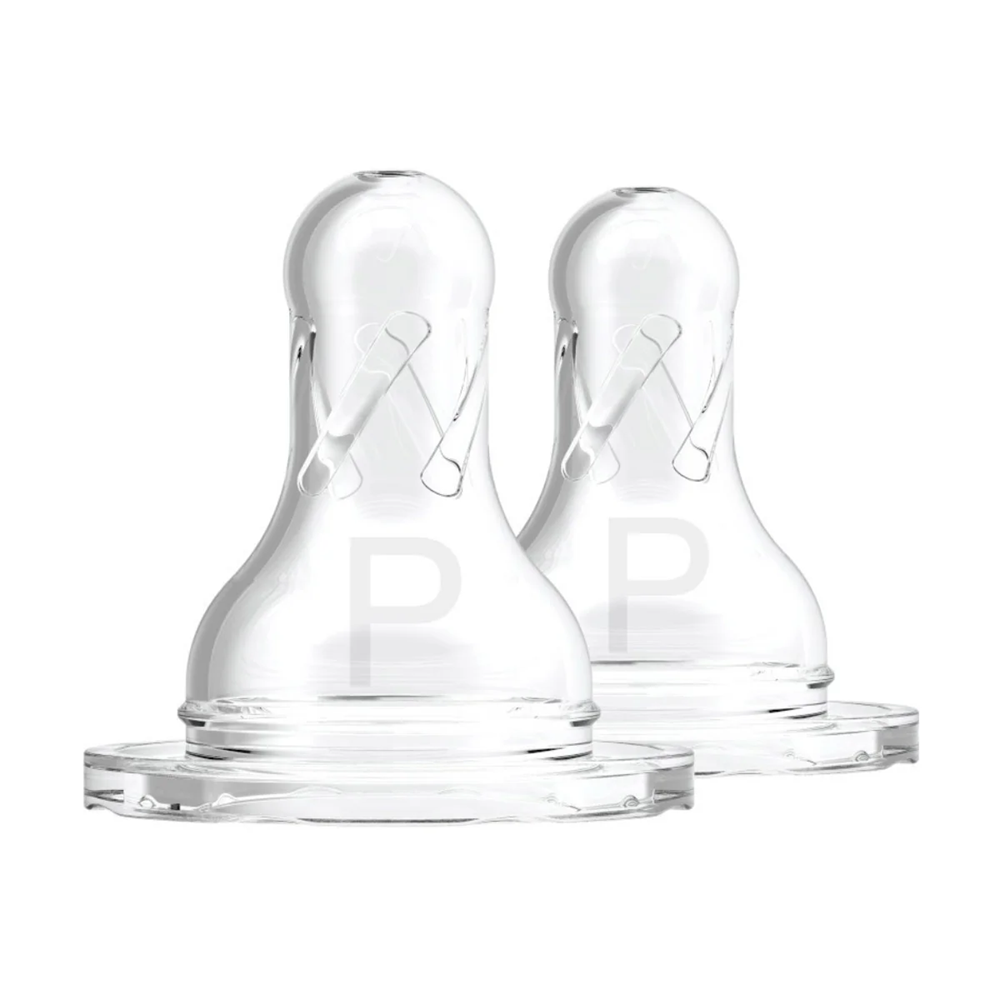
Dr Brown's Narrow Neck Teats - 2 Pack
Dr Brown's Narrow Neck Teats - 2 Pack
SKU:292-P
In stock
Couldn't load pickup availability
Overview
Overview
Details
Exclusively for Dr. Brown's Natural Flow® baby bottles. Other teats may not work properly and can result in feeding problems for your infant.
Made of super-soft, high-grade silicone, each nipple level provides a different flow rate. The standard nipple has a traditional profile. The vent system fully vents our bottle for vacuum-free feeding, which we call positive-pressure flow, similar to breastfeeding. As the baby feeds, air is channelled from the nipple collar through the vent system, bypassing the breast milk or formula, to the back of the bottle. Air never mixes with the breast milk or formula which minimises oxidation and helps preserve essential nutrients like vitamins C, A and E.
Contains
- 2 Silicone teats (fits standard bottle)
What's Included
What's Included
Technical Specification
Technical Specification
User Guide
User Guide
Delivery and Returns
Delivery and Returns
- Delivery: Free within NZ on orders over $130 (excluding bulky items) or $8 standard shipping
- Returns: Accepted within 14 days of receipt with proof of purchase
- Some items are excluded from returns including sale items, hardware, car seats, prams, monitors and personal items - please click here for the full list.
Share this product
Recently Viewed Products
Related Blogs

Bottle-feeding: choosing the right bottles and teats
Choosing the Right Bottle & Teat for Your Baby A Practical Guide to Finding the Right Bottle Feeding Setup We’ve been helping families for many years now, and a question we are always asked by new parents is “Which is the best baby bottle?” - and while we wish there was a one size fits all answer to this question, the reality is that there isn't one perfect bottle for every baby. The best baby bottle is the one that suits your bub's feeding style, comfort, and stage of development, while also fitting your family's routine and preferences. Finding the right bottles and teats can sometimes feel overwhelming. With so many options available, from anti colic bottles and wide neck designs to glass, silicone, and plastic bottles… it's natural to wonder which choice is best for your baby. In this guide, we'll help you understand the different bottle and teat options so you can find a feeding setup that feels right for your baby and your family. How to Choose the Best Baby Bottle When comparing baby bottles, start by thinking about your baby's feeding needs rather than focusing on brands or features. Newborn? Look for slow flow teats and easy to clean bottles – you’ll likely be using up to 12 bottles a day in those very early stages! Breastfed or mixed feeding? Wide neck bottles and breast shaped teats can help support a natural latch. Experiencing wind or reflux? Anti-colic bottles will help reduce swallowed air. Need something practical for everyday use? Lightweight plastic bottles are often a great choice. Looking for a long term option? Glass bottles are durable and long lasting. Choosing the Right Bottle MaterialDifferent bottle materials offer different benefits, but there isn't a single right choice. Bottle Type Best For Things to Know Plastic Everyday use Lightweight and practical Glass Durability Easy to clean but heavier Silicone Mixed feeding Soft and flexible 💛 Dimples Tip: Something we often tell parents is not to overthink the bottle material too much. Most babies will adapt well to different bottle types, so it's often more about what works best for your family and feeding routine. Bottle Shapes at a Glance Standard Bottles - A simple, reliable option that works well for most babies. Wide-Neck Bottles - Easier to fill and clean, and often preferred by families combining breast and bottle feeding. Anti-Colic Bottles - Designed to reduce the amount of air swallowed during feeding. 💛 Something we get asked a lot at Dimples: "Are anti colic bottles really worth it?" For babies who experience wind, gas, or reflux, or even for as a preventative method – yes! We know many parents who have found they make feeding more comfortable and reduce post feed fussiness. Explore our bottle range here Explore our Infant and Toddler Formula range here Best Bottles for Breastfed Babies & Mixed Feeding Another common question we hear at Dimples is: "What's the best bottle for a breastfed baby?" While every baby is different, wide-neck bottles with soft silicone teats are often a great place to start. When introducing a bottle to a breastfed baby, look for: Wide teats that encourage a natural latch Slow flow teats that mimic breastfeeding Soft silicone teats with a familiar feel Bottles designed to support mixed feeding Many parents also find paced bottle feeding helpful, as it encourages babies to feed at a rhythm that's closer to breastfeeding. You can learn more about paced bottle feeding here. Shop bottles suitable for mixed feeding Choosing the right teat flow can make feeding feel calmer and more comfortable for your baby. For newborns and younger babies, a slow flow teat is usually the best place to start. This helps milk flow gently and steadily, giving your baby time to feed at their own pace. As your baby grows and becomes more confident with bottle feeding, they may be ready for a medium or faster flow teat. Age guides can be helpful, but your baby's feeding cues are often the best sign. The flow may be too fast if your baby is coughing, spluttering, gulping milk, leaking milk from their mouth, or becoming unsettled during feeds. The flow may be too slow if your baby seems frustrated, takes a very long time to finish a bottle, or often falls asleep before finishing their feed. 💛 Another common questions we are asked: "When should I move up a teat size?" The answer is usually based on your baby's feeding cues rather than just their age alone. Shop our teat range here Cleaning, Sterilising & Bottle Care Keeping bottles and teats clean is a very important part of bottle feeding. Wash bottles and teats thoroughly, replace worn teats when needed, and sterilise bottles up until your baby is approximately 12 months old. A few simple essentials can make life easier: Bottle sterilisers Bottle warmers Bottle brushes Drying racks Feeding bibs Shop bottle cleaning and sterilising essentials here Frequently Asked Questions about Bottle Feeding What bottles are best for newborns? Most newborns do well with bottles fitted with slow flow teats. Anti-colic designs can also be helpful for babies prone to wind or reflux. What bottle is best for a breastfed baby? Wide-neck bottles with soft silicone teats are often a great option for supporting mixed feeding and encouraging a natural latch. Are anti-colic bottles worth it? For babies who swallow excess air while feeding, anti-colic bottles may help reduce wind, gas, and feeding discomfort. How do I know if teat flow is too fast? Look for coughing, spluttering, milk leaking from the mouth, or your baby struggling to keep up with the flow. Glass vs plastic baby bottles: which is better? Both are excellent options. Plastic bottles are lightweight and practical, while glass bottles are durable, easy to clean, and resistant to staining. Finding the Right Feeding Fit for Your Family Every baby is different, and finding the best baby bottle often involves a little trial and error. Trust your baby's cues, be kind to yourself, and remember that there's no single "right" choice. What matters most is finding a feeding setup that feels comfortable for both you and your baby. 💛 A final note from our team: We've helped hundreds of New Zealand families navigate bottle feeding over the years, and if there's one thing we've learned, it's that every feeding journey looks a little different. You're doing a great job. Shop our full range of baby bottles, teats and feeding essentials
Learn more
Formula and bottle-feeding tips for new parents
Everything you need to know about bottle feeding During the first year, your baby goes through a great deal of growth and development. Most babies triple their birth weight by the time they hit their first birthday – so it’s no wonder they need lots of energy to grow! While it’s widely acknowledged that ‘breast is best’, choosing how you feed your baby is an important and completely personal decision. For some women, personal circumstance, cultural beliefs and physical or mental wellbeing mean breastfeeding isn’t an option, and therefore a safe alternative is required. If you’ve decided to bottle-feed (if you’re thinking about it, speak with your midwife, doctor or nurse first), it’s vital to have clear and well-informed information on the safe preparation and use of formula. Here’s what you need to know about formula-feeding your wee one: About baby formula Most formula is made from modified cow’s or goat's milk so the protein level isn’t too high and babies can digest it. Unlike regular milk, formula has added minerals, vitamins, and fats essential for human growth and development, and when prepared correctly, it contains enough nutrients for healthy growth in babies. In New Zealand, there are strict manufacturing regulations in place to make sure that the formula in your local supermarket is always of good quality and safe for your baby. But that doesn’t make the baby aisle any less overwhelming. Here’s a quick breakdown of the kinds of formula you can buy: Cow’s-milk formula Most cow’s-milk formulas sold in New Zealand have a similar nutritional profile – so price doesn’t necessarily mean one is better than another. Casein and whey are the proteins in breastmilk, and cow’s-milk formula has the same proteins. It will either have more casein or more whey – you can find the percentage of each noted on the formula’s ingredient label. Key points: Your baby’s first formula should contain whey as the main type of protein, as it’s the easiest to digest. Some formulas will be labelled ‘follow-on’ or ‘step 2’ – these are casein-dominant formulas best suited for babies aged six months and over. They’re also designed for hungrier babies who are not yet old enough to start solid food. Your baby can stay on the first formula for 12 months and as you start to introduce solids. If your child isn’t reacting well to cow’s-milk formula and you suspect an allergy, it’s best to seek advice from a healthcare professional who can advise you on alternative types of formula. Goat’s-milk formula This type of formula also contains whey and casein proteins, but the casein protein is slightly different from that in cow’s milk. It contains beta-casein (rather than alpha-casein) which is more easily digestible. Again, you can find the protein ratios outlined on the nutritional label. Soy infant formula Made using soya beans as a source of protein, soy infant formula is a vegetarian option. It’s best to seek advice from a healthcare professional before switching to the soy alternative. Gold formula Gold formula contains extra ingredients which aren’t strictly necessary for your baby – but may be beneficial. Here we explain a few: Long-chain polyunsaturated fatty acids (LCPUFAs). Thought to be important in the development of the brain and eyes. Alpha-lactalbumin. Thought to be nutritious for babies because it’s the main type of whey protein in breastmilk. Pro and prebiotics. These help promote the growth of good bacteria and may help maintain a healthy balance of gut bacteria. May be good for eye health. How to prepare baby formula Before you get started, always carefully read and follow the instructions on the formula tin – not all formulas have the same size scoops or are prepared in the same way. Check the use-by date and dispose of formula if it has expired. Bottle-feeding equipment Here’s what you’ll need to bottle-feed: Large bottles (saves you buying new ones as your baby grows) Bottle rings and caps Teats (either silicone or latex is fine, graded according to size of the hole or age of the baby) Bottle brushes Teat brushes A steriliser (optional) Check our handy guide to bottles and teats here! Making up a bottle of formula Step 1 : Boil the kettle and let the water cool for about 30 minutes, until it has reached a lukewarm temperature. You can also do this in advance, storing the cooled boiled water in sterilised bottles in the fridge. Step 2 : Pour the lukewarm water into the bottle before carefully adding the scoops of formula powder (levelling the powder with a clean knife or the tin's in-built level). Seal the bottle with a ring and cap, then shake gently to encourage the powder to dissolve. Step 3 : Before feeding your baby, check the temperature of the formula by tipping a few drops on the inside of your wrist – it should feel lukewarm. Never add anything to the formula, and if your baby doesn’t finish the bottle, throw any leftover formula away within an hour. Warming infant formula If you are not feeding your baby straight away, place formula in the fridge immediately (store at the back of the fridge) with a cap over the teat to prevent contamination. It can be stored for a maximum of 24 hours. Once removed, it’s only safe to use for up to one hour. The safest way to warm formula is to stand the bottle in a bowl of warm water for no longer than 10 minutes as harmful bacteria can grow in prepared formula. After warming, gently swirl the bottle to mix the formula, and test the temperature. If it’s too hot, cool it down by putting it in a bowl of cold water or by running it under the cold tap. Microwaving bottles is not recommended because uneven heating of the milk can burn your baby’s mouth. Cleaning and sterilising Hygiene is essential – your baby’s immune system isn’t strong enough to fight off some diseases yet, and formula-fed infants are at higher risk of gastrointestinal infection. You need to clean your bottles, teats, rings and caps after every feed and before you sterilise them. Tips for cleaning bottle-feeding equipment: Wash all bottles, rings, caps and teats in hot soapy water. Squirt water through the teat holes and use a bottle brush to ensure that everything is scrupulously clean, getting into all those nooks and crannies, then rinse well. Check for any cracks in the teats and throw away any damaged ones. Rinse everything well in hot water and leave them to air dry. After you’ve cleaned your equipment, you need to sterilise everything by boiling, steaming, or with chemicals. Boiling - To sterilise a baby bottle by boiling, place the disassembled bottle parts into a large pot and cover them fully with water. Bring the water to a rolling boil and let it boil for at least 5 minutes to ensure all parts are thoroughly sterilised. Use clean tongs to remove the items and place them on a clean, dry surface to air dry completely. You can buy electric (plug-in) or microwave steam sterilisers. These units 'cook' your equipment at a temperature high enough to kill bacteria. If using chemical sterilisers , follow the instructions on the box or packet. If you’re unsure, seek help from a professional Don’t be afraid to take your time deciding about feeding your baby. The most important consideration is that your baby is comfortable and well-fed, and you’re able to enjoy this special (albeit exhausting!) time with your newborn. Get the information you need to make an informed decision, and if you’re not sure, consult with your health professional, who’s in the best position to give you accurate advice for your baby and his or her needs.
Learn more
How To Store Your Breast Milk Safely and Successfully
Tips to Storing Your Breast Milk Safely, Sustainably and Successfully. If you are looking for ways to store your breast milk Dimples has plenty of solutions to make sure you are making the most of that liquid gold. Once baby has arrived you may decide pumping and storing your milk is a great solution, particularly if you are heading back to work or just if you are after a solution for when baby’s milk isn’t being fed straight from you. Collecting the First Stage of your Milk Colostrum is the first stage of milk you will develop during the late stages of your pregnancy as well as in the first few days after baby has arrived. Colostrum will appear in a thick clear or yellow consistency. Colostrum is filled with all the good nutrients your newborn will need in those early days to help begin building their immune system. What is the best way to store my breast milk? Once your breast milk has officially come in and you are wanting to store milk for another day, Dimples has everything you will need to make sure your supply is stored away safely and conveniently. Haakaa has created reusable milk storage bags designed out of silicone so you can reduce any waste in the environment that is caused by single-use plastics. The environment you choose to store your breast milk in may need to change based on when you are planning to feed baby. Breast milk is best when transferred to a cooler place after four hours, however, breast milk should remain stable within room temperatures that are 25ºC or lower between 6 and 8 hours. If you choose to store your breast milk within the refrigerator it should remain safe for use up to 2 days at a temperature of 4ºC or lower. If your breast milk isn’t required within this time frame it should be stored in the freezer after 48 hours. Breast milk can be stored in your basic fridge freezer for up to 3 months. How to prepare breast milk that has been stored . Preparing breast milk that has been previously frozen is simple. Placing the pouch in the refrigerator to thaw for several hours before use is an easy solution. When heating any form of milk for baby using a microwave should be avoided. Using a microwave can lead to heating milk unevenly and increase the risk of scalding your baby. To safely heat milk and have it ready for baby, simply stand the pouch in a bed of warm water (not boiled) and allow it to sit until it has reached a lukewarm temperature. Simply use a food thermometer to test the temperature of baby’s milk to always ensure that they are safe. Another option to heat your little one’s milk is using the Meke Milk Warmer . This item stocked by Dimples is an innovative way to heat baby’s milk whether it is breast milk, formula, or even hot chocolate. Simply choose the appropriate temperature and with the press of a button and your milky beverage is ready to go. Sterilising your equipment Being able to re-use the equipment required during your breastfeeding journey is a great positive not only does it significantly reduce costs, but it also has a positive effect on the environment with reduced consumption. Ensuring you have everything clean and sterilised will be an important part of your routine. Haakaa’s Silicone bottle brush is sized to fit perfectly into Haakaa’s silicone milk storage bags , the soft and flexible bristles are made from 100% silicone allowing you to reach all area’s giving a thorough clean. Dimples stocks all the solutions you will need to make your breastfeeding journey as simple and as gentle on the environment as possible.
Learn more
Breastfeeding Basics and Tips
Understanding the Fundamentals of Breastfeeding Breastfeeding might seem straightforward, but many new moms find it challenging. Patience is essential, and being well-prepared can make the process smoother. Here, we break down the basics to help you get ready for this journey. The Three Stages of Breast Milk Colostrum: The First Stage When your baby is born, your body produces colostrum, a clear or yellowish liquid packed with nutrients, proteins, and vitamins. This small amount is perfect for newborns, helping to protect their digestive tract and immune system. Transitional Milk: The Second Stage Regular breastfeeding will stimulate the production of transitional milk, which appears around the third to fifth day. It looks like a mix of milk and orange juice, rich in lactose, fat, and calories. Mature Milk: The Third Stage By the second week, mature milk replaces transitional milk. This pale, sometimes bluish milk provides all the nutrients, fat, and proteins your baby needs, adjusting its water content in hot weather and boosting antibodies when needed. Achieving a Good Latch Proper latching is crucial to prevent discomfort. A good latch covers both the nipple and the areola and shouldn't be painful. Here’s how to ensure a successful latch: Positioning Your Baby Hold your baby tummy-to-tummy with your breasts, keeping their head aligned with their body. Mouth to Nipple Tickle your baby’s lips with your nipple or express a bit of milk to encourage the rooting reflex. When your baby opens wide, bring them to your breast. Ensuring Proper Attachment A proper latch involves the baby’s chin and nose touching your breast. If necessary, adjust the bottom lip to ensure it isn’t tucked in. Watch for a steady suck-swallow-breathe pattern. Trying Different Positions If you encounter difficulties, experiment with different breastfeeding positions like the football hold or side-lying. Consult a lactation consultant if needed. Maintaining Comfort and Milk Supply Relax and Feed on Demand Stay calm and relaxed to enhance milk production. Allow your baby to feed without time limits, ensuring one breast is fully drained before switching to the other. Recognizing Hunger Cues Signs of hunger include nuzzling your breasts, rooting, sucking on hands or clothing, and making lip-smacking noises. Crying is a late hunger cue. Feeding Frequency Newborns typically feed 8-12 times a day. Some may need to be woken up for feeds if they sleep for more than six hours. Patience and Persistence Breastfeeding takes time and practice. Be patient with yourself and your baby, seeking professional help if needed. With time, breastfeeding will become more natural and enjoyable for both of you. By following these tips, you can create a calm and successful breastfeeding experience, eventually making it look effortless.
Learn more