


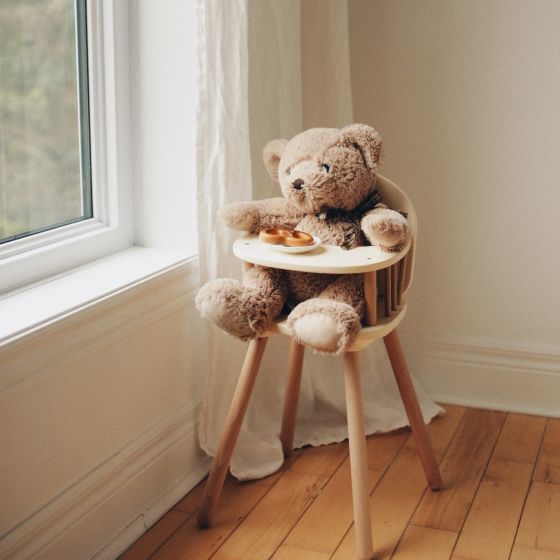
Dolls High chair
Dolls High chair
SKU:KF089
Low stock
Couldn't load pickup availability
Overview
Overview
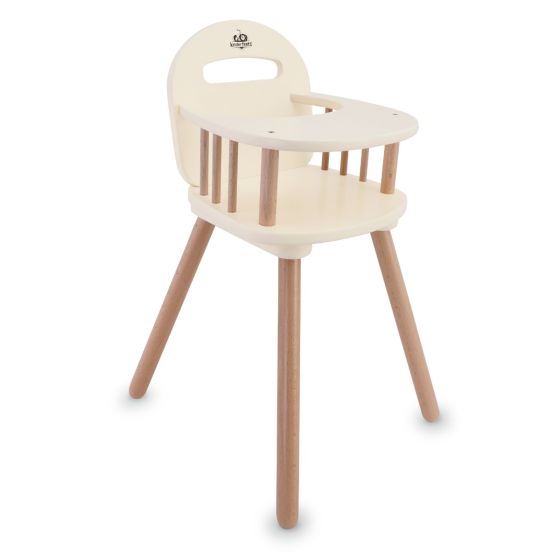
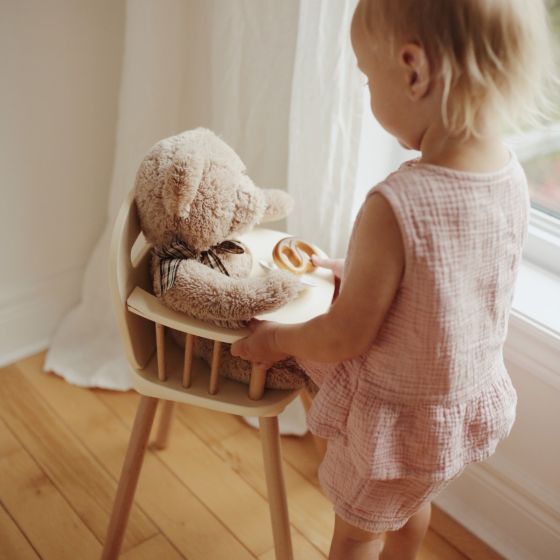
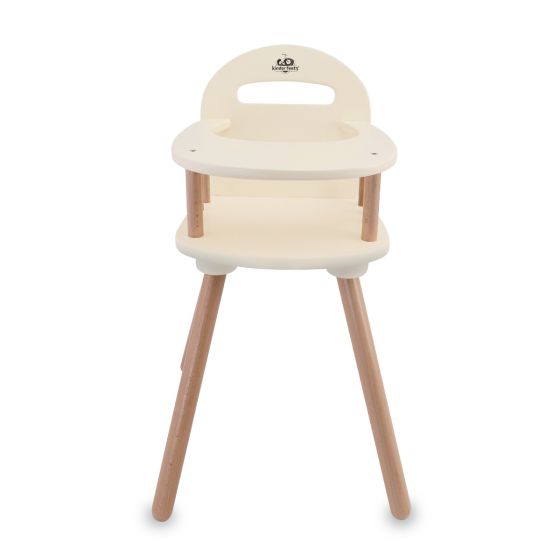
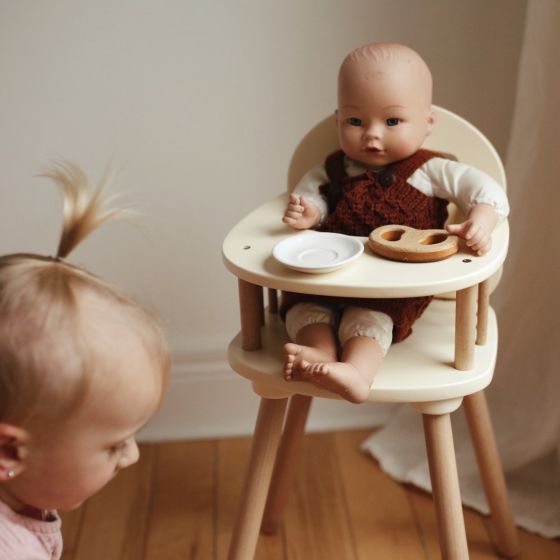
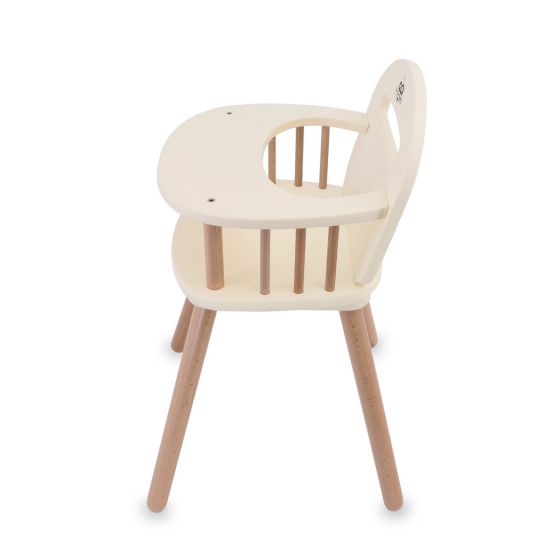
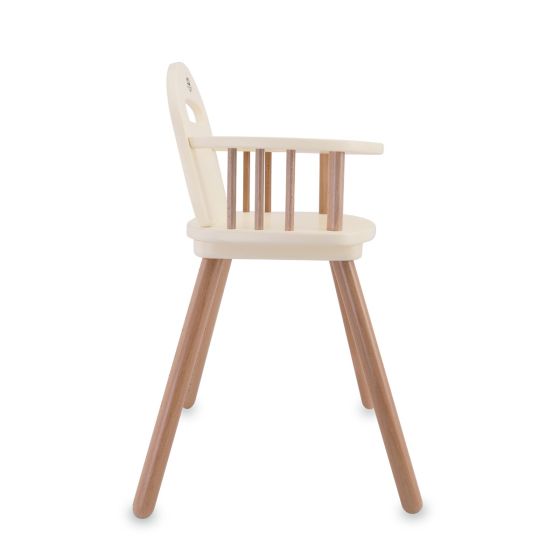
As children engage in role play with the Doll Chair, they develop crucial skills like creativity and self-expression. The chair features a large tray and an easy-to-clean surface, making pretend mealtime or snacktime a simple clean-up.
Crafted from durable, sustainable materials, including birch plywood, solid beech, and engineered wood, the Kinderfeets Doll Chair is built to withstand childhood fun and exploration. The chair is finished with nontoxic, water-based dyes and lacquers, ensuring your child's safety during playtime. Easy to assemble with the included tools, this charming toy high chair will quickly become a new favourite accessory.
Technical Specification
Technical Specification
Delivery and Returns
Delivery and Returns
- Delivery: Free within NZ on orders over $130 (excluding bulky items) or $8 standard shipping
- Returns: Accepted within 14 days of receipt with proof of purchase
- Some items are excluded from returns including sale items, hardware, car seats, prams, monitors and personal items - please click here for the full list.
Share this product
Recently Viewed Products
Related Blogs

Encouraging play time with your little one
Encouraging play time with your little one Playtime with your children is one of the most powerful ways to contribute to your child’s development. It is so important to have these playful interactions with your little one early on in the Newborn stage. To build a connection between you and your Newborn this form of interaction doesn’t require much more than using your face, voice and body to keep them entertained. You will begin to learn more about one another and start to see you baby’s personality come to light. You may feel in the beginning as if this form of play is a little one sided, however through these interactions you are helping with their cognitive and sensory development. They are beginning to build connections in their brains which will help them to understand different words. Beginning by making funny faces and smiling, singing, telling nursery rhymes, and reading to them are all the simplest and most effective ways to interact with baby. Introducing your baby to new materials that they can touch and move around is another great way to stimulate their brains. Allowing them to do things as simple splashing around water during bath time is a great way of helping them to explore their senses. During these early stages of development you are the most important tool for your baby’s entertainment however Dimples also sells a range of interactive toys in various forms to aide when it comes to play time between you and your little one. Toys to add when it is play time. The Jelly Cat books follow delightful little characters through a variety of different stories. Story time with your little one is a great way to interact and stimulate their mind. Changing the pitch and tone of your voice will help with baby making different connections in their brain. Play time can require a lot of energy for baby so you will notice they can quickly get tired. Baby will signal they are getting tired by looking away from you, they may become disinterested or even grumpy. After your baby is rested, they will signal when they are ready to play again by looking towards you, making noises as well was wiggling their arms and legs about. Evolving play time as your child grows As baby grows up, they are learning more every day. They are beginning to develop new skills therefore it is important to evolve your playtime routine. Between the ages of one and two your toddler will begin to explore the world and will begin to gain more of an idea on how things work. During this age it is great to have a balance between structured and unstructured play. Unstructured play is allowing your child to explore what strikes their own interest. It is through unstructured play where you will learn the most about your child and what they are attracted to. Here it is best to take a step back and watch your little one’s imagination grow. Structured play is a great way for you child to learn in a more organised setting, this may involve activities such as swim lessons, musical groups, dance classes. Structured play will help to broaden your toddler’s knowledge and physical skills, this often takes part within a group setting. Play within a social setting is important as it helps to develop social and communication skills as well as teach them about sharing. It is a good idea when buying toys to keep you little one entertained to consider buying toys that are educational, therefore you are ensuring that not only are they having fun but they are also expanding their knowledge. Dimples offers a range of educational yet entertaining toys to make sure you little one’s mind is always learning. The Stacking Ring Tower from Mushie is made from 100% non-toxic BPA and phthalate free plastics, they help to refine bubs organisational and motor skill all while being fun for them to play and engage with. Screen time is an important factor to be aware of. Putting your child in front of a screen is an easy solution when needing to keep your little one entertained so you can get certain tasks done. However, it important to consider balance when it comes to how much screen time you are allowing you child to have. Screens only show a two-dimensional world, it doesn’t offer the same sensory experience that you child will gain when they are out and about. Play time away from the screen allows your child to explore all five senses and use their imagination, you will notice their knowledge broadening quickly the more they venture into the world.
Learn more
The Play Table Packed with Possibilities
Harness the power of early learning with the Stokke® MuTable that grows and adapts just as quickly as your child’s imagination! Play isn’t just fun – it’s also the foundation of learning. A children’s play table gives little ones the perfect space to explore with both hands and minds. From building the MuTable Play House (which comes complete with dolls and toys) to tackling puzzles or inventing animal adventures with play dough, every activity sparks creativity, problem solving, and growth. The MuTable is designed to grow with your child. It comes with three double sided activity boards, each one offering new adventures and challenges as your little one develops. From quiet solo play to lively group fun, there’s something to spark curiosity at every stage: A wooden cover that flips to become a blackboard for doodles, scribbles, and first masterpieces A reversible landscape board featuring a peaceful nature setting on one side and a bustling city scene on the other A bricks board with surfaces for both small and large blocks, giving building projects endless possibilities The MuTable chairs are perfectly sized for little ones to sit comfortably while they draw, build, and create. Cleverly designed to grow with your child, the seat height can be adjusted as they get bigger. When it’s time for a change, simply remove the backrest and the chair transforms into a sturdy stool that can hold up to 100kg. Why a child’s play table is a game changer A fun zone for kidsA child-sized play table and chair set creates a safe, comfortable space just for them. It encourages proper posture while giving little ones their very own place to play, build, and create. Nurtures creativityFrom drawing and painting to building towers or sculpting playdough, a play table becomes the stage for endless adventures. With the MuTable’s colourful, tactile boards, your child can dive into imaginative worlds every day... saving the city, exploring nature, or inventing their own stories. Encourages independenceEasy access to their own table and chairs means children can jump into play whenever they choose. This sense of ownership helps build problem-solving skills, self-sufficiency, and confidence. Brings kids togetherA play table is also a hub for teamwork. Kids can play side by side, sharing space while still enjoying their own chair. This is perfect for collaboration, cooperation, and making memories. Made to lastCrafted from premium natural wood, the MuTable and chairs are built for years of use, backed by a 3-year warranty. Softly curved edges ensure safety, while the award-winning design blends seamlessly with any home. Grows with your childDesigned to adapt as your little one gets older, both the table and chairs come with leg extensions to raise the height as needed. The clever design means the MuTable keeps up with every stage of childhood.
Learn more
Introducing a bedtime routine with your baby
The Power of a Bedtime Routine for Your Baby Simple rhythms that can make bedtime calmer – for both of you In the early weeks with a newborn, life seems to find a rhythm all on it’s own! Feeds, naps, cuddles and nappy changes all blur into one another, and having anything that resembles a routine can feel a little out of reach… Don’t worry – that’s totally normal. As your baby grows, you might start to notice more predictable patterns start to emerge. This can be a lovely time to gently introduce a baby bedtime routine - a simple series of calming steps that helps signal to your little one that that the day is coming to an end. It doesn’t need to be complicated. In fact, some of the best bedtime routines are the simplest ones. Why a Bedtime Routine Matters Babies LOVE familiarity. Repeating the same gentle activities each evening can help your baby begin to recognise that sleep is coming, while creating a comforting transition between the day’s activities and bedtime. A bedtime routine can also be a really special opportunity to slow everything down together, creating a sense of calm, security and connection. And while your bedtime routine will naturally change as your baby grows, those familiar little rituals can continue well into childhood. When Should You Start a Bedtime Routine? There’s no exact age when you have to start. During the newborn stage, feeding and sleeping are naturally quite unpredictable, so there’s no need to worry about a strict schedule. From around six to eight weeks, you will probably notice your baby becoming more predictable, and you can begin introducing a few simple bedtime cues if it feels right for your family. At first, your routine might simply be a fresh nappy, sleepwear, a feed and a cuddle. You can always add more as your baby grows. How to Start a Baby Bedtime Routine There’s no “perfect” bedtime routine - what works beautifully for one family might not work at all for another. The important things are keeping it relatively simple, calm and consistent. Around 20 to 30 minutes is usually plenty, and where possible, try doing the final part of the routine in your babes room so they begin to associate that space with winding down and sleep. Here’s a simple bedtime rhythm you could try: Bath A warm bath (or shower with you!) can be a lovely way to end your day together. Keep the lights soft if you can, slow things down and let bath time become part of the transition from playtime to bedtime. Massage After the bath, a few minutes of gentle baby massage can be incredibly calming and is a beautiful opportunity for some quiet bonding time. You could use a baby massage product such as Scullys Massage Oil, or keep things very simple with Loloma Coconut Oil. Keep the movements very slow and gentle, talking quietly, humming or singing to your baby as you go. Over time, even the smell and feel of their usual massage can become another little signal that bedtime is approaching. A Little Extra Wind Down Support For particularly restless little ones, you may also like to add something like Magnesium Rescue into your bedtime routine. Magnesium can help regulate the nervous system, promote muscle relaxation, and support the production of melatonin. The important thing here is the ritual itself. Whether it’s massage, moisturising or simply a quiet cuddle after their bath, repeating the same calm steps each night is what helps make bedtime feel familiar. Sleepwear Changing into cosy sleepwear is another simple but powerful bedtime cue! Choose soft, breathable layers that are appropriate for the temperature of your baby’s room. Merino is one of our favourites for sleep because it makes layering easy throughout the year. Our baby sleepwear collection includes merino bodysuits, babygrows, gowns and other cosy layers for bedtime. 💛 Dimples Tip: Your baby’s room temperature is much more useful than the season when deciding what they should wear to bed. Feel their chest or back to check whether they’re comfortably warm rather than relying on their hands and feet, which can naturally feel cooler. Feeding For younger babies, a feed will naturally be an important part of bedtime. As your baby gets older, you might like to experiment with offering their final feed slightly earlier in the routine rather than making it the very last thing before sleep. Some families find this helps separate feeding from falling asleep. But don't stress if your baby loves feeding to sleep, especially in those early months. Every baby is different and your routine can evolve gradually. A Story or Song This is one of our favourite parts of a bedtime routine. Your baby certainly doesn’t need to understand the story yet to enjoy listening to your voice. Reading the same book each night, singing a lullaby or simply humming quietly can become a wonderfully familiar sleep cue. Reading together from an early age is also such a lovely habit to establish, and our children’s book collection has plenty of beautiful first books to choose from. One day they'll be choosing the bedtime story themselves - and probably asking you to read it agaaaaiiiin! Cuddles & Goodnight Finish with a cuddle, a quiet goodnight and plenty of reassurance. It sounds so simple, but that same kiss, phrase or cuddle each evening can become one of the most familiar parts of your baby’s bedtime routine. And even if you know you’ll probably be seeing them again in a few hours, it’s still a lovely way to finish the day together. Watch for Your Baby’s Sleepy Cues One of the best bedtime tips we can give is to watch your baby rather than becoming too attached to the clock. Yawning, rubbing their eyes, staring into the distance, becoming quieter or suddenly getting a little fussy can all be signs that your baby is getting tired. Starting your bedtime routine when you notice these early sleepy cues can often make settling easier than waiting until your baby is overtired. Create a Calm, Sleep Friendly Nursery As bedtime gets closer, gradually make the house feel a little quieter. Dim the lights, turn the television off and put away stimulating or noisy toys. These small environmental changes can become part of your baby’s bedtime cues too. A dark room is ideal for sleep, but a gentle night light can be super handy while you're feeding, settling or changing nappies overnight. 💛 Dimples Tip: Once bedtime begins, keep voices quieter and movements slower. Babies pick up on our energy surprisingly well, so turning your pace down can help make the whole room feel calmer. Putting Baby Down for Sleep As you get to know your baby, you may like to experiment with placing them into their sleep space when they're sleepy but still awake. Some babies take to this beautifully. Others need plenty of cuddling, rocking or feeding before they're ready to settle - particularly when they're very young. There's no need to turn bedtime into a battle. The aim of a routine is to make sleep feel calm and predictable, not to achieve a perfect settling technique. What works for your baby today may also be completely different in a few months time. Be Consistent, But Stay Flexible Consistency helps babies recognise their bedtime cues, but flexibility is just as important. There'll be evenings when your baby is overtired. There'll be illnesses, holidays, late dinners, visitors and nights where absolutely nothing goes according to plan. That's parenting! Rather than worrying about following your routine perfectly, think about having a few familiar rituals you can return to wherever you are. A fresh nappy, familiar sleepwear, the same book, a cuddle and your usual goodnight might be all your baby needs to recognise that it's bedtime. If more than one parent or caregiver can occasionally do the bedtime routine, that's great! It helps your baby become comfortable settling with the other special people in their life. And Don't Forget About Mum Once baby is finally settled, it can be surprisingly difficult to switch your own brain off. After spending all day feeding, changing, remembering, organising and looking after somebody else, having a tiny bedtime ritual of your own can be just as valuable. Make a warm drink, put your phone down, have a shower or simply sit somewhere quiet for ten minutes. For mums who enjoy something cosy before bed, Mamma's Milk Bar Moon Milk can become part of your own evening wind-down ritual. Prepare yourself a nice warm cup and enjoy a quiet moment once your little one is settled. Small Rituals With Lasting Benefits Your baby's bedtime routine doesn't need to be elaborate, and it certainly doesn't need to be perfect. It's simply a collection of familiar little moments that tell your baby: the day is finished, you're safe, and it's time to rest. Some nights it might be bath, massage, pyjamas, feed, story and bed. Other nights it might be clean nappy, feed, cuddle... bed. Both count! As your baby grows, the routine will grow with them. The massage might disappear, they'll choose their own pyjamas, and eventually they'll be the one reading the bedtime book. But that cuddle and goodnight kiss? That will still matter - even if one day you have to sneak them in after lights out. ❤️
Learn more
Pretty Brave Shoes: A Guide to Little Feet
Little feet have a lot of growing and exploring to do! From those first little steps to running, playing and discovering the world, choosing shoes that are comfortable and designed to move with them is an important part of every stage.
Learn more