


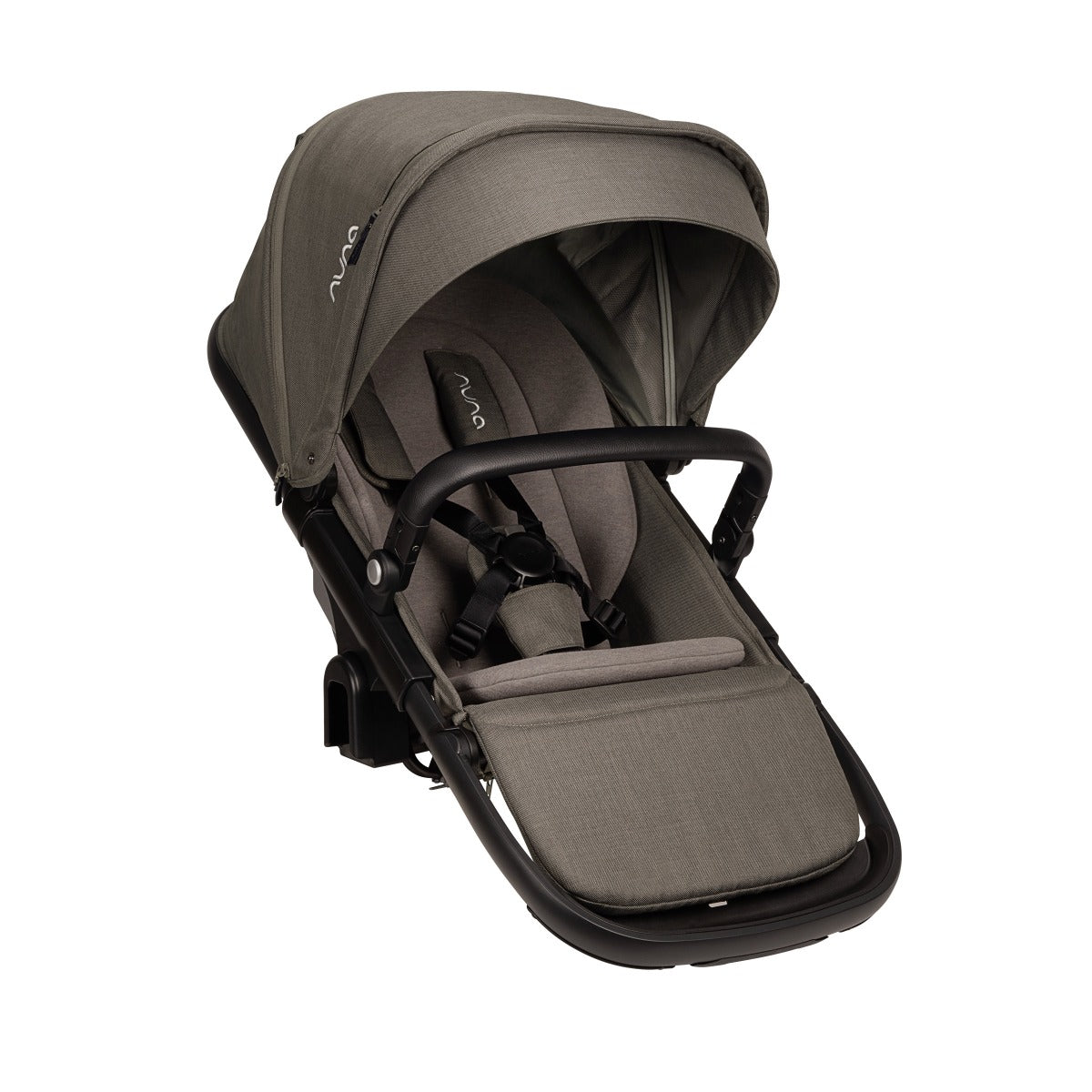
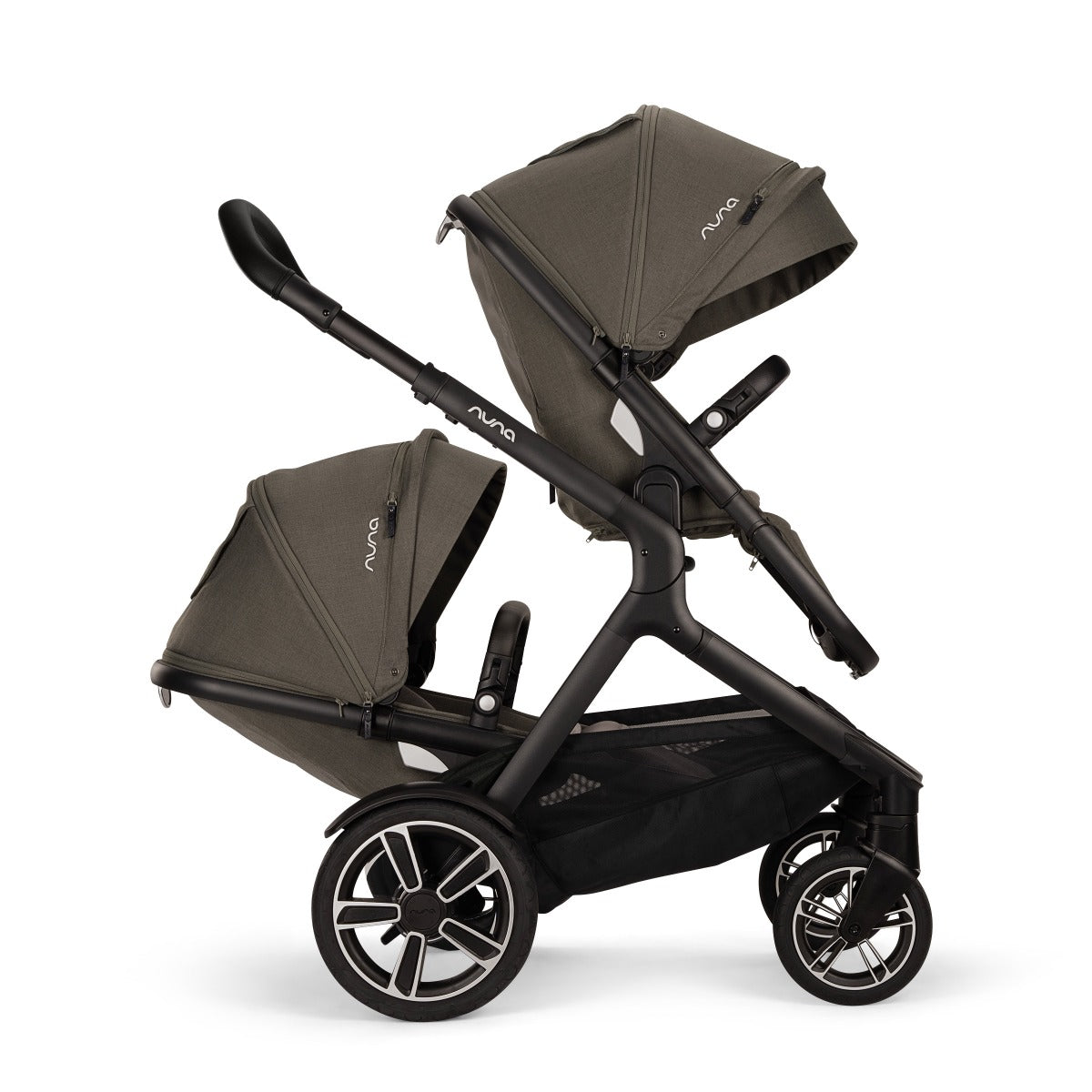
Nuna Demi Next Sibling Seat
Nuna Demi Next Sibling Seat
SKU:NAC17900GRNGL
Out of stock
Couldn't load pickup availability
Overview
Overview
The DEMI next sibling seat in Granite colour helps you reach your next level of adventure. It adds extra seating options to your DEMI next stroller, meeting you on your level and accommodating your shifting needs.
What's Included
What's Included
Technical Specification
Technical Specification
User Guide
User Guide
Delivery and Returns
Delivery and Returns
- Delivery: Free within NZ on orders over $130 (excluding bulky items) or $8 standard shipping
- Returns: Accepted within 14 days of receipt with proof of purchase
- Some items are excluded from returns including sale items, hardware, car seats, prams, monitors and personal items - please click here for the full list.
Share this product
Recently Viewed Products
Related Blogs

Introducing the Nuna NEXT System
One Base, Four Ways to Ride: Grow with Your Baby The Nuna NEXT System is a clever, modular solution designed to grow with your baby from birth to approximately four years old. Built around the innovative NEXT Base, it offers compatibility with four different seats – the CARI Next, PIPA Next, ARRA Next, and TODL Next – giving you flexibility and confidence for every stage of your little one’s early years. Nuna NEXT Base The heart of the system, the NEXT Base offers safe, secure installation with thoughtful features to simplify life on the go. It allows for 360-degree seat rotation, making it easier to get your child in and out. With 10 adjustable ISOFIX positions, it fits a wide range of vehicles, and colour-coded indicators ensure everything is correctly installed. Built-in side impact protection, a load leg, and shock-absorbing materials provide added peace of mind. Nuna CARI Next The CARI Next combines the safety of a car seat with the comfort of a lie-flat carrycot – ideal for healthy spinal development in those early months. It's suitable from birth up to 70cm or 9kg and features a three-point harness, organic jersey mattress, and infant inserts for a snug fit. Compatible with all Nuna strollers, it makes transitions between pram and car effortless. Nuna PIPA Next Lightweight at just 2.8kg, the PIPA Next is perfect for travel, whether you’re hopping in and out of cars or navigating airports. It can be installed with either the NEXT Base or a seatbelt – a great option for taxi travel. It includes an adjustable headrest, dream drape, and automatically deploying side impact protection wings. Suitable rear-facing from 40 to 83cm or up to 13kg. Nuna ARRA Flex The Arra Flex is a lightweight capsule (only 3.9 kg) designed for healthy spinal development with three recline positions, including a relaxed 157° fully flat angle. It installs using either the vehicle seat belt or the NEXT Base. The Merino wool and TENCEL™ insert, high‑strength handle, and no‑rethread harness make it a premium, ergonomic choice for newborns up to 13 kg or around 24 months (40–87 cm). Nuna TODL Next Designed to take over once your baby has outgrown their capsule, the TODL Next is suitable from birth to around four years. It offers five recline positions, six adjustable headrest settings, and an extendable harness. Use it rear-facing from 40 to 105cm (up to 19kg), and forward-facing from 76 to 105cm (also up to 19kg). It keeps your growing child safe and supported at every stage. Experience Ultimate Flexibility with the Nuna NEXT System With four seat options and just one base, the Nuna NEXT System delivers unmatched flexibility, smart design, and long-term value. Whether you're bringing your newborn home from the hospital or transporting a curious toddler, this all-in-one system has you covered. Shop the Nuna NEXT range now at Dimples
Learn more
Stroller Buying Guide: How to pick the right ride for Your Family
Why Choosing the Right Stroller Matters: Essential Tips for New Parents When you have a baby or toddler, a good stroller is essential. It lets you get out of the house and navigate the world with ease. Leaving the house with a newborn can be tricky, so a high-quality, easy-to-use stroller is a lifeline for many new parents. Your stroller is also one of the most expensive baby purchases you’ll make, so it’s important to get it right. You don’t want to invest in a stroller that ends up being too heavy, hard to fold, or difficult to steer. Of course, no one stroller suits every parent. Consider your lifestyle. Will you be navigating bush walks and country paths or be more likely to keep to the footpaths and malls? Before you buy, it’s a good idea to take a look at different models in-store, push them around, fold them down, and open them up to get a feel for how they work. Before you’re overwhelmed by options and terminology - In New Zealand, we tend to use the words pram, stroller, buggy and pushchair interchangeably. Capsule compatibility For new babies, you’ll most likely want a stroller that’s compatible with your capsule car seat. These are particularly handy during the sleepy newborn phase, as they let you move the baby from car to stroller without waking them. Our strollers are compatible with most capsules from well-known brands, such as Maxi Cosi and Nuna. Talk to our in-store team if you want to check on compatibility. Carrycot – or not A detachable carrycot can be incredibly handy in the early stages – from newborn to around 6 months. Lying flat on their back is the best, safest position for newborn baby to be in. If the seat on the stroller you choose has a lie-flat position, a carrycot isn’t essential. But many parents choose them because they simplify life in the first few months. A carrycot attached to your stroller not only allows your baby to sleep comfortably while on the go, it can also be removed and used as a portable bed for a bit of supervised sleep when visiting friends and family. Single vs. Double Strollers: Which is Right for Your Family? When you buy a stroller for your first baby, it can be hard to imagine life with more children. But it’s a good idea to consider your future when making your decision. Some strollers – like the Nuna Demi Next and the Edwards and Co Olive – have the option to add an extra seat for a sibling. If you plan to have two children close in age, this is worth considering. Having twins? Both the Demi next and Olive are tandem strollers, where the seats are not side-by-side but instead tiered. The Nuna Trvl Dubl is a side-by-side option - at just 78 cm wide, its slim profile fits through standard doorways. Another option to consider for an older sibling is a Stroller board that attaches to the back of the stroller. These are great for independent walkers who might tire on a long walk or need a ride to quicken the pace. (Note that these connect to select strollers only.) The right size for your space Strollers come in a range of shapes and sizes. They’re all foldable, but some – like the lightweight Stokke Yoyo – have a more compact fold than others. It even fits in an aeroplane’s overhead locker making it ideal for travel. Travel can be considered a separate stroller category all together – check out our Travel Stroller Blog But even for your everyday stroller, you’ll want to think about storage and transport options. Where will you keep your stroller when you’re at home? How big is the boot of your car? How often will you need to lift it into the car, onto public transport or up stairs? If you can, try the stroller in your boot to see how well it fits. If not, measure the space before you make a decision. How easily the stroller folds is another factor to consider and this is where trying a few models in-store is a good idea. One-hand fold mechanisms are incredibly convenient, especially when your arms are full with a little one. If you think you’ll be lifting your stroller frequently, opt for a lightweight model. Which wheels are best? For a while there, three-wheel strollers seemed to be the only option. Now, four-wheel models are having a resurgence in popularity. Three-wheel strollers are typically thought to be easier to steer, especially with one hand – which can be useful if you’re carrying an upset baby and pushing a pram at the same time. Four-wheel strollers, tend to be more compact, making them easier to manage in shops and cafés. They also tend to fold more neatly for easy storage. Tyre type is another factor to consider - larger wheels with foam-filled or inflatable tyres tend to offer better suspension, which is more comfortable for your baby on rough terrain. Whereas smaller swivelling wheels are easier to manoeuvre around busy places and crowded shops For the best of both worlds, the four-wheeled Nuna Mixx has tough, foam filled tyres and boasts easy one-handed steering. The wheels on the New Nuna Swiv offer something unique – with a 360 degree swivel so you can navigate small spaces with side-to-side ease. Forward or back? Forward-facing or rear-facing? If you’ve never bought a stroller before, it can be hard to know what you’ll prefer. Fortunately, this choice is more about preference than safety or practicality. Newborns are naturally drawn to their parent's faces, and a rear-facing stroller lets you interact and keep an eye on them as you go. Then as they grow up, forward-facing gives them a chance to look out on the world around them. Most everyday strollers we sell have convertible parent-facing/world-facing seats so you have both options in one. Other things to consider Comfort features for your little one - like padded seats, adjustable recline positions and good suspension. How comfortable is the handle height? Adjustable handle height can be good for parents of different heights. Does the stroller offer good storage underneath for your baby essentials, nappy bag, and shopping? Fun and functional extras These days, strollers have a huge range of add-ons and accessories – rain and shade covers, parasols, cup holders, snack trays and compatible nappy bags. Choose what’s best for you As with any big purchase, buying a stroller is about working out what’s most important to you, and finding a model that best fits your needs and budget. If you need help finding the right stroller for your family, you can take our Quiz You can also visit one of our stores, talk to the in-store team and take some of our display models for a spin. Check out our range here.
Learn more
Making a Baby First Aid Kit
10 essentials for your baby’s first aid kit Be ready for emergencies and trips away You’ve Pinterested your dream nursery, sussed the decor and ticked off all the big purchases like a cot, pram and capsule. The reality of being responsible for a tiny person can take a while to sink in, and usually, a first aid kit for your baby isn’t top of mind. While you might have a couple of items like a thermometer and tiny nail clippers on your radar, a comprehensive first aid kit will set you up for years to come. It’s also easy to pop in your bag for trips away. Be sure to include these ten essentials: Thermometer – a thermometer you can trust can give you so much assurance. A non-contact thermometer like the NUK Baby Flash Thermometer makes the process super easy, and can even be used to see how hot your baby’s bath or food are too! Nasal decongestant and saline spray – unfortunately, it's only a matter of time before your little one gets their first cold and it usually means trouble feeding and sleeping. Since it’s a good few years until they can learn to blow their nose (usually around aged 2), a nasal decongestant combined with a saline nasal spray can help de-stuff and make feeding and sleeping a little easier. Nail clippers – cutting tiny nails for the first time can be a truly frightening experience and even worse, they seem to grow at lightning speed! Having some specific clippers on hand to keep nails short will prevent him from scratching himself. Emergency contacts – avoid scrambling on your phone by keeping important numbers like PlunketLine , Healthline and your local GP in an easy-to-find spot in your first aid kit – consider taping them to the inside of the lid. Pain relief – some form of over-the-counter pain relief such as liquid paracetamol or ibuprofen in your baby first aid kit can come in handy at all hours of the day or night. While you should always consult a professional (either your GP or an after-hours service) before administering any type of medicine, having this at the ready for fevers and minor aches and pains saves a trip to the pharmacy. An oral syringe – getting medicine into a baby can be tricky. The Haakaa Oral Syringe is an affordable, reusable syringe that is easy to use and easy to clean. Tweezers – even babies can get splinters! Rubbing alcohol swabs – grab a stash of these sterilising wipes to keep thermometers, tweezers and scissors clean. Plasters and antiseptic spray – even before they’re on the move, cuts and scrapes can happen. When they start moving, cuts and scrapes seem to happen every day! Disinfecting these and covering them with a small plaster will help them heal much faster. Gas relief drops – when burping doesn't seem to cut it, try infant gas relief drops. Learn more – take a course In addition to a well-stocked first aid kit for your baby, going along to a course specifically designed for dealing with littlies in an emergency is a great investment. Organisations like Plunket and Red Cross regularly hold affordable short courses designed to give you the confidence and basic skills needed to deal with emergencies until help arrives.
Learn more
Pretty Brave Shoes: A Guide to Little Feet
Little feet have a lot of growing and exploring to do! From those first little steps to running, playing and discovering the world, choosing shoes that are comfortable and designed to move with them is an important part of every stage.
Learn more