




Cloud 3 Stage Activity Centre
Cloud 3 Stage Activity Centre
SKU:SH303326
Low stock
Couldn't load pickup availability
Overview
Overview
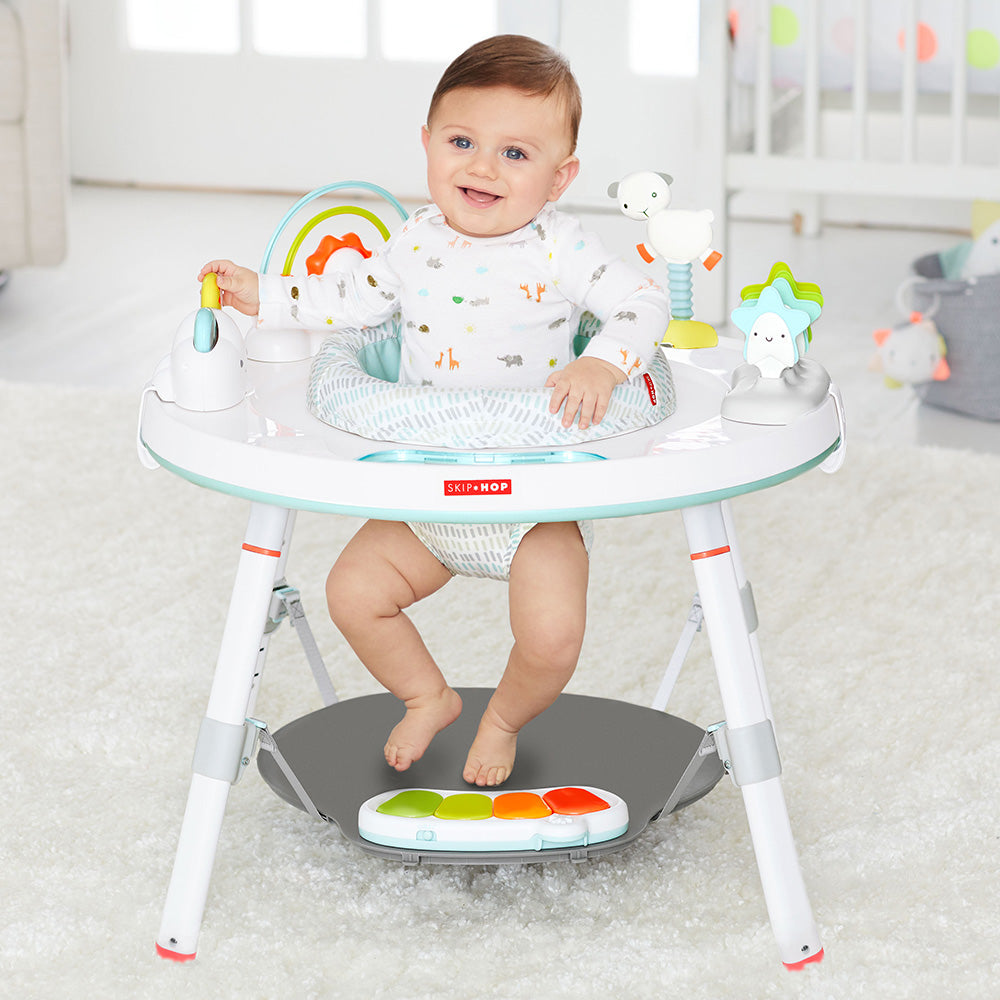
Designed in collaboration with a pediatrician, the Skip Hop Explore & More Activity Centre encourages a “whole body” approach to play, learning, and development.
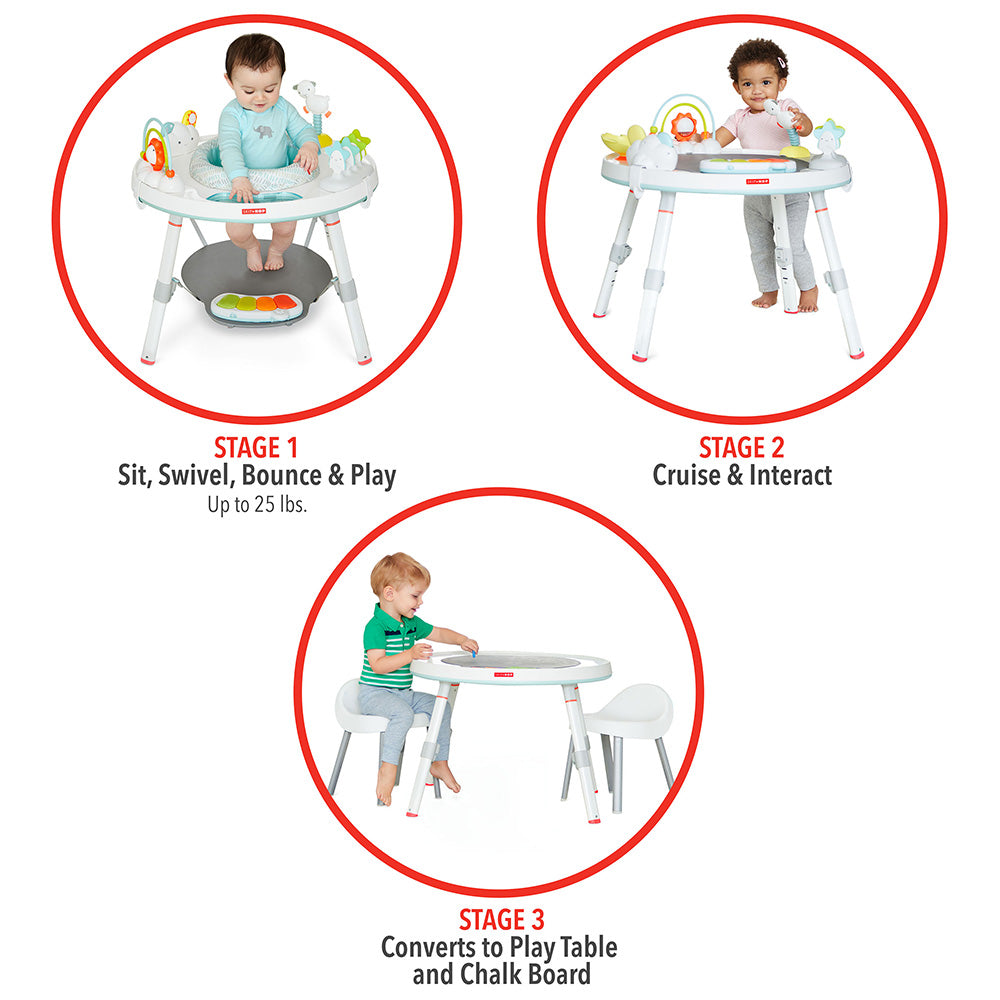
Every feature has been thoughtfully created to support your baby’s stage of growth and curiosity, from the early months of sitting and bouncing, through to cruising and creative play as toddlers. The unique Discovery Window™ allows your baby to see their feet while they play, helping them understand cause and effect.
Clip on toys can be positioned anywhere to match your baby’s abilities, while the musical light up piano offers three engaging play modes. As your child grows, the activity centre easily converts into a sturdy play table with a smooth surface for drawing, crafts, and more.
With its clean, modern design and long lasting versatility, this is one piece of baby gear that evolves beautifully with your little one.
Key Features
Key Features
Technical Specification
Technical Specification
User Guide
User Guide
Delivery and Returns
Delivery and Returns
- Delivery: Free within NZ on orders over $130 (excluding bulky items) or $8 standard shipping
- Returns: Accepted within 14 days of receipt with proof of purchase
- Some items are excluded from returns including sale items, hardware, car seats, prams, monitors and personal items - please click here for the full list.
Share this product
Recently Viewed Products
Related Blogs

Toys for Every Age & Stage
Choosing Toys or Gifts They'll Love What might look like messy play or mindless rattling is actually serious business for your baby. From day one, they’re learning through movement, touch, sound, and – yes – smearing food on every available surface. Play is how your little one makes sense of the world, so choosing toys that match their stage of development can really help them thrive. Here’s a simple guide to what kinds of toys to look out for during each phase of your baby’s exciting journey. 0–6 Months: The First Explorer Your newborn may be tiny and still figuring out the basics, but their brain is already hard at work. Even in the early days, babies can recognise voices and slowly begin to track faces (though not quite in focus at first). At this stage, look for toys with high-contrast patterns and simple shapes – a mobile over the cot is ideal for visual stimulation and encouraging early motor skills as they start to reach out. A fun activity gym is amazing for development and early hand eye coordination as well. Suckling is another important reflex to support, so having safe teething toys can help build strength in their mouth muscles – which later supports chewing and speech. We stock a super fun range of teething toys at Dimples. Babies also love the sound of your voice, so don’t hesitate to chat away, sing, or start reading aloud. Soft crinkly activity books are a great addition as they are very visually interesting to your little one, as well as a high contrast board book. 6–12 Months: The Little Scientist As your baby gets stronger, tummy time becomes key for building neck and upper body strength. Use an engaging play mat to make tummy time fun and motivating. Around six months, proper teething often begins, so toys they can safely chew are your best friends – easing discomfort while supporting oral development. At this stage, babies are all about discovery – they’re working on sitting up, crawling, grasping, and even pulling themselves to stand. Toys that support these physical leaps are ideal. Look for soft balls to encourage rolling and crawling, stacking toys for building early coordination, and activity cubes or busy boards with things to twist, slide, and push. Toys that respond with sound or light when touched can also be hugely exciting (and educational), helping babies connect cause and effect. And don’t forget the classics – things that crinkle, rattle, or squeak are still crowd-pleasers and support sensory development beautifully. 12–18 Months: The Creative Genius You’ve made it through the first year – what a milestone! At this age, many little ones are eager to master walking. A sturdy walker toy can support their balance and leg strength as they wobble around with pride. Fine motor skills also start taking centre stage. Now that your little one is on the move and growing more curious by the day, toys that support exploration, movement, and problem-solving are ideal. Push-and-pull toys like the classic Buzzy Bee or a cute pull along toy are perfect for developing balance and coordination as they become more confident on their feet. Large building blocks or stacking rings help improve fine motor skills and spatial awareness. This is also a great age for toys that encourage interest in pretend play – think toy phones, baby dolls, animal figurines, or mini tea sets. Musical instruments like tambourines, shakers, or xylophones are not only fun but also help with rhythm and sensory processing. Chunky crayons are also great for encouraging scribbles – and those early masterpieces might earn a spot on your fridge. As their vocabulary starts to form and their understanding of language grows, this is the perfect time to keep those conversations flowing. Reading together, singing songs, and chatting about what you’re doing throughout the day helps build their language skills and connection to you. Even if they’re not saying much just yet, they’re absorbing it all – storing up words, rhythms, and tones to use later. 18 Months - 2 Years: The Big Personality Welcome to toddlerhood – where the big personality really comes through! At this stage, your child is becoming more independent, showing clear preferences, and beginning to express their likes and dislikes. You might notice them choosing to play solo more often, or forming strong attachments to certain toys, books, routines, or even characters from stories and shows. This is also when pretend play really starts to blossom. Role-playing everyday scenarios – like cooking dinner, feeding a doll, or making a pretend phone call – is not only adorable, it’s an important part of social and emotional development. A toddler-sized kitchen set is a fantastic toy at this age, encouraging imaginative storytelling and helping little ones mimic the world they see around them. One of these Kitchen Helpers let your toddler safely join you at the counter, fostering independence and fine motor skills. By involving them in simple kitchen tasks, you’re nurturing their creativity and boosting their confidence in a hands-on way. Beginner puzzles are also a great choice to foster problem solving skills – Particularly ones with familiar objects such as this zoo puzzle, or this vehicle puzzle. At this age, play becomes more purposeful – every stack, stir, and story is helping your little one make sense of the world and build skills for the future. 3+ Years: The Explorer Preschoolers see the world with fresh eyes – everything is fascinating! Toys at this age are more than entertainment; they support learning, spark imagination, and help your child make sense of their world. By three, many children are ready for smaller pieces, but it's still important to supervise, just incase. Preschoolers play hard – building, crashing, dragging, shaking, and repeating – and quality toys will last longer and often perform better. Children this age are also starting to enjoy more meaningful creative and open ended activities. Here are a few of our favourite picks for the bigger kids ages 3+ Washable Colouring in Tablecloth - Great for sole play or a group activity. Best of all it can be reused over and over again! Balance Bike Start off with the trike if your little one is new to riding, and then it transforms into a balance bike! Cash Register - Perfect for pretend grocery shops or café setups, this beautifully crafted toy helps children explore early math, communication, and social interaction Playdough - Little monkeys love squishing, rolling, and making lots of different fun objects Connetix - Inspire creativity with the countless ways these sets can be built Go at Their Pace Every child develops at their own rhythm. Some skip crawling and go straight to walking. Others might take their time with speech while still communicating effectively in their own way. Some might be into different things than their peers - and that's okay! It’s tempting to compare, but there’s a very wide range of normal. If you’re ever concerned, have a chat with your GP or child health nurse. You're doing an incredible job raising a one of a kind little person. And remember – the best toy of all is you. Your love, voice, and presence are what your baby cherishes most ❤️
Learn more
Baby Swimming Lessons: When to Start & What to Expect
Baby Swimming Lessons: Building Water Confidence from an Early Age Living in New Zealand means water is never far away! We've got beaches, we've got lakes and we've got rivers, not to mention our swimming pools and backyard water play. Learning how to feel confident and safe around water is an important life skill for our Kiwi kids. Introducing your little one to the water from an early age can be a lovely experience for the whole family. Swimming lessons can support coordination, movement and confidence, while also giving parents and caregivers a special opportunity to have fun, connect and learn together. Most importantly, early positive experiences around water can help lay the foundations for lifelong water safety. Water Safety New Zealand says drowning remains a leading cause of death for New Zealand children aged under five, making active supervision and age appropriate water skills incredibly important. Start with water confidence Your baby's first introduction to water doesn't need to happen at a swimming pool. Bath time is a great place to start. Allow your baby to enjoy splashing, kicking and gradually becoming familiar with water around their face and body. As they become more comfortable, trips to the local pool can introduce them to a completely different environment with new sounds, sensations and movements plus a whole lot of fun! The aim at this stage isn't to turn your baby into a swimmer. It's simply about helping them feel happy and secure around water. When can babies start swimming lessons? There isn't one set age that suits every baby or every swimming programme. Some specialist swim schools offer parent and baby classes from around three months, while others begin from six months. The best option is to check the starting age and requirements of your chosen swim school. Finding swimming lessons in New Zealand If you're looking for somewhere to start, there are plenty of great options. Dean Greenwood Swim School has several Auckland locations and offers programmes ranging from babies through to adults. Hilton Brown Swimming offers lessons for babies, children, teenagers and adults across locations in Auckland, Waikato, Hawke's Bay and Manawatū. Their infant programme focuses on water confidence, movement, safety awareness and introducing skills such as floating. Many local leisure centres and community swimming pools also offer learn-to-swim programmes for babies, preschoolers, school aged children and even adults, so it's totally worth checking what is available close to home. What happens at baby swimming lessons? Baby swimming lessons are usually much more about water familiarisation and confidence than traditional swimming. A parent or caregiver will generally get into the pool too, helping baby feel secure while the instructor introduces activities through play, songs and movement. Depending on your baby's age and the programme, lessons may gradually introduce skills such as: Becoming comfortable with water around the face and head Kicking and moving through the water Floating and rolling Breath control and gentle submersion Moving towards or returning to a safe position Learning to feel calm and confident in the pool It's also valuable learning for parents. You'll become more confident handling your baby in the water and learn ways to continue practising positive water experiences together. And remember - swimming lessons build skills and confidence, but they never replace active adult supervision around water. Tips for making swimming lessons easier Give yourself plenty of time Getting yourself and a baby changed can sometimes take longer than the swimming lesson itself! Arrive early enough that you don't need to rush. Family changing rooms are especially helpful, and if your pool allows strollers inside, having somewhere safe for baby to sit while you get changed can make things much easier. Pack for afterwards Swimming can be tiring, particularly for little ones. Have everything ready for a feed or snack afterwards depending on your baby's age. Keep them warm Moving from a warm swimming pool into a cooler changing room or outside air can feel like a big temperature change. Have a cosy towel and dry clothing ready so you can get your little one comfortable quickly. Bring another pair of hands If you're taking more than one child to lessons, another adult can make changing, feeding and getting everyone safely to and from the pool considerably easier. It can totally be done with one caregiver if you're game... but four hands are easier than two. Don't worry if every lesson isn't perfect Some days your baby might love the pool. Other days they may be tired, hungry or simply not interested. That's completely normal. Building water confidence is a gradual process, so keep the experience positive rather than trying to push through when they've had enough. What to pack for baby swimming lessons A little preparation makes getting in and out of the pool much easier. Baby swimwear Start with comfortable baby swimwear and swimming essentials suitable for your little one's age and the type of swimming you'll be doing. Our new Baby Swimwear Collection brings together the swim essentials you need for trips to the pool, beach and summer days by the water. Shop our full range of Baby Swim Essentials here Swim nappies Most pools require babies who aren't toilet trained to wear an appropriate swim nappy, so check your swim school's requirements before your first lesson. A warm towel A soft towel or hooded towel is ideal for wrapping baby up as soon as they leave the water. A change mat Pool changing rooms aren't always the easiest place to change a baby, so having your own change mat can be incredibly useful. The Purely Baby Disposable Change Mats are particularly handy for swimming lessons because you can create a clean changing surface and simply dispose of the mat afterwards. Don't forget Pack a few extra essentials too: Dry clothes Spare nappies Wipes A wet bag or waterproof bag for wet swimwear Milk, a bottle or snacks depending on baby's age Your own swimwear and towel - surprisingly easy to forget! Water safety always comes first Swimming lessons are valuable, but no swimming lesson or floatation device can replace close adult supervision. Water Safety New Zealand recommends keeping babies and young children within arm's reach whenever they're in or around water. This applies everywhere - the swimming pool, beach, bath, paddling pool, lake or river. Stay focused on your child rather than relying on lifeguards, older siblings or floatation toys to supervise them. It's also important to look for potential water hazards around your own home. In New Zealand, residential pools that can hold water to a depth of 400 mm or more are subject to requirements for physical barriers designed to prevent unsupervised access by children under five. Enjoy the water together Learning to swim is a journey, and it begins long before your child is swimming independently. Positive bath times, trips to the pool and regular swimming lessons can all help your little one develop confidence and respect for the water while creating plenty of special memories along the way. Keep it fun, follow their pace and, above all, stay close whenever water is around.
Learn more
Best Travel Strollers in NZ: Lightweight & Compact Picks for 2026
Travelling with a baby or toddler is much easier with a lightweight, compact stroller. Whether you’re navigating airports, hopping on and off trains or exploring a new city, the right stroller can make all the difference. We’ve compared some of the best travel strollers available in New Zealand, including the Stokke YOYO3, Nuna VIAA CABN, Nuna TRVL dubl and Edwards & Co Lucci. Why Choose a Travel Stroller? Everyday strollers tend to be packed with extra features that are great for everyday usage but can make them more bulky. When it comes to travel, compact and lightweight is the way to go. Travel strollers are designed to be easy to carry, fold, and store – perfect for life on the move. What to Look For Foldability: Look for a stroller that’s easy to fold – ideally one-handed. Weight: A lighter stroller is easier to lift into car boots, overhead lockers, or up stairs. Compact Size: Check the folded dimensions – the smaller, the better for travel. Portability: Is there a carry strap or handle? This makes a big difference on the go. Manoeuvrability: Smooth steering and good suspension can help you navigate tight spaces and bumpy pavements. Comfort: Reclining seats, padded cushions, and a sun canopy keep your little one happy on the move. Storage: A basket underneath for snacks, nappies, and must-haves is a handy bonus. Accessories: Travel bags, rain covers, and cup holders can all add extra convenience. Plane Travel Suitability: If you want to carry your stroller onboard, check its folded dimensions. IATA (the International Air Transport Association) suggests 56 x 45 x 25 cm for carry-on. But cabin baggage and stroller rules vary between airlines, routes and aircraft. Always check directly with your airline before flying. You may also be able to use your stroller right up to the gate and have it stored in the hold – ask your airline in advance. Even strollers designed to fit in overhead lockers may need to be gate-checked on full flights. Our Top Picks for Travel Strollers STOKKE YOYO3Weight: 6.2 kg (6+ pack)Folded Size: 52 x 44 x 18 cm The YOYO3 folds with one hand and opens in seconds – true to its name. Its compact size makes it a favourite for airline travel, and it’s compatible with a bassinet, newborn pack, or capsule. The slim frame and smooth steering are ideal for city life, and it’s customisable with colour/seat packs in a range of colours. It even has a padded shoulder strap so you can carry it hands-free. Perfect for: Urban adventures and families who travel often. NUNA VIAA CABN Weight: 7.6 kgFolded Size: L 20 x W 42.5 x H 62 (52 without armbar) cm The Nuna Viaa Cabn is compact, lightweight and designed to meet IATA cabin guidelines, fitting into the overhead locker. With a quick, compact fold, smooth manoeuvrability and all the premium details you expect from Nuna, it’s ready for airport dashes, city exploring and everyday outings. Perfect for: Those who want a high-end, luxurious stroller with all the comfort of a full-size model. NUNA TRVL DUBLWeight: 12.8 kgFolded Size: L 41 x W 78 x H 74 cm Travelling with two? The Nuna TRVL dubl offers the convenience of a travel stroller in a side-by-side design. At 78cm wide, it's designed to move through standard doorways and narrow spaces, while each seat reclines independently - handy when one child wants to nap and the other wants to see the sights. It folds one-handed, stands on its own when folded and is surprisingly lightweight for a double stroller. Perfect for: Families travelling with twins, a baby and toddler, or two young children. EDWARDS & CO LUCCIWeight: 7.3 kgFolded Size: 57cm H x 46cm W x 24cm D The Lucci’s one-handed auto-fold makes travel easy. Ergonomic seat with 3 recline options including lie-flat. Meets IATA guidelines for the overhead plane lockers in Travel Mode (wheels/bumper removed). Perfect for: Families looking for a lightweight, compact travel stroller that won’t break the bank. Shop stroller accessories Which Travel Stroller Is Right for You? The best travel stroller depends on where you're going and how you'll use it. Flying frequently? Folded size and weight may be your priority. Exploring cities? Look for smooth steering, suspension and a comfortable recline. Travelling with two children? A lightweight double stroller can make getting around much easier. Shop our range of strollers online, or visit Dimples Newmarket or Christchurch to fold, carry and test-drive them for yourself. Our team can help you find the best stroller for your family and your next adventure. Happy travels! FAQs Can you take a travel stroller on a plane?Often, but it depends on the airline, aircraft and stroller's folded dimensions. Some compact strollers may be accepted as cabin baggage, while others need to be checked or left at the aircraft door. What size stroller fits in an overhead compartment?There isn't one universal size. Many airlines use cabin-bag dimensions around 56 × 45 × 25cm as a general reference, but individual airline rules apply. Can a travel stroller be used as an everyday stroller?Yes. Many modern travel strollers offer features such as reclining seats, good suspension, storage baskets and sun canopies, making them practical for everyday use as well as holidays. And they don't take up too much space in your car boot. However you should consider how much storage and all-terrain capability you need before choosing one as your main stroller. Travel strollers typically have smaller wheels making a slight less smooth ride. Can you use a travel stroller from birth?Some travel strollers are suitable from birth thanks to a lie-flat seat, newborn insert, bassinet or compatible infant capsule. Always check the manufacturer's age, weight and configuration guidelines for the specific stroller.
Learn more
How to Choose a Car Seat
Which is the right seat for your little one? Choosing a car seat can feel overwhelming. Your choice is more than just a purchase; it's an investment in your child's safety and comfort. Are you looking for a capsule, a convertible, a booster seat or an all in one? And how do you know where to start? Buckle up as we lay out the different types of seat to help you figure out what’s right for your whānau. Capsule Car Seats Best for: Newborns to approx. 12 months (up to 13kg depending on the brand)What they are: Rear-facing, portable infant car seats that easily lift in or out of the car. Most of the capsules we sell clip onto a base (sold separately) that stays installed in your car. Others have a baseless install either by Isofix or car seatbelt. Why parents love them: If you choose a capsule that's compatible with your stroller, you can transfer your sleeping baby for car to stroller without waking them They're easy to carry with a handle Most work with a base that stays in the car - simple click and go. Things to consider: You’ll likely only use it for the first year. Weight matters – some are much easier to carry than others. Great options to compare: Nuna Pipa Next – lightweight (only 2.8kg) and super portable. Nuna Arra Flex – features three recline positions - including a near-flat 157° recline. Maxi Cosi Pebble 360 Pro – ergonomic recline, 360° base for easy loading. Nuna Pipa Urbn – ideal for swapping between cars or rideshares, it has built-in Isofix, no base required. Nuna Cari Next – this one is in a category all of its own - both a carrycot and car seat. The Cari has a three-point harness and connects to the Nuna Next Base in the car. Baby can lie peacefully at a full recline - the best position for a developing spine. The Cari can also connect to your stroller so you can move from home to car to pushchair without interrupting their sleep. Convertible Car Seats Best for: Birth to approx. 4 years (or longer depending on the seat)What they are: Seats that start rear-facing and convert to forward-facing as your child grows. Why parents love them: Cost-effective – you’ll use it for several years. Often more spacious and padded than a capsule. Things to consider: Not portable – it stays installed in the car. Some seats rotate on a base, so you can turn them towards the door to make buckling in easier Check your car - do you have Isofix points or do you need a seat that can be seat belt installed? Great options to compare: Nuna Todl Next – works with a rotating base for easy access. Nuna Rylo – built-in 360° rotation, no separate base required. Nuna Rava Next - seatbelt installed, and known for its simple installation, generous legroom, and plush comfort. Ideal for families who want a long-lasting seat without the need for a base or Isofix. All-in-One (Convertible + Booster) Best for: Birth to approx. 11–12 yearsWhat they are: Car seats that transition from rear-facing to forward-facing to booster seat. Why parents love them: One purchase that lasts for years. Ideal for parents who don’t want to keep upgrading. Things to consider: Not portable – stays in the car. No rotating options available. Great options to compare: Nuna Exec Next – rear-facing from birth, forward-facing to booster mode up to 148cm / 50kg. Britax One4Life Slim – rear-facing to booster mode up to 160cm / 54.4kg. Booster Seats Best for: 4+ years (or as per height and weight guidelines)What they are: Forward-facing seats that position the vehicle seatbelt properly across your child. Why parents love them: Simple to use and install. Gives older kids a good seat height and a view out the window. Often more compact. Things to consider: Only suitable once your child meets minimum size requirements. Great options to compare: Nuna Lumn – harnessed car seat that transforms to a belt positioning booster Nuna Aace Lx – adjustable height, recline, and side impact protection. Britax Skyline – affordable, comfortable, and lightweight. Axkid Up – has a patented raisable seat to elevate your child to better align with the vehicle seat belt Other Key Considerations When Choosing a Car Seat Car fit: Not all seats fit all vehicles – check for compatibility, especially if fitting multiple seats. Ease of use: Consider rotating seats if you struggle with lifting your child in and out. Installation method: Isofix is quicker and easier, but seatbelt installs offer flexibility for older vehicles or travel. However Isofix does have lower weight restrictions (generally around 18kgs). If a seat allows for both Isofix and seatbelt installation it can pay to opt for Vehicle Seat Belt installation as it eliminates having to switch installation method once weight limits are reached. Longevity: Weigh up whether you want a dedicated seat for each stage or one that adapts as your child grows. Need Help Choosing? Our Car Seat Technicians are here to help you make the best choice for your family. Visit a Dimples store and get personalised advice, try seats in your car, and enjoy our free professional car seat fitting with purchase. You can also take our handy quiz to find out what might work best for you. Whichever seat you choose, safety and comfort come first – and we’re here to make sure you get both. Shop the full car seat range online or in-store today.
Learn more