
Tummy Time: Why It Matters (and How to Make It Easier)
Tummy time is one of those things you hear about early on in parenthood - right up there with sleep routines, feeding cues, and learning to drink a hot cup of tea while it's still warm! It’s recommended for your baby’s development, but the reality is, many little ones aren’t too thrilled about it at first. The good news? There are ways to make it easier for both of you.
Before we get into the tips and tricks, let’s take a quick look at what tummy time actually is, and why it matters so much.
Why is tummy time important?
When your baby spends time on their tummy (while awake and supervised), they’re doing more than just working those tiny muscles. Tummy time plays a key role in helping to:
Strengthen their neck, shoulders, arms, and back
Support healthy motor development (like lifting their head, rolling over, and eventually crawling)
Prevent flat spots on the back of their head (also known as positional plagiocephaly)
It’s also laying the groundwork for milestones down the track. Chiropractor Dr Ainslee explains that, “Research has confirmed that tummy time not only helps children meet gross motor milestones like crawling, walking, and jumping. It also supports their social, cognitive, and learning development later in life.”
So, what counts as tummy time?
Tummy time doesn’t always have to mean placing your baby directly on the floor. It’s any time your baby is tummy-down while they’re awake and being supervised. Dr Ainslee puts it beautifully - it’s about “handling a baby in a way that naturally facilitates the development of interactive head control.”
That means there are lots of ways to fit tummy time into your daily routine - even in those early newborn weeks.
Gentle ways to start tummy time
If your baby isn’t loving tummy time just yet, that’s okay. Start small and keep it gentle.
Chest-to-chest: One of the easiest and most comforting ways to begin. Lie back and place your baby tummy-down on your chest. Skin-to-skin adds even more benefits.
Football hold: Hold your baby tummy-down along your forearm, with your hand supporting their tummy and your other hand under their head. Keep them close - this one’s great for newborns.
Across your lap: Another simple option that gives your baby some tummy time and lets you sneak in a burp or a cuddle.
Baby expert Dorothy Waide encourages parents to start early, even just for a few seconds at a time. “The sooner you start, the quicker baby will adapt. If you begin with short bursts after each nap, you’ll soon find your little one starts to enjoy it more and more.”
Making tummy time fun
Tummy time doesn’t have to feel like a chore - for either of you. The more engaging it is, the more likely your baby will stick with it (and enjoy it too!). Try:
Getting down to their level: Lie on the floor beside them, chat, sing, or just keep them company.
Using mirrors or books: A mirror or a high-contrast board book placed in front of your baby can be fascinating for those curious eyes.
Sensory toys: Toys like this Farm Activity Playmat are designed to make tummy time more exciting. It includes a removable cushion, a flip-up mirror, a delightful 3D farm animal, a squeaker animal, a teething toy, and an array of textures to touch and feel, making it an ideal companion for endless fun and learning.
Supportive gear that can help
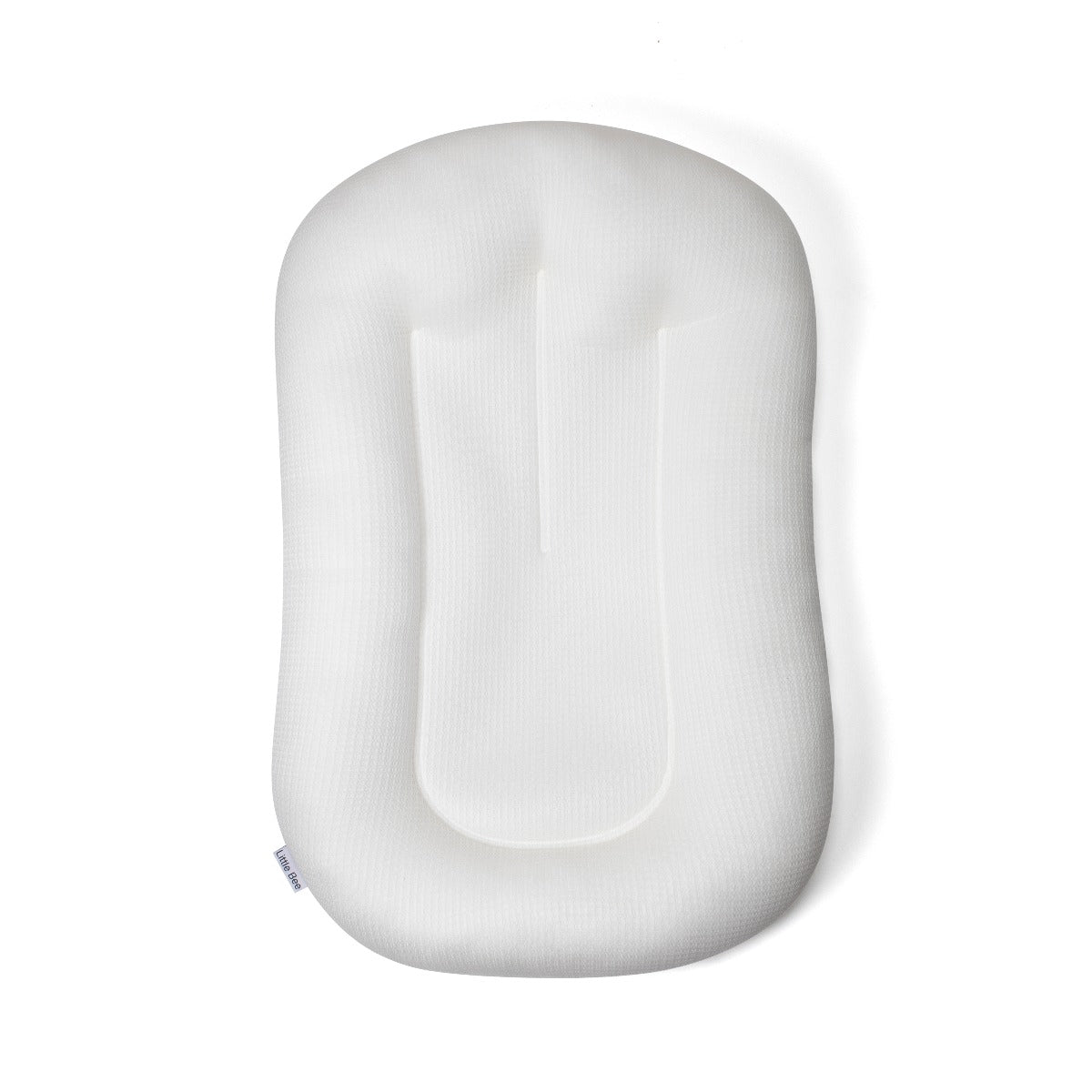
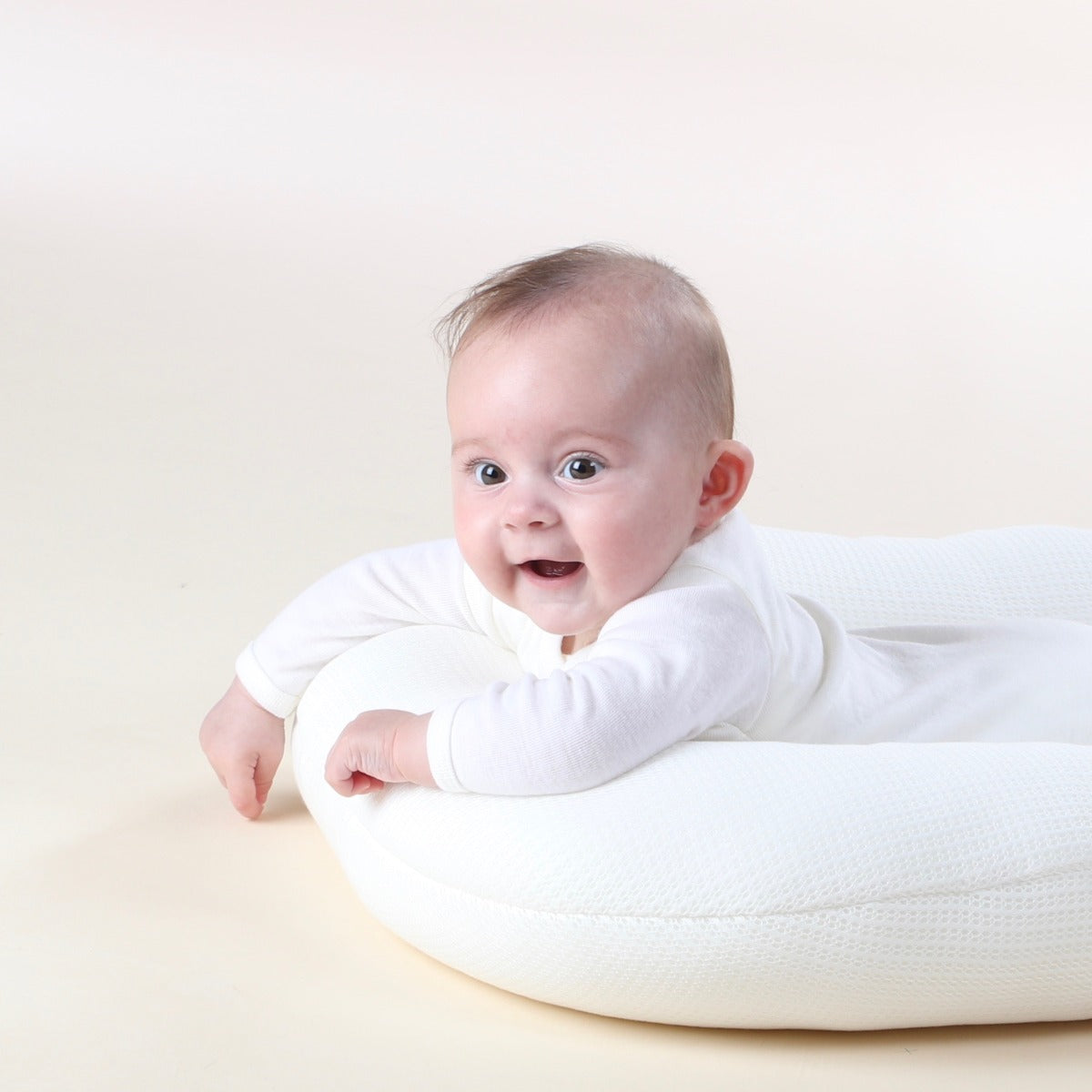
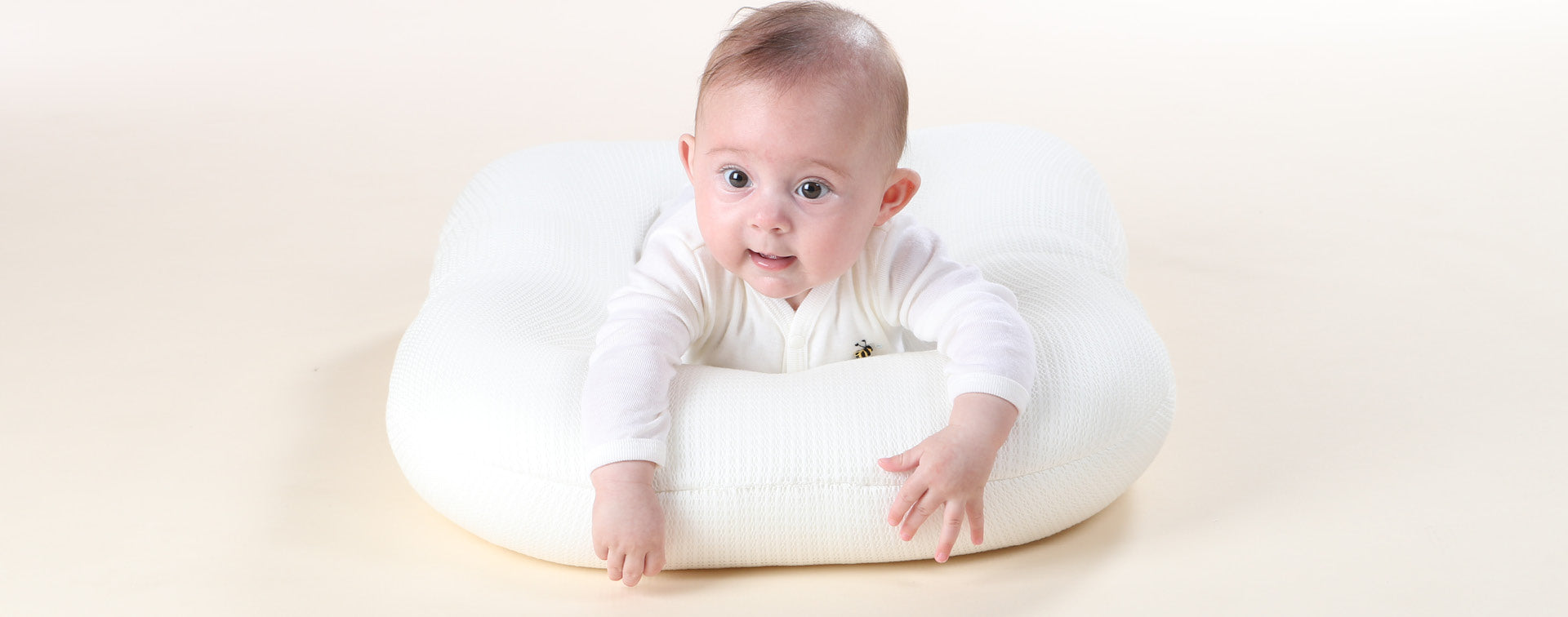
The Little Bee by Dimples Baby Lounger is a handy tool for tummy time. It’s designed with a gently raised end that gives your baby the right angle to strengthen their upper body muscles in a supported way. The flat end provides a comfy space for rest - so it’s a multitasker.
The Doomoo Softy is another great tummy time option — especially for younger babies. Drape your little one over the soft cushion so their arms and chest rest on it. It gently raises their upper body, helping them lift their head and build strength without feeling too flat on the floor. Plus, it doubles as a comfy feeding or lounging cushion when tummy time’s done.
The takeaway? You don’t have to do it all at once — and your baby doesn’t have to love it right away. Like most things in early parenthood, tummy time is a journey. Start slow, keep it playful, and know that every minute counts.
If you’re looking for supportive products to make tummy time easier, explore our collection of sensory play mats, baby loungers, and purpose-designed tummy time toys.
Give your baby a cozy space to rest, play, and explore with the Little Bee Baby Lounger.
Thoughtfully designed for both comfort and safety, it creates a cozy spot where your baby can lounge and relax while you get things done. The raised side gently supports your little one for handsfree feeding or settling, while also providing a safe edge for tummy time. The flat side is perfect for resting, changing, or dressing.
Made from soft, breathable Tencel® fibers with clever 3D Mesh for airflow, it keeps your baby comfortable and cool. Lightweight and portable, it comes with a handy zip carry bag so you can take it anywhere without worrying about dirt or mess. Use it with or without a cover (sold separately) to make life even easier.
From quiet moments at home to playful activity gym sessions, The Little Bee Baby Lounger is designed to make life a little simpler for parents and a lot more comfortable for your precious little one.
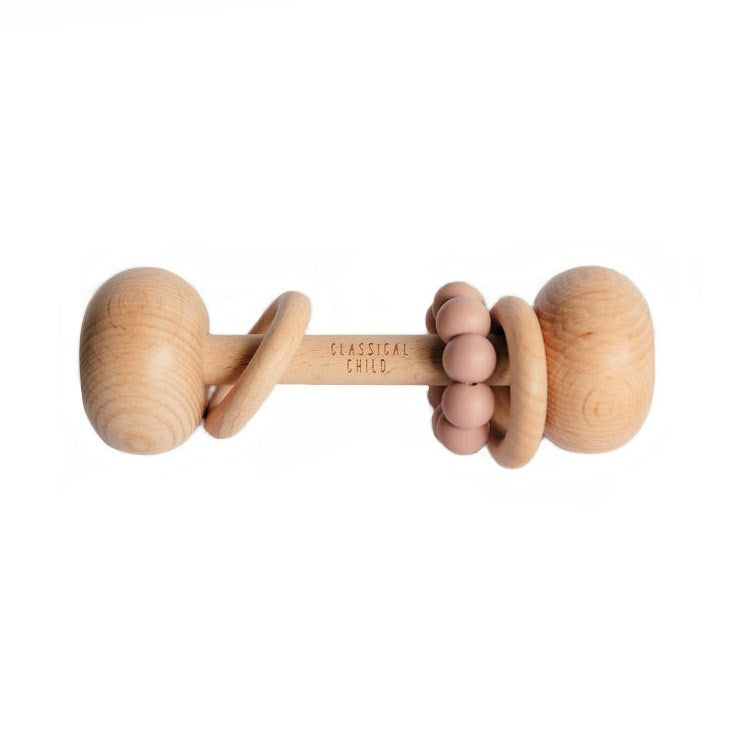
This lovely natural wooden rattle is a great addition to your little one's toy collection, or makes the perfect gift for any child. Crafted from sustainable beechwood and food grade silicone, our Beech & Silicone Rattle helps to develop eye hand coordination and fine motor skills, it's easy for tiny hands to grasp and makes a soft rattle sound baby will love.
Silicone is a great sensory material and is soft on sore gums. Beechwood is naturally anti-bacterial. Your baby will love exploring the textures with their tongue and gums!
Our beechwood products are all natural and toxic free, eco friendly and naturally antibacterial. They will not absorb odors or support the growth of mould, bacteria or fungus.
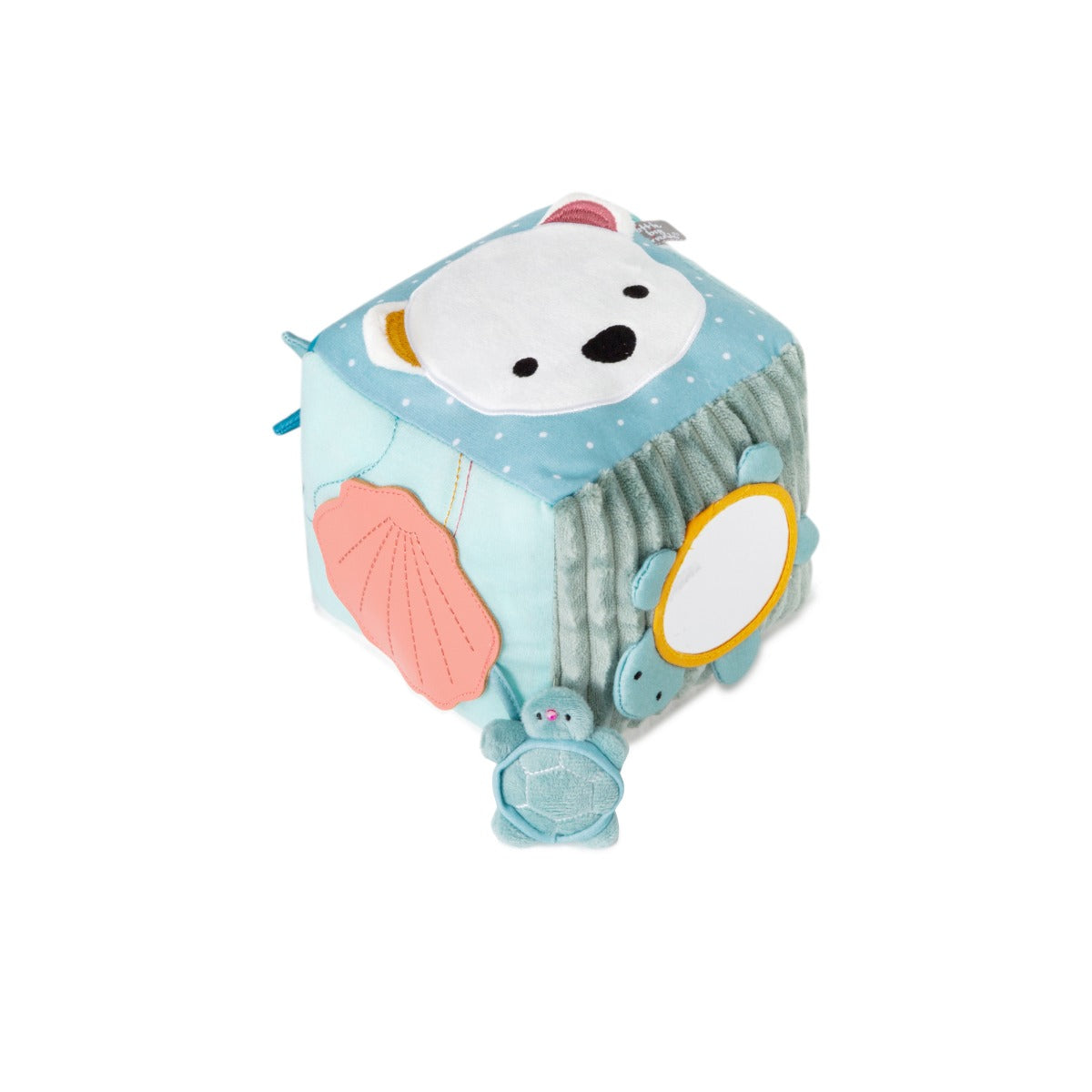
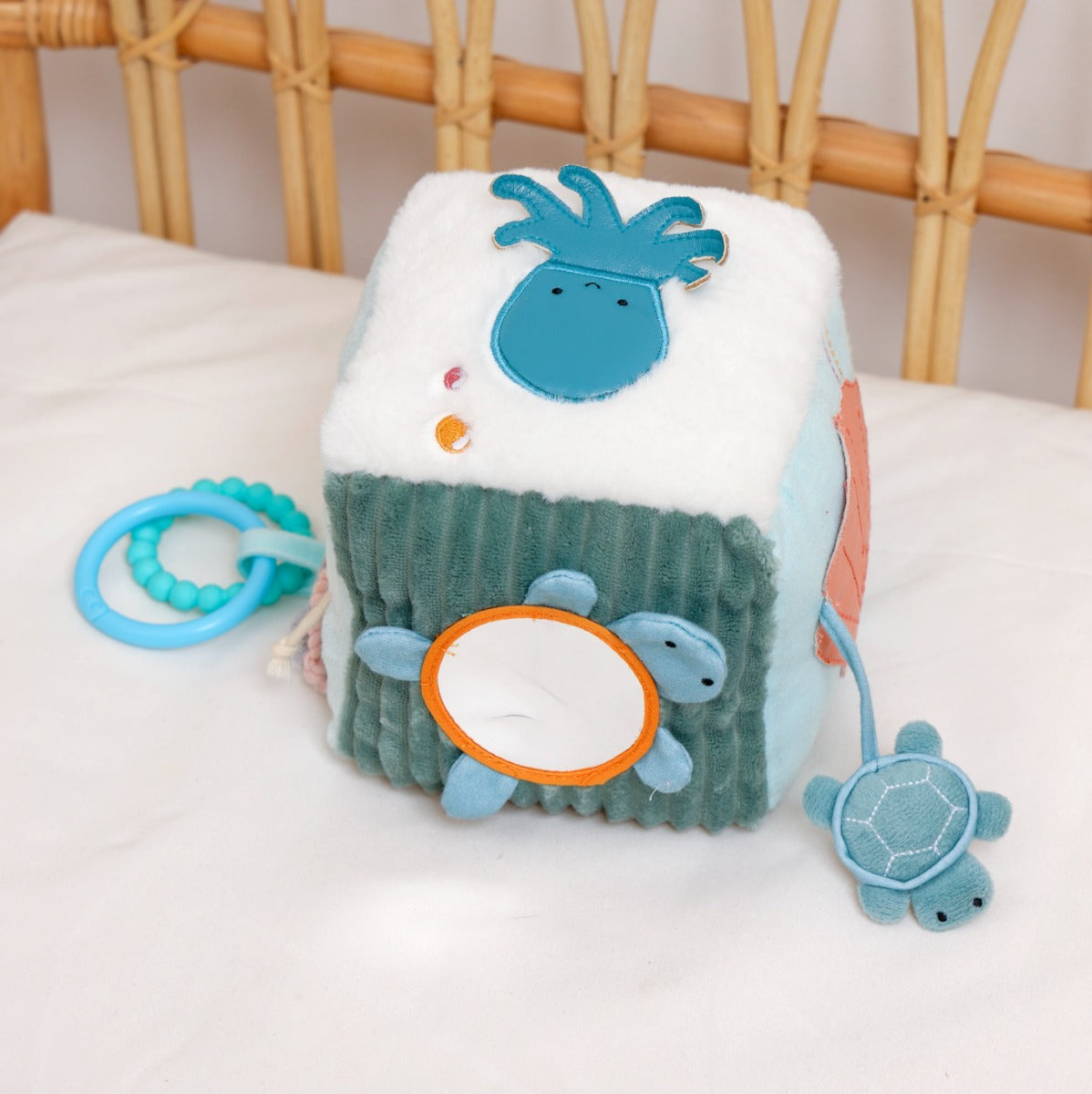
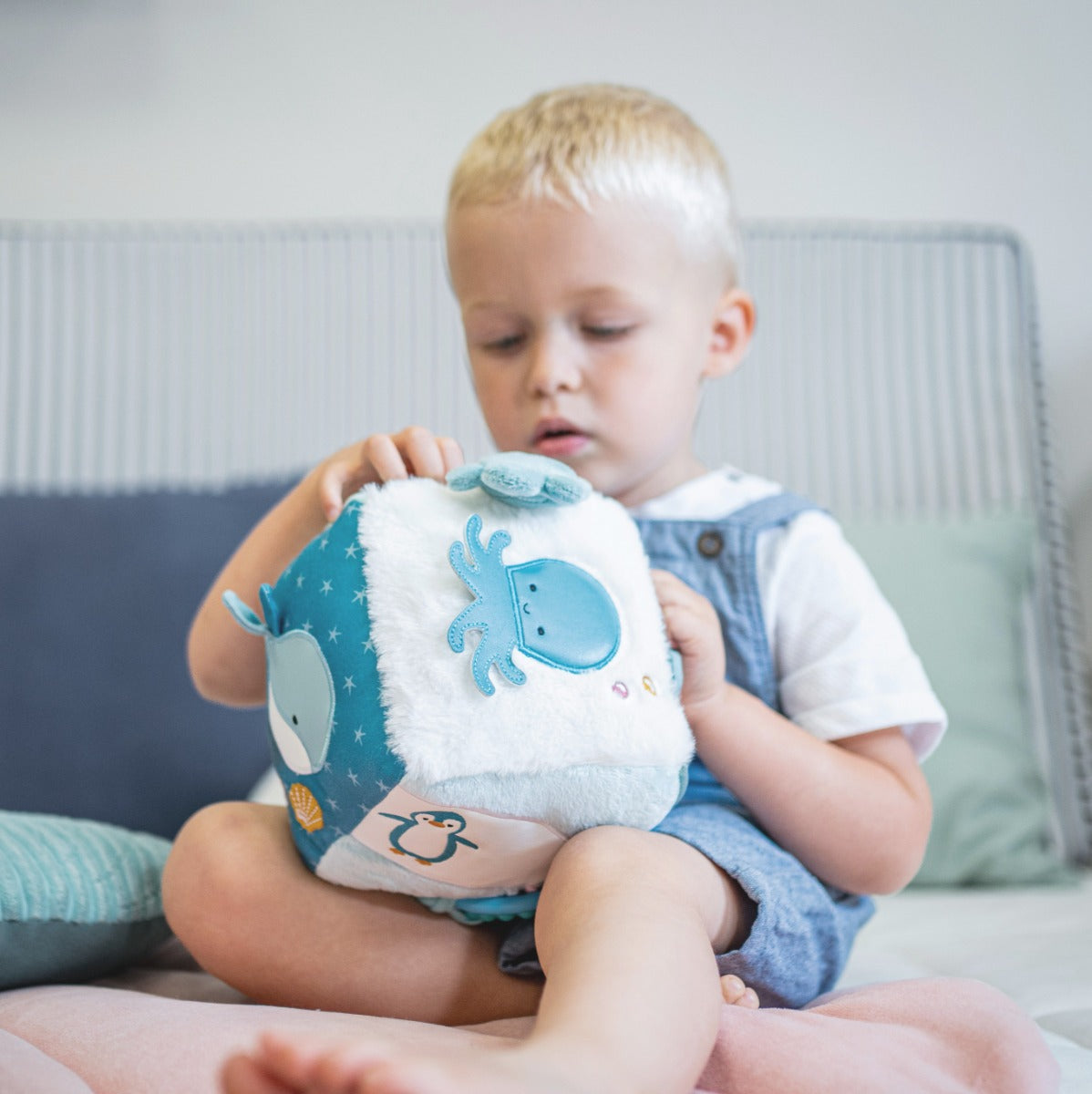
Soft Activity Cube for playful discovery. It's a developmental toy with a variety of fabrics that offers different textures and colors.
The Soft Activity Cube encourages hand-eye coordination and motor skills. Include rattle, crinkly fabrics, and a mirror to discover his reflection. Perfect for babies who are 6 months of age.
Soft Activity Cube for playful discovery. It's a developmental toy with a variety of fabrics that offers different textures and colors. The Soft Activity Cube encourages hand-eye coordination and the development of motor skills. Includes a rattle, crinkly fabrics, and a mirror to discover their reflection.
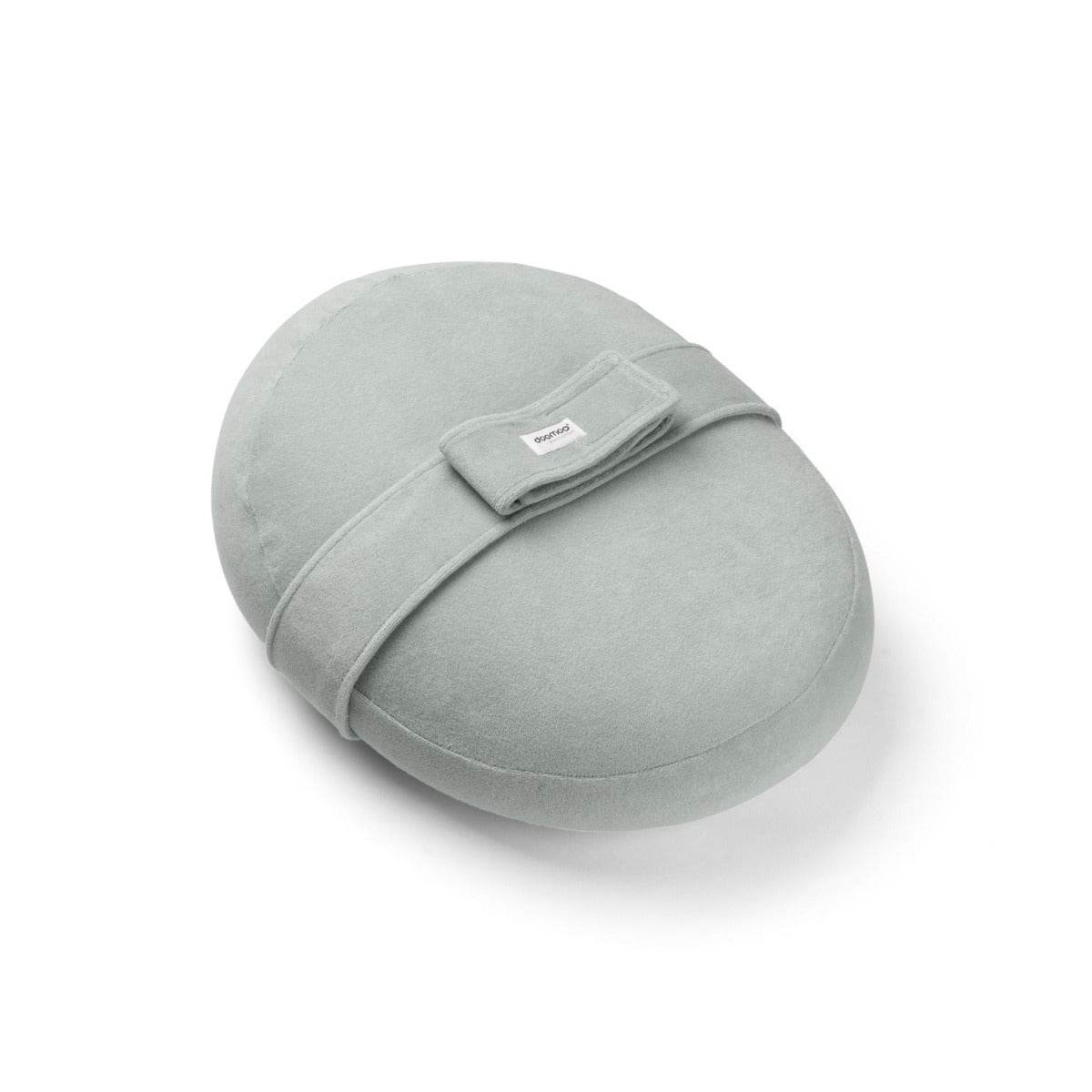
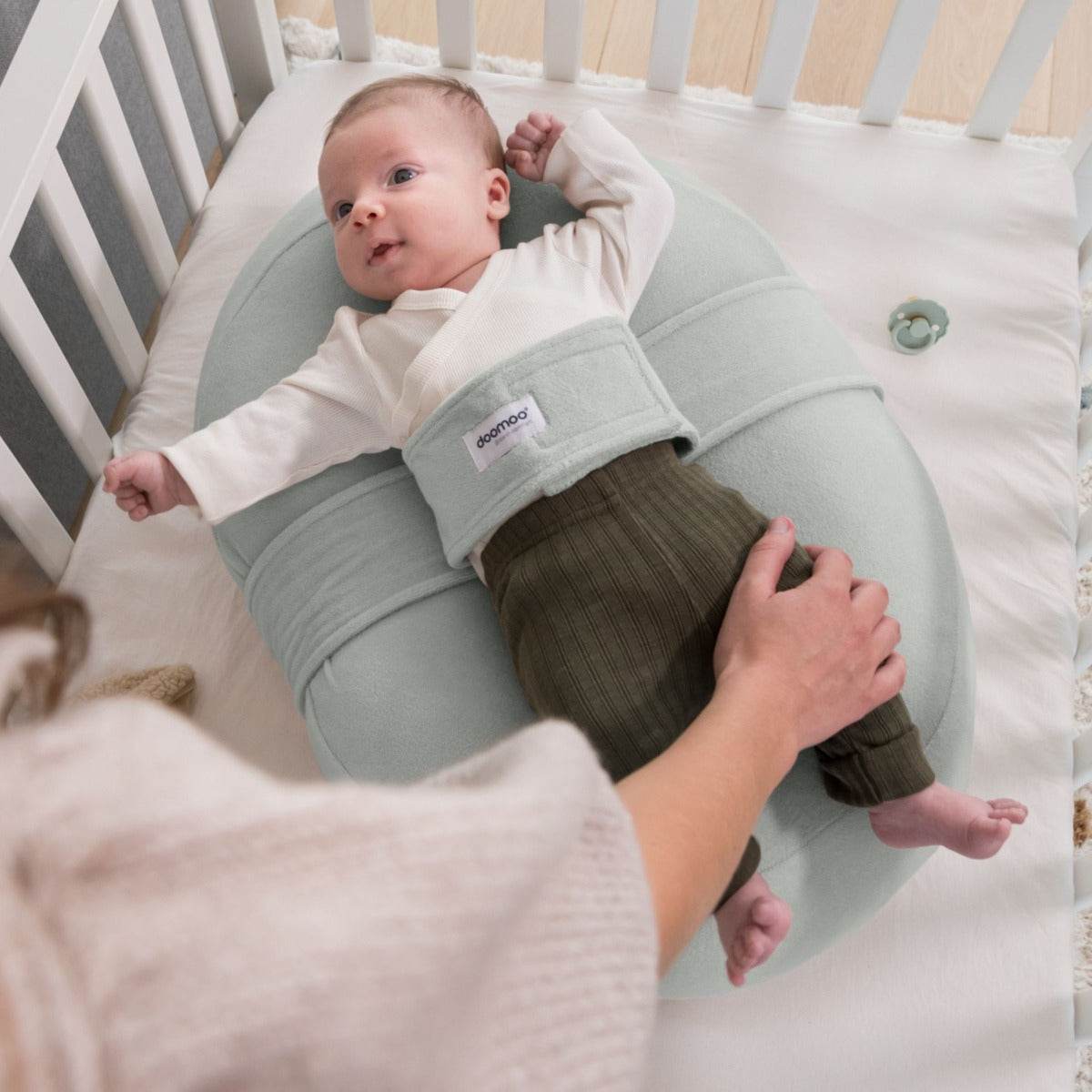
The Relax Cover in Green colour transforms your maternity pillow into a secure relax cushion for your baby. It comes with a removable security belt, so your baby can relax safe. Done with feeding? No need to tuck away your nursing pillow just yet! Use it as a pouf for your toddler.
Use your pillow in a different way with doomoo’s super soft Relax Cover. Just draw the Relax Cover over the pillow and it becomes a safe relax cushion for your baby or a pouf for your toddler.
How to help keep your baby safe
Entering the world of parenthood comes with its fair share of anxiety, from wondering how different your new life will be, to the worry of being responsible for a new little person. Sudden infant death syndrome (SIDS), previously known as ‘cot death’, is the unexplained death (typically during sleep) of a seemingly healthy baby. While SIDS is a very real threat, with a little knowledge you can reduce many known contributing factors.
Back to sleep
You’ll no doubt hear this on repeat from midwives and Plunket nurses as soon as your little babe comes along and for very good reason. Babies who sleep on their stomachs are much more at risk of SIDS. While it’s not 100% understood exactly why experts believe it could be about re-inhaling stale air. Once your baby can happily roll over by themself, you don’t need to worry about sleeping positions any more.
Make it a strictly smoke-free zone
Smoking (and exposure to second-hand smoke) during pregnancy not only puts your baby at risk of health issues but increases the risk of SIDS too. It’s thought that nicotine can wreak havoc on a mechanism in their brain which senses a lack of oxygen and triggers breathing to start (called auto-resuscitation). So make sure it’s strictly a smoke-free zone when you’re pregnant and when your little one arrives, and that your family and friends are on board too.
Welcome your new (temporary) roommate
It’s widely recommended that your new babe bunks in with you (in their own safe sleeping space) for at least the first four to six months. This isn’t always practical for light sleepers, in which case a good
breathing movement monitor
set up in their nursery will give you peace of mind.
A safe spot for slumber
While room-sharing is recommended, bed-sharing isn’t. It can be so tempting to savour that extra time snuggled up in bed with your new babe, but bulky duvets, pillows and even an adult rolling can spell danger for little ones. Setting your baby up with their own safe space (like a portable
Moses basket
) within arm’s reach is your best option.
Be prepared to be suddenly jolted awake and find yourself sitting up in bed or a nursing chair with your baby in your arms – sleep deprivation can really grab hold of you in the early days. Sleeping with a baby on a chair or sofa is very dangerous, so to avoid this as much as possible, use the middle-of-the-night feeds as opportunities to clear out and edit that day’s photos on your phone (no doubt there will be plenty!) Your phone’s blue light will help keep you alert.
Baby, it’s cold outside
It’s important to make sure the room where your baby is sleeping is at a comfortable temperature. Bundling up babies at all times is an outdated theory – overheating is another substantial SIDS risk. Higher temperatures can put babies into a deeper slumber, making it difficult for them to wake if their breathing is obstructed. The recommended room temperature for a baby is 16 to 20 degrees, with around 18 degrees being ideal. To check your baby’s temperature, feel his back or tummy – it should feel warm. A great way to check the temperature of their nursery is with a combined nightlight/temperature sensor like the
Moon Nightlight
.
Blankets (and everything else) be gone
All those cute blankets, animal-shaped pillows and snuggly little toys that create a cosy-looking cot will need to stay in storage until your baby’s first birthday. Until then, all you need is a fitted sheet and wearable bedding like a Merino Sleep Pod to keep them warm. The key is to avoid anything that may cover their face and restrict breathing.
Breastfeed if possible
Experts aren’t sure why, but breastfeeding can significantly lower the risk of SIDS. The theory is that breastfeeding promotes the sucking and swallowing action, which develops muscles that keep the airway open while boosting brain development. Breastfed babies are generally lighter sleepers, too. This might not sound like a benefit at 2 am, but anything that helps reduce SIDS is a big plus.
A big tick for pacifiers
There tends to be negativity around using pacifiers, but they can not only be life-saving for unsettled babies during car trips, but also literally life-saving. Once again, it’s a bit of an unknown how pacifiers help, but there is a clear link – babies who use pacifiers are at lower risk of SIDS. As with breastfeeding, this could be due to more developed sucking and swallowing muscles that help keep airways open. If you’re breastfeeding, wait until this is well established (at least 4-6 weeks) before introducing a good quality
silicone pacifier
.
Do what you can to reduce the risk
While there are still a lot of unknowns with SIDS, being armed with what you can do to reduce as many risks as possible should put your mind at ease. Keep in mind that the risk of SIDS decreases after six months and is pretty rare after a baby’s first birthday.
During pregnancy, your body undergoes amazing changes to nurture and make space for your little one. As your pregnancy progresses, you may find it more challenging to get comfortable and restful sleep in preparation for the busy days ahead with your newborn.
Weight gain during pregnancy can also put a strain on your joints, causing discomfort in your back, hips, knees, and ankles, making finding a comfortable position even harder.
This is where a good pregnancy pillow becomes your best friend, offering the support you need to sleep more soundly and comfortably.
Embrace Versatility with the 3-in-1 Buddy Supportive Pregnancy Pillow
The Doomoo Buddy pillow offers full-body support, designed to relieve pressure on your hips and spine, whether you prefer sleeping on your side or your back. Its hypoallergenic micro pearl filling adjusts to your body’s shape, providing comfort throughout the night. But it’s not just for pregnancy! Once baby arrives, the Buddy becomes an excellent support for breastfeeding or bottle feeding, making those moments a bit more comfortable. It also serves as a soft cushion for your baby to rest or play on, making it a truly versatile product.
For Extra Comfort: Doomoo Comfy Big & Doomoo Maxxy
The Doomoo Comfy Big is designed for ultimate relaxation during pregnancy, with soft, supportive filling that allows you to find the perfect position for sleep or lounging. Whether you're supporting your growing bump or using it for added back support, the Comfy Big offers tailored comfort that adjusts to your body’s needs.
The Doomoo Maxxy offers a versatile solution for both you and your baby. It’s perfect for sleeping, feeding, or even giving your baby a comfy place to rest and play. Its larger design makes it ideal for more support as your body changes during pregnancy, and it’s just as useful post-pregnancy when baby arrives.
For feeding your little one
Finally, the Doomoo Soft Feeding Pillow is a must-have for any new parent. Its soft, supportive design provides comfort during breastfeeding and ensures your little one is well-supported while feeding or relaxing. It can also double as a tummy time tool to help prop your baby up, or even a barrier for when they are learning to sit up on their own!
We Love Doomoo!
Softness and comfort are at the heart of everything Belgium-made brand Doomoo creates. Their products are designed with both you and your baby in mind, providing the perfect balance of support and relaxation. We love them for their thoughtful, high-quality designs that make pregnancy and postpartum life that much easier and more comfortable.
They have a fantastic range of products designed to support both your and your baby’s sleep. Check out the full range here or visit us in-store at Dimples.
Which is the right seat for your little one?
Choosing a car seat can feel overwhelming. Your choice is more than just a purchase; it's an investment in your child's safety and comfort. Are you looking for a capsule, a convertible, a booster seat or an all in one? And how do you know where to start?
Buckle up as we lay out the different types of seat to help you figure out what’s right for your whānau.
Capsule Car Seats
Best for: Newborns to approx. 12 months (up to 13kg depending on the brand)What they are: Rear-facing, portable infant car seats that easily lift in or out of the car. Most of the capsules we sell clip onto a base (sold separately) that stays installed in your car. Others have a baseless install either by Isofix or car seatbelt.
Why parents love them:
If you choose a capsule that's compatible with your stroller, you can transfer your sleeping baby for car to stroller without waking them
They're easy to carry with a handle
Most work with a base that stays in the car - simple click and go.
Things to consider:
You’ll likely only use it for the first year.
Weight matters – some are much easier to carry than others.
Great options to compare:
Nuna Pipa Next – lightweight (only 2.8kg) and super portable.
Nuna Arra Flex – features three recline positions - including a near-flat 157° recline.
Maxi Cosi Pebble 360 Pro – ergonomic recline, 360° base for easy loading.
Nuna Pipa Urbn – ideal for swapping between cars or rideshares, it has built-in Isofix, no base required.
Nuna Cari Next – this one is in a category all of its own - both a carrycot and car seat. The Cari has a three-point harness and connects to the Nuna Next Base in the car. Baby can lie peacefully at a full recline - the best position for a developing spine. The Cari can also connect to your stroller so you can move from home to car to pushchair without interrupting their sleep.
Convertible Car Seats
Best for: Birth to approx. 4 years (or longer depending on the seat)What they are: Seats that start rear-facing and convert to forward-facing as your child grows.
Why parents love them:
Cost-effective – you’ll use it for several years.
Often more spacious and padded than a capsule.
Things to consider:
Not portable – it stays installed in the car.
Some seats rotate on a base, so you can turn them towards the door to make buckling in easier
Check your car - do you have Isofix points or do you need a seat that can be seat belt installed?
Great options to compare:
Nuna Todl Next – works with a rotating base for easy access.
Nuna Rylo – built-in 360° rotation, no separate base required.
Nuna Rava Next - seatbelt installed, and known for its simple installation, generous legroom, and plush comfort. Ideal for families who want a long-lasting seat without the need for a base or Isofix.
All-in-One (Convertible + Booster)
Best for: Birth to approx. 11–12 yearsWhat they are: Car seats that transition from rear-facing to forward-facing to booster seat.
Why parents love them:
One purchase that lasts for years.
Ideal for parents who don’t want to keep upgrading.
Things to consider:
Not portable – stays in the car.
No rotating options available.
Great options to compare:
Nuna Exec Next – rear-facing from birth, forward-facing to booster mode up to 148cm / 50kg.
Britax One4Life Slim – rear-facing to booster mode up to 160cm / 54.4kg.
Booster Seats
Best for: 4+ years (or as per height and weight guidelines)What they are: Forward-facing seats that position the vehicle seatbelt properly across your child.
Why parents love them:
Simple to use and install.
Gives older kids a good seat height and a view out the window.
Often more compact.
Things to consider:
Only suitable once your child meets minimum size requirements.
Great options to compare:
Nuna Lumn – harnessed car seat that transforms to a belt positioning booster
Nuna Aace Lx – adjustable height, recline, and side impact protection.
Britax Skyline – affordable, comfortable, and lightweight.
Axkid Up – has a patented raisable seat to elevate your child to better align with the vehicle seat belt
Other Key Considerations When Choosing a Car Seat
Car fit: Not all seats fit all vehicles – check for compatibility, especially if fitting multiple seats.
Ease of use: Consider rotating seats if you struggle with lifting your child in and out.
Installation method: Isofix is quicker and easier, but seatbelt installs offer flexibility for older vehicles or travel. However Isofix does have lower weight restrictions (generally around 18kgs). If a seat allows for both Isofix and seatbelt installation it can pay to opt for Vehicle Seat Belt installation as it eliminates having to switch installation method once weight limits are reached.
Longevity: Weigh up whether you want a dedicated seat for each stage or one that adapts as your child grows.
Need Help Choosing?
Our Car Seat Technicians are here to help you make the best choice for your family. Visit a Dimples store and get personalised advice, try seats in your car, and enjoy our free professional car seat fitting with purchase. You can also take our handy quiz to find out what might work best for you.
Whichever seat you choose, safety and comfort come first – and we’re here to make sure you get both.
Shop the full car seat range online or in-store today.
The Power of a Bedtime Routine for Your Baby
Simple rhythms that can make bedtime calmer – for both of you
In the early weeks with a newborn, life seems to find a rhythm all on it’s own! Feeds, naps, cuddles and nappy changes all blur into one another, and having anything that resembles a routine can feel a little out of reach… Don’t worry – that’s totally normal.
As your baby grows, you might start to notice more predictable patterns start to emerge. This can be a lovely time to gently introduce a baby bedtime routine - a simple series of calming steps that helps signal to your little one that that the day is coming to an end.
It doesn’t need to be complicated. In fact, some of the best bedtime routines are the simplest ones.
Why a Bedtime Routine Matters
Babies LOVE familiarity. Repeating the same gentle activities each evening can help your baby begin to recognise that sleep is coming, while creating a comforting transition between the day’s activities and bedtime.
A bedtime routine can also be a really special opportunity to slow everything down together, creating a sense of calm, security and connection.
And while your bedtime routine will naturally change as your baby grows, those familiar little rituals can continue well into childhood.
When Should You Start a Bedtime Routine?
There’s no exact age when you have to start.
During the newborn stage, feeding and sleeping are naturally quite unpredictable, so there’s no need to worry about a strict schedule. From around six to eight weeks, you will probably notice your baby becoming more predictable, and you can begin introducing a few simple bedtime cues if it feels right for your family.
At first, your routine might simply be a fresh nappy, sleepwear, a feed and a cuddle. You can always add more as your baby grows.
How to Start a Baby Bedtime Routine
There’s no “perfect” bedtime routine - what works beautifully for one family might not work at all for another.
The important things are keeping it relatively simple, calm and consistent. Around 20 to 30 minutes is usually plenty, and where possible, try doing the final part of the routine in your babes room so they begin to associate that space with winding down and sleep.
Here’s a simple bedtime rhythm you could try:
Bath
A warm bath (or shower with you!) can be a lovely way to end your day together. Keep the lights soft if you can, slow things down and let bath time become part of the transition from playtime to bedtime.
Massage
After the bath, a few minutes of gentle baby massage can be incredibly calming and is a beautiful opportunity for some quiet bonding time.
You could use a baby massage product such as Scullys Massage Oil, or keep things very simple with Loloma Coconut Oil.
Keep the movements very slow and gentle, talking quietly, humming or singing to your baby as you go. Over time, even the smell and feel of their usual massage can become another little signal that bedtime is approaching.
A Little Extra Wind Down Support
For particularly restless little ones, you may also like to add something like Magnesium Rescue into your bedtime routine. Magnesium can help regulate the nervous system, promote muscle relaxation, and support the production of melatonin.
The important thing here is the ritual itself. Whether it’s massage, moisturising or simply a quiet cuddle after their bath, repeating the same calm steps each night is what helps make bedtime feel familiar.
Sleepwear
Changing into cosy sleepwear is another simple but powerful bedtime cue!
Choose soft, breathable layers that are appropriate for the temperature of your baby’s room. Merino is one of our favourites for sleep because it makes layering easy throughout the year.
Our baby sleepwear collection includes merino bodysuits, babygrows, gowns and other cosy layers for bedtime.
💛 Dimples Tip: Your baby’s room temperature is much more useful than the season when deciding what they should wear to bed. Feel their chest or back to check whether they’re comfortably warm rather than relying on their hands and feet, which can naturally feel cooler.
Feeding
For younger babies, a feed will naturally be an important part of bedtime.
As your baby gets older, you might like to experiment with offering their final feed slightly earlier in the routine rather than making it the very last thing before sleep. Some families find this helps separate feeding from falling asleep.
But don't stress if your baby loves feeding to sleep, especially in those early months. Every baby is different and your routine can evolve gradually.
A Story or Song
This is one of our favourite parts of a bedtime routine.
Your baby certainly doesn’t need to understand the story yet to enjoy listening to your voice. Reading the same book each night, singing a lullaby or simply humming quietly can become a wonderfully familiar sleep cue.
Reading together from an early age is also such a lovely habit to establish, and our children’s book collection has plenty of beautiful first books to choose from.
One day they'll be choosing the bedtime story themselves - and probably asking you to read it agaaaaiiiin!
Cuddles & Goodnight
Finish with a cuddle, a quiet goodnight and plenty of reassurance.
It sounds so simple, but that same kiss, phrase or cuddle each evening can become one of the most familiar parts of your baby’s bedtime routine.
And even if you know you’ll probably be seeing them again in a few hours, it’s still a lovely way to finish the day together.
Watch for Your Baby’s Sleepy Cues
One of the best bedtime tips we can give is to watch your baby rather than becoming too attached to the clock.
Yawning, rubbing their eyes, staring into the distance, becoming quieter or suddenly getting a little fussy can all be signs that your baby is getting tired.
Starting your bedtime routine when you notice these early sleepy cues can often make settling easier than waiting until your baby is overtired.
Create a Calm, Sleep Friendly Nursery
As bedtime gets closer, gradually make the house feel a little quieter.
Dim the lights, turn the television off and put away stimulating or noisy toys. These small environmental changes can become part of your baby’s bedtime cues too.
A dark room is ideal for sleep, but a gentle night light can be super handy while you're feeding, settling or changing nappies overnight.
💛 Dimples Tip: Once bedtime begins, keep voices quieter and movements slower. Babies pick up on our energy surprisingly well, so turning your pace down can help make the whole room feel calmer.
Putting Baby Down for Sleep
As you get to know your baby, you may like to experiment with placing them into their sleep space when they're sleepy but still awake.
Some babies take to this beautifully. Others need plenty of cuddling, rocking or feeding before they're ready to settle - particularly when they're very young.
There's no need to turn bedtime into a battle. The aim of a routine is to make sleep feel calm and predictable, not to achieve a perfect settling technique.
What works for your baby today may also be completely different in a few months time.
Be Consistent, But Stay Flexible
Consistency helps babies recognise their bedtime cues, but flexibility is just as important.
There'll be evenings when your baby is overtired. There'll be illnesses, holidays, late dinners, visitors and nights where absolutely nothing goes according to plan.
That's parenting!
Rather than worrying about following your routine perfectly, think about having a few familiar rituals you can return to wherever you are.
A fresh nappy, familiar sleepwear, the same book, a cuddle and your usual goodnight might be all your baby needs to recognise that it's bedtime.
If more than one parent or caregiver can occasionally do the bedtime routine, that's great! It helps your baby become comfortable settling with the other special people in their life.
And Don't Forget About Mum
Once baby is finally settled, it can be surprisingly difficult to switch your own brain off.
After spending all day feeding, changing, remembering, organising and looking after somebody else, having a tiny bedtime ritual of your own can be just as valuable.
Make a warm drink, put your phone down, have a shower or simply sit somewhere quiet for ten minutes.
For mums who enjoy something cosy before bed, Mamma's Milk Bar Moon Milk can become part of your own evening wind-down ritual. Prepare yourself a nice warm cup and enjoy a quiet moment once your little one is settled.
Small Rituals With Lasting Benefits
Your baby's bedtime routine doesn't need to be elaborate, and it certainly doesn't need to be perfect.
It's simply a collection of familiar little moments that tell your baby: the day is finished, you're safe, and it's time to rest.
Some nights it might be bath, massage, pyjamas, feed, story and bed. Other nights it might be clean nappy, feed, cuddle... bed.
Both count!
As your baby grows, the routine will grow with them. The massage might disappear, they'll choose their own pyjamas, and eventually they'll be the one reading the bedtime book.
But that cuddle and goodnight kiss? That will still matter - even if one day you have to sneak them in after lights out. ❤️