


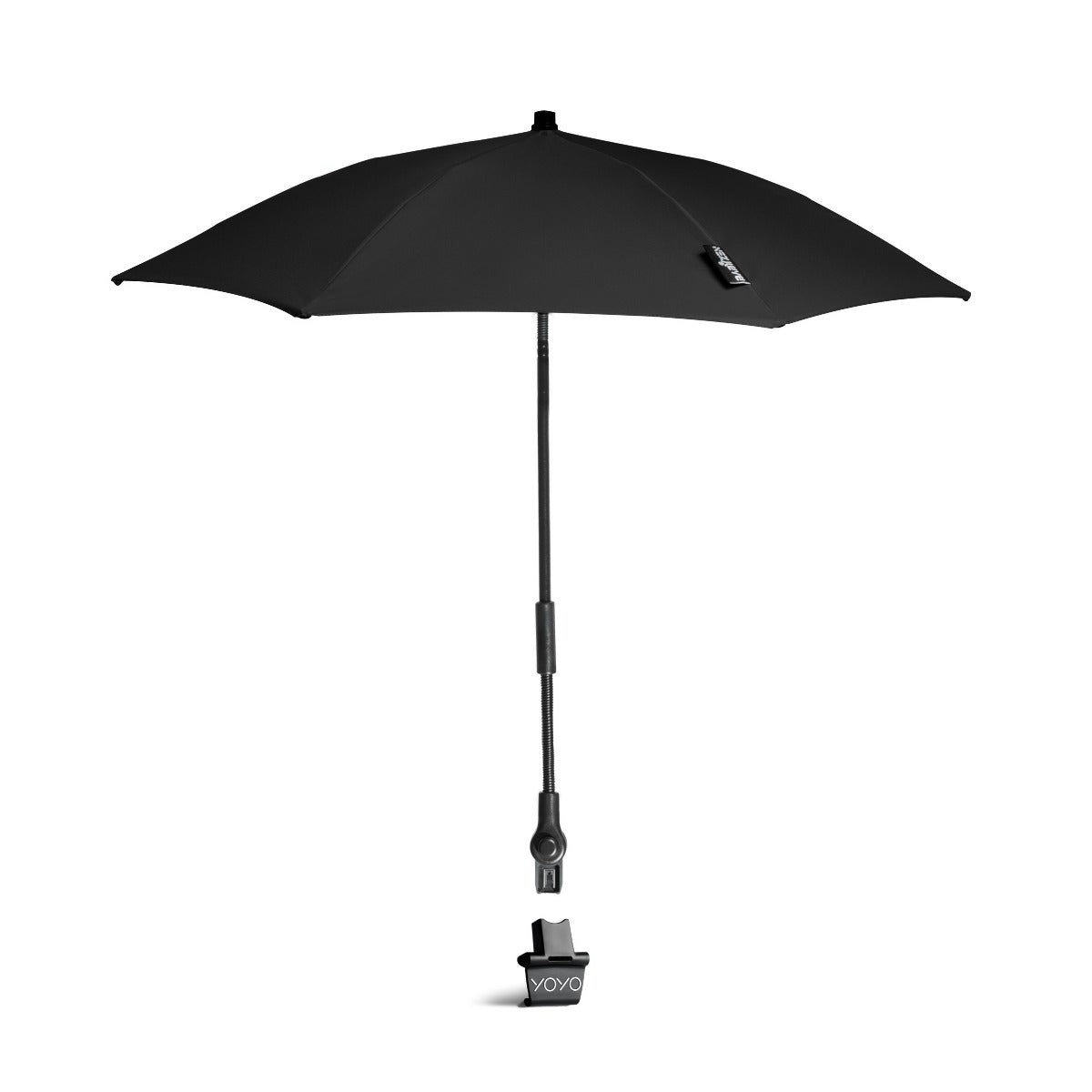
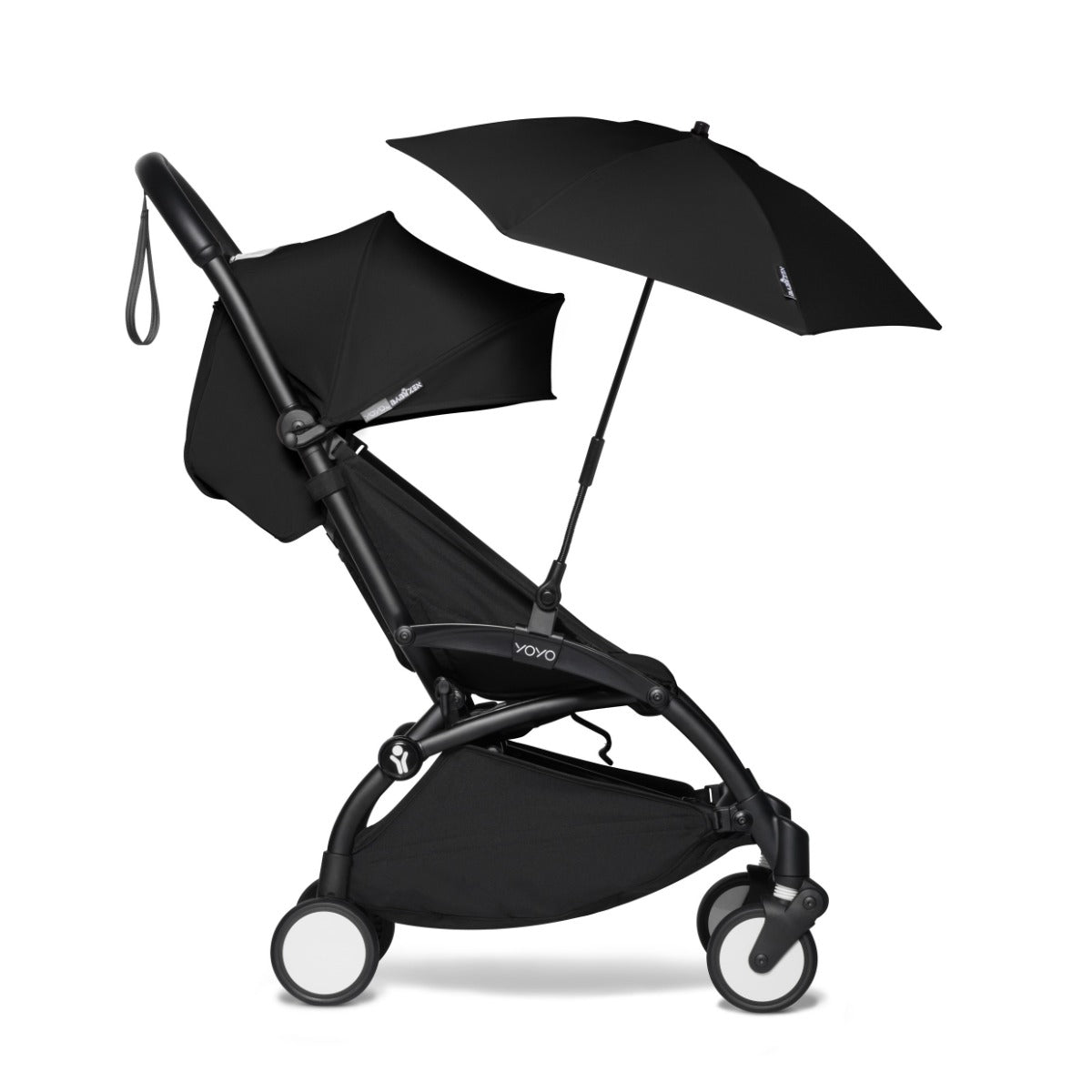


Stokke YOYO Parasol
Stokke YOYO Parasol
SKU:653201
Low stock
Couldn't load pickup availability
Overview
Overview
The Parasols can be adapted to all YOYO versions (0+ or 6+) and even connect to car seats.
With UPF 50+ protection and greater level of opacity, they fully protect babies from the sun.
What's Included
What's Included
Delivery and Returns
Delivery and Returns
- Delivery: Free within NZ on orders over $130 (excluding bulky items) or $8 standard shipping
- Returns: Accepted within 14 days of receipt with proof of purchase
- Some items are excluded from returns including sale items, hardware, car seats, prams, monitors and personal items - please click here for the full list.
Share this product
Recently Viewed Products
Related Blogs

Stroller Buying Guide: How to pick the right ride for Your Family
Why Choosing the Right Stroller Matters: Essential Tips for New Parents When you have a baby or toddler, a good stroller is essential. It lets you get out of the house and navigate the world with ease. Leaving the house with a newborn can be tricky, so a high-quality, easy-to-use stroller is a lifeline for many new parents. Your stroller is also one of the most expensive baby purchases you’ll make, so it’s important to get it right. You don’t want to invest in a stroller that ends up being too heavy, hard to fold, or difficult to steer. Of course, no one stroller suits every parent. Consider your lifestyle. Will you be navigating bush walks and country paths or be more likely to keep to the footpaths and malls? Before you buy, it’s a good idea to take a look at different models in-store, push them around, fold them down, and open them up to get a feel for how they work. Before you’re overwhelmed by options and terminology - In New Zealand, we tend to use the words pram, stroller, buggy and pushchair interchangeably. Capsule compatibility For new babies, you’ll most likely want a stroller that’s compatible with your capsule car seat. These are particularly handy during the sleepy newborn phase, as they let you move the baby from car to stroller without waking them. Our strollers are compatible with most capsules from well-known brands, such as Maxi Cosi and Nuna. Talk to our in-store team if you want to check on compatibility. Carrycot – or not A detachable carrycot can be incredibly handy in the early stages – from newborn to around 6 months. Lying flat on their back is the best, safest position for newborn baby to be in. If the seat on the stroller you choose has a lie-flat position, a carrycot isn’t essential. But many parents choose them because they simplify life in the first few months. A carrycot attached to your stroller not only allows your baby to sleep comfortably while on the go, it can also be removed and used as a portable bed for a bit of supervised sleep when visiting friends and family. Single vs. Double Strollers: Which is Right for Your Family? When you buy a stroller for your first baby, it can be hard to imagine life with more children. But it’s a good idea to consider your future when making your decision. Some strollers – like the Nuna Demi Next and the Edwards and Co Olive – have the option to add an extra seat for a sibling. If you plan to have two children close in age, this is worth considering. Having twins? Both the Demi next and Olive are tandem strollers, where the seats are not side-by-side but instead tiered. The Nuna Trvl Dubl is a side-by-side option - at just 78 cm wide, its slim profile fits through standard doorways. Another option to consider for an older sibling is a Stroller board that attaches to the back of the stroller. These are great for independent walkers who might tire on a long walk or need a ride to quicken the pace. (Note that these connect to select strollers only.) The right size for your space Strollers come in a range of shapes and sizes. They’re all foldable, but some – like the lightweight Stokke Yoyo – have a more compact fold than others. It even fits in an aeroplane’s overhead locker making it ideal for travel. Travel can be considered a separate stroller category all together – check out our Travel Stroller Blog But even for your everyday stroller, you’ll want to think about storage and transport options. Where will you keep your stroller when you’re at home? How big is the boot of your car? How often will you need to lift it into the car, onto public transport or up stairs? If you can, try the stroller in your boot to see how well it fits. If not, measure the space before you make a decision. How easily the stroller folds is another factor to consider and this is where trying a few models in-store is a good idea. One-hand fold mechanisms are incredibly convenient, especially when your arms are full with a little one. If you think you’ll be lifting your stroller frequently, opt for a lightweight model. Which wheels are best? For a while there, three-wheel strollers seemed to be the only option. Now, four-wheel models are having a resurgence in popularity. Three-wheel strollers are typically thought to be easier to steer, especially with one hand – which can be useful if you’re carrying an upset baby and pushing a pram at the same time. Four-wheel strollers, tend to be more compact, making them easier to manage in shops and cafés. They also tend to fold more neatly for easy storage. Tyre type is another factor to consider - larger wheels with foam-filled or inflatable tyres tend to offer better suspension, which is more comfortable for your baby on rough terrain. Whereas smaller swivelling wheels are easier to manoeuvre around busy places and crowded shops For the best of both worlds, the four-wheeled Nuna Mixx has tough, foam filled tyres and boasts easy one-handed steering. The wheels on the New Nuna Swiv offer something unique – with a 360 degree swivel so you can navigate small spaces with side-to-side ease. Forward or back? Forward-facing or rear-facing? If you’ve never bought a stroller before, it can be hard to know what you’ll prefer. Fortunately, this choice is more about preference than safety or practicality. Newborns are naturally drawn to their parent's faces, and a rear-facing stroller lets you interact and keep an eye on them as you go. Then as they grow up, forward-facing gives them a chance to look out on the world around them. Most everyday strollers we sell have convertible parent-facing/world-facing seats so you have both options in one. Other things to consider Comfort features for your little one - like padded seats, adjustable recline positions and good suspension. How comfortable is the handle height? Adjustable handle height can be good for parents of different heights. Does the stroller offer good storage underneath for your baby essentials, nappy bag, and shopping? Fun and functional extras These days, strollers have a huge range of add-ons and accessories – rain and shade covers, parasols, cup holders, snack trays and compatible nappy bags. Choose what’s best for you As with any big purchase, buying a stroller is about working out what’s most important to you, and finding a model that best fits your needs and budget. If you need help finding the right stroller for your family, you can take our Quiz You can also visit one of our stores, talk to the in-store team and take some of our display models for a spin. Check out our range here.
Learn more
YOYO Stroller Buying Guide
Is the YOYO the Right Travel Stroller for You? If you’re searching for a stroller that makes life simpler, especially when you’re out and about, the YOYO³ is well worth a look. The latest version of this much-loved pram is still ultra-compact and easy to fold, but with added comfort and improved suspension. Whether you're heading on a plane, tackling public transport, or simply want something light and easy to manage, the YOYO³ is designed to make everyday outings more enjoyable – for both you and your baby. One thing that’s helpful to know before you start building your YOYO³ - the frame is sold separately. This gives you the flexibility to customise your setup from the beginning - and makes it easy to update or upgrade later as your little one grows. This modular approach is just a part of what makes the YOYO³ so popular: it's a compact pram that evolves with your journey. What makes the YOYO so popular? Parents love the YOYO for its versatility and portability. Here’s why: It unfolds easily with one hand – ideal if you’re holding your baby or juggling bags. Once folded, it’s compact enough to sling over your shoulder or tuck away in small spaces. It weighs just 6.4kg with the 6+ seat, 6.6kg with the Newborn Pack, or 8.1kg with the Bassinet. The folded size (52 × 44 × 18 cm) fits in the overhead lockers of most airlines.* You can use it from birth through toddlerhood by choosing the right setup for your child’s age. Choosing your newborn setup: Bassinet vs Newborn Pack One of the first decisions to make is how you'd like to use the stroller from day one. The YOYO³ has two newborn options: The YOYO³ BassinetThis lightweight, semi-rigid bassinet clips onto the stroller frame in one click. It offers: A ventilated shell and breathable double mattress for comfort A parent-facing position so you can keep an eye on your baby The ability to unclip the bassinet and place it down flat without disturbing your little one A snug, bassinet-style interior with no harness – just soft fabrics and space to stretch Many parents prefer this option if they want a more traditional pram experience or the ability to move baby between stroller and indoors without waking them. The YOYO³ Newborn Pack (0+)This clever option transforms your stroller into a lie-flat, parent-facing pushchair that folds in one piece with the frame – no need to detach anything when you’re heading onto a bus or popping it into the boot. It includes: A soft nest with a 5-point harness for safety A 2.5cm mattress insert for newborn comfort The ability to fold down ultra-compact – perfect for travel or tight storage spaces If you’ll be using the YOYO³ for quick errands, public transport, or frequent travel, the Newborn Pack offers ultimate convenience. Not sure which is right for you? It often comes down to lifestyle. If you need something super compact and easy to fold at a moment’s notice, go with the Newborn Pack. If you want a more spacious, removable bassinet, the YOYO Bassinet might suit you better. When do you move to the next stage? Once your baby is sitting independently (around 6 months), it’s time to switch to the YOYO³ 6+ Seat Pack. This setup is forward-facing and features: A five-point harness for growing explorers A multi-position reclining backrest A sun canopy with ventilation panels to keep your little one cool Easy access to the under-seat basket From here, your stroller grows with your toddler, adapting to everyday life and bigger adventures alike. What about using a car capsule? With the right adapters, you can clip certain car seat capsules directly onto the YOYO³ frame. This can be helpful for short trips where baby falls asleep in the car – just transfer the capsule to the stroller without waking them. Find out about compatible capsules in the User Guide for each adapter here. That said, for longer walks or nap times, it’s best for baby to be lying flat in either the Newborn Pack or Bassinet, as this supports healthy spine development. Accessories to make life easier There’s a full range of optional accessories that fit the YOYO³, including: Footmuff for winter strolls Stroller board for an older sibling Rain cover and parasol for all-weather outings Leg rest for added comfort A rolling bag to carry your shopping and baby essentials Cup holder for your coffee on the go Travel bag to protect your stroller during flights And even ski attachments for snowy destinations! Plus, if your family grows, you can get an add-on Connect Frame that lets you turn your YOYO³ into a double stroller! You can mix and match seats or bassinets depending on the ages of your children. Is the YOYO for you? The YOYO³ really shines when you need something reliable, compact, and easy to handle. Whether you're catching flights or just want a pram that doesn't take up the whole boot, it’s a strong option from newborn right through to toddlerhood. And if you’re unsure which setup is right for your baby, come visit us in-store. We’ll walk you through the options, show you how it folds, and help you choose the best configuration for your lifestyle. * Cabin luggage standards can vary – we recommend checking with your airline before travelling.
Learn more
Introducing Our Virtual Shopping Service
As a busy parent it can be hard to find the time to get out to the shops. Or perhaps you’re in hospital post-birth and realise you need some more essentials in tiny sizes. Of course there’s always the option to shop online, but sometimes that just doesn’t cut it. Perhaps you want to see a product in action, or ask a question, or get advice . . . You can now book in to have a video call with our in-store team. They can show you close ups, give you a demo or help you choose when you’re confused by all the options. It’s the perfect option for busy parents. And we’ve made it easy with an ONLINE BOOKING SYSTEM . Book a Virtual Shopping Appointment Here's why our virtual shopping service is a game-changer: Personalized Assistance: Need help finding the right stroller, cot, or baby monitor for you? Our team of knowledgeable experts can help. Virtual Tours: Explore our store virtually with guided tours led by our experienced staff. From nursery furniture setups to the latest babywear arrivals, our virtual tours give you an immersive shopping experience without leaving your home (or birthing unit). Shop with confidence: Once you've made your selections, you’ll have the peace of mind to buy online. Then you can have your purchase delivered to your door or arrange a Click & Collect. Whether you're a first-time parent or a seasoned pro, we're here to make your parenthood journey a little bit easier. Embrace the convenience of our virtual shopping service and enjoy a stress-free shopping experience like never before.
Learn more
Pretty Brave Shoes: A Guide to Little Feet
Little feet have a lot of growing and exploring to do! From those first little steps to running, playing and discovering the world, choosing shoes that are comfortable and designed to move with them is an important part of every stage.
Learn more