


Silicone Fresh Food Feeder
Silicone Fresh Food Feeder
SKU:126704
In stock
Couldn't load pickup availability
Overview
Overview
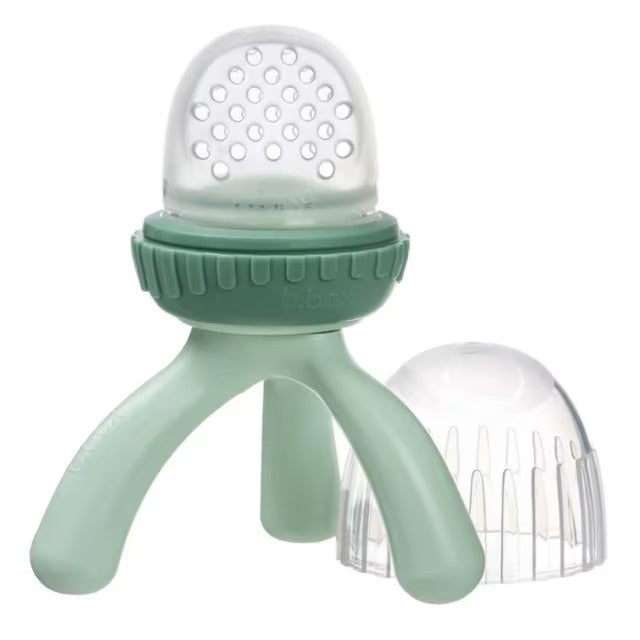
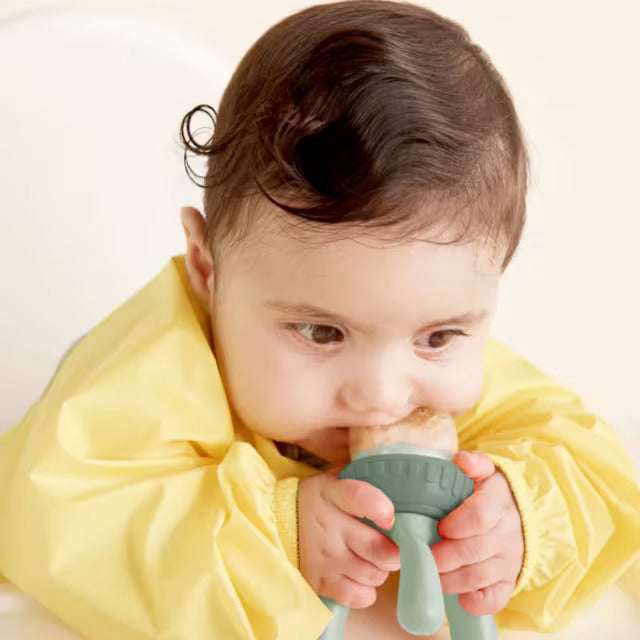
The fresh food feeder in Sage colour has been reimagined with a food-grade silicone design that's easy to clean, gentle on baby's gums, and dishwasher safe. This silicone feeder allows little ones to enjoy self-feeding in a fun and safe way, with tots as young as 4 months able to enjoy melon, soft fruits, cool steamed veggies, and more.
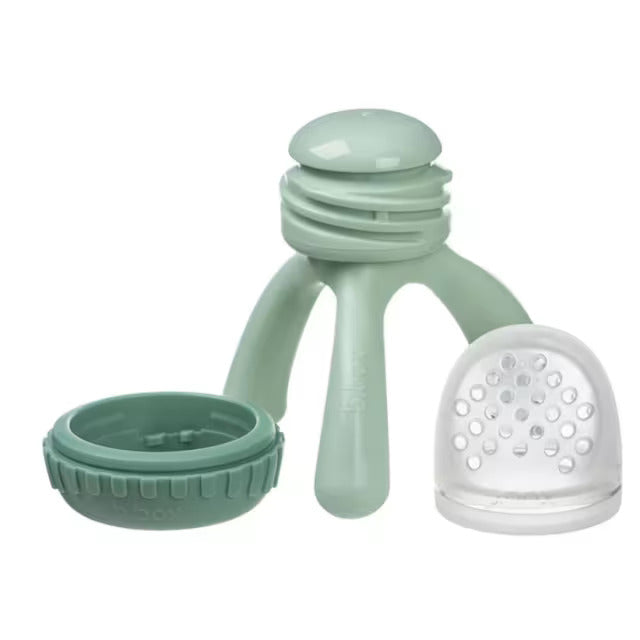
To use, simply twist the easy click-lock ring to open, fill the silicone feeder with food, and close it back up for mealtime enjoyment.
The unique tripod design makes it easy for bubs to hold with one or two hands, or parents can lend a helping hand. The tripod design also allows the feeder to stand up when placed down, keeping it clean and hygienic. A hygiene cap is included to ensure the feeder stays clean when not in use or while on the go. Cleaning is a breeze—just rinse it under the tap or place it in the dishwasher (top rack). The silicone feeder is also suitable for use in a steam steriliser.
This feeder is the perfect way to safely introduce fresh foods and solids, offering a hygienic, baby-friendly feeding experience. The soft food-grade silicone is gentle on baby’s gums, while the ergonomic, easy-grip tripod design allows bubs to hold it comfortably at any angle. The click-lock ring makes removal and insertion easy, and the included hygiene cap keeps the feeder clean when not in use.
Key Features
Key Features
User Guide
User Guide
Delivery and Returns
Delivery and Returns
- Delivery: Free within NZ on orders over $130 (excluding bulky items) or $8 standard shipping
- Returns: Accepted within 14 days of receipt with proof of purchase
- Some items are excluded from returns including sale items, hardware, car seats, prams, monitors and personal items - please click here for the full list.
Share this product
Recently Viewed Products
Related Blogs

Beginning your baby on solid foods
Starting Solids: A New Chapter in Your Baby’s Feeding Journey Introducing your baby to solids is an exciting milestone for both of you! It’s a time for new tastes, textures, and the inevitable messes that come with it. But as your baby reaches the six-month mark, it’s time to introduce them to new foods to complement their milk diet. For the first six months, your baby relies on iron stores from the womb and breast milk or formula. But as those iron stores begin to deplete, solids are needed to boost their nutrition. It’s recommended to continue breastfeeding or bottle-feeding alongside solids until your baby is 12 months old. Solids at this stage complement, rather than replace, their milk feeds. You can also start offering small amounts of water after six months, either in a sippy cup or with meals, to help your baby stay hydrated as they transition to solids. Signs Your Baby Might Be Ready for Solids Here are some signs to watch for that indicate your little one is ready to start eating solids: They seem hungry after milk feeds Can sit up with support and hold their head steady Show interest in your food, possibly reaching out or opening their mouth Make chewing motions when they see food Open their mouth when a spoon comes near The right Approach for Your Baby There are different ways to approach weaning. Spoon-feeding (offering purées or mashed foods), Baby-led weaning with finger food or a combination of both. There is no one "perfect" approach. The best method is the one that feels safe, enjoyable, and sustainable for your family. This book by Annabel Karmel is a great resource, filled with advice and recipes.. What matters most is offering nutritious foods (including iron-rich options), sharing pressure-free, positive mealtime experiences and supervising baby around food. With patience, consistency, and a little flexibility, you'll be helping your baby build a lifelong healthy relationship with food. Baby’s First Taste: Making Mealtimes Memorable Starting solids can be an exciting and slightly messy adventure! You can begin with simple, iron-rich foods to complement their milk diet, such as: Iron-fortified rice cereal mixed with breast milk or formula Purées of cooked vegetables like pumpkin, kūmara, or carrot Mashed avocado – easy to prepare and great for baby’s first tastes Purée of cooked apple or pear – mild, easy-to-digest options Purée of cooked chicken or beef – an excellent way to introduce iron A fantastic way to offer baby their first tastes is with the b.box Silicone Fresh Food Feeder. Simply pop in soft fruits or steamed vegetables, and let baby explore with a self-feeding method that doubles as teething relief. Make Mealtimes Easier with the Right Tools The right tools can make the journey into solids so much easier – and a little less messy! The Zazi Clever Spoon Set is designed for tiny hands, and paired with the Clever Bowl with Lid, they're perfect for portioning, feeding, and storing leftovers. The b.box Roll + Go Mealtime Mat keeps the mess contained, while the classic Mum2Mum Wonder Bib or the Mum2Mum Sleeved Wonder Bib makes sure your baby’s outfit stays clean, even on the messiest of days. After all, less laundry means more cuddle time! Moving to Mash As your baby approaches seven months, they’ll likely be ready to try foods with a thicker consistency. Offer them mashed or fork-mashed foods like ripe banana, avocado, small pasta pieces, or cooked egg. These textures are easy for your baby to swallow and great for practicing chewing. At this stage, avoid harder lumps like whole peas, which can pose a choking risk. Embracing Independence Around 8 Months Around eight months, your baby may begin showing an interest in feeding themselves. They may grab the spoon and try to feed themselves – it’s messy, but it’s also a great opportunity for developing their hand-eye coordination. Give them a chance to explore, but always stay close by to offer a helping hand (and a napkin)! We’re Here to Help At Dimples, we know starting solids can feel overwhelming. That’s why we’re always here to support you with expert advice and product recommendations. Visit us in-store or contact our friendly team for any questions – we’ve got everything you need to make this adventure as fun and easy as possible.
Learn more
Dimples Highchair Buying Guide
Choosing the Right Highchair for Your Baby 🍽️ When it comes time to start solids, your baby deserves only the best. A good highchair should be safe, ergonomic, and built to last — not just through the puree phase, but right through toddlerhood and beyond. One key feature to look for? A footrest. It might seem minor, but it plays a big role in supporting healthy hip development. Paediatricians note that having stable foot support helps babies build motor skills, which leads to better eating, improved concentration, and less fidgeting at mealtimes (win-win). At Dimples, we offer a carefully chosen range of highchairs that are beautifully designed and built with your baby’s comfort in mind. Here are some of our favourites: Stokke Tripp Trapp A timeless classic that grows with your child. The Stokke Tripp Trapp is fully adjustable, with height and depth settings on both the seat and footrest, so you can tailor the fit as your little one grows. The Tripp Trapp has two attachments available (see more on these below), so you can use the chair from birth - all the way through to adulthood! Designed to sit right up at the table, the Tripp Trapp helps make mealtimes feel like a family occasion, right from the start. It comes in a beautiful range of colours to match any home. Age range: From birth with newborn set; from 6 months with the baby set Weight limit: Up to 136 kg Tripp Trapp Newborn Set Suitable from birth up to 9 kg, the Newborn Set lifts your baby up to table height and surrounds them in a soft, nest-like seat. With two adjustable angles, great leg support, and a secure five-point harness, it’s perfect for safe and cozy bonding during mealtimes or family chats. Age range: 0–6 months (approx.) Weight limit: 9 kg Tripp Trapp Baby Set Once baby is ready to start solids, the Baby Set provides the right amount of support with a high backrest and secure harness. Add the Tripp Trapp Tray and Cushion for a complete mealtime setup that’s both practical and stylish. The cushions come in a range of lovely patterns to complement your kitchen décor. Age range: From 6–36 months (when baby can sit unaided) Weight limit: Up to 15 kg Stokke Nomi Highchair Designed by the same creator as the Tripp Trapp, the Stokke Nomi brings a modern twist to ergonomic seating. Lightweight yet incredibly sturdy, this highchair supports your baby from newborn through to adulthood. The flowing design offers excellent freedom of movement and encourages active sitting — important for developing posture and coordination. The footrest is easily adjustable without tools, and the chair's curved edges and organic shape make it a standout in any dining space. Age range: From birth with the Nomi Baby Set; from 6 months as a highchair Weight limit: Up to 150 kg Stokke Clikk Highchair Minimalist, modern, and made to make life easier. The Stokke Clikk arrives in one compact box and clicks together in minutes — no tools required. It includes everything you need: seat, tray, footrest, and harness. The ergonomic design supports your baby’s hips and posture, and the tray is dishwasher-safe for fuss-free clean-up. Add the Clikk Cushion for extra comfort, or get the Travel Bag if you’re heading away. Light, durable, and practical — this one’s a winner for home or holidays. Age range: 6 months to 3 years Weight limit: Up to 15 kg Nuna Bryn Highchair Sleek, sturdy, and thoughtfully designed — the Nuna Bryn is all about making mealtimes smoother. This highchair features an easy-to-adjust recline, a secure five-point harness, and a smooth seat surface that wipes clean in seconds. The tray is removable so baby can be brought closer to the table. With its clean lines and high-end materials, the Bryn blends beautifully into any home. Age range: 6 months to approximately 3 years Weight limit: Up to 15 kg Find Your Perfect Fit at Dimples Whether you’re after a highchair that grows with your child, fits your décor, or travels easily, Dimples has a range of safe, stylish, and practical options to suit your family’s lifestyle. Shop online or visit us in-store — we’re here to help you find the perfect seat for your little one’s next stage.
Learn more
Motherhood: Beyond the Fourth Trimester
Beyond The Fourth Trimester - A Sustainable Approach To Health Once the first few months with your new baby have passed you might be feeling like the haze of those early weeks has passed. You also might not be there just yet, just as each baby is different so is each pregnancy and the subsequent postpartum period. This is why it is important to be mindful of not judging how well you are doing based on other mothers who might appear to be completely back to normal with a baby who sleeps all night. If you are still breastfeeding, many mothers report a drop in milk supply at this point often saying that they no longer feel like their breasts are as full. This is something I experienced with my first baby and thought it meant I was losing my milk supply. It is normal for the initial fullness and engorgement to diminish as your milk supply is more established at this point, and your body has adjusted to supplying what your baby needs. If you do ever feel concerned by this your Plunket nurse, local lactation consultant or the La Leche league are a wonderful source of support & encouragement. Once those exhausting early months have passed many of the mothers I work with are keen to start focusing on reclaiming their pre-pregnancy bodies and to start dieting and exercising. Focusing on good nutrition and consistent exercise is hugely beneficial and has many positive health impacts such as increased energy, better sleep, improved mood and changes in body composition. What is really important to be mindful of, is that changes in diet and physical activity are best to be done with an incremental approach to minimise the chances of under-fuelling yourself, drops in milk supply, injuries and adding too much pressure on yourself. It also allows you to build sustainable health habits that you are more likely to maintain long term. I always recommend an appointment with a postpartum trained physiotherapist. They can assess your posture for diastasis recti (tummy muscle separation) and guidance on pelvic floor exercises. Women who have had caesareans often think because they haven't had a natural birth they don't need to worry about pelvic floor exercises - this isn't the case, pregnancy still takes its toll on the body so re-strengthening the pelvic floor after carrying a baby is important for all mothers. Working with a personal trainer that specialises in postpartum exercise is a great idea. They can ensure your exercise technique is correct to avoid injury and set an exercise program that is suitable for your current fitness level that will be mindful of the changes that need to be made to a fitness program based on your requirements postpartum. When looking at dieting I always encourage my Mum’s take a non-diet approach to focus on improving health not through restriction but with healthy nutritional choices that improve their health status not diminish it. To achieve this we focus on a nutritional approach that has a strong focus on nutrient repletion to help the body to replete nutrients that were preferentially supplied to their growing baby. Focusing on a diet full of whole unprocessed foods is the foundation for this. Most women find that this approach is very empowering, it leads to better satiety and self-regulation of eating over restriction then binge eating. When it comes to improving your diet always aim for progress, not perfection, and most importantly enjoy your meals! Adequate protein intake is essential for tissue repair and rebuilding especially when exercising. Sources of protein include meat, chicken, seafood, eggs, legumes nuts and seeds. Protein also helps to keep you feeling full for longer. I use and recommend Clean Lean Protein powder for smoothies as it is perfectly safe for breastfeeding mums. You can use the discount code ‘mela’ to save 15% at nuzest.co.nz . Eating plenty of colourful vegetables and some fruits (eat the rainbow!) is important to supply essential vitamins, minerals, phytonutrients, fibre and carbohydrate. I aim to have three fist-sized servings of vegetables with lunch and dinner. It is important to supply yourself with some complex carbohydrate for energy and to assist with glycogen repletion after exercising. Some good sources are pumpkin, yams, kumara, and whole grains such as brown rice and quinoa. Don't forget to incorporate healthy fats with each meal. Fats have been demonised and avoided for so long that many people are not aware of how important adequate fat intake is for health. Dietary fat is essential for the absorption of many nutrients, production of certain hormones, the supply of energy and support of cell growth. Good sources of healthy fats include oily fish such as salmon, extra virgin olive oil, hemp seed oil, avocado, nuts and seeds. Lastly don't forget to drink your water! Aim for two glasses on rising then another 2 litres throughout the day and more when exercising. If you are a breastfeeding mum aiming to have a glass of water with each feed I find keeping a water bottle close by during the day and for those night feeds is a great idea - it’s thirsty work! Kylie Stowe @melawholefoods Postpartum Nourish Bowl Serves 1 Ingredients 120-150 grams of cooked sliced meat (or vegetarian alternative) 2 cups of salad greens 1 cup of an assortment of diced colourful vegetables 1 palm-sized serve of cooked complex carbohydrate (pumpkin, yams, brown rice, quinoa, kumara) ¼ - ½ of an avocado or 40 grams of Feta 1 tbsp of hummus 1tbsp toasted pumpkin & sunflower seeds 2 tbsp of dressing of your choice. Method Arrange all of the ingredients in a bowl, season, drizzle with dressing and enjoy! My favourite dressing is made with extra virgin olive oil, apple cider vinegar & wholegrain mustard. To change up the flavours you can coat your protein in different herbs and spices the one pictured is Moroccan chicken.
Learn more
Healthy Eating - Kids in the kitchen
Kids in the kitchen – building a foundation of health I am hugely passionate about building a strong foundation of health for children, so that they don’t spend a large chunk of their lives attempting to undo bad habits or with chronic health conditions. One really impactful way to do this is to teach them how to cook nutritious home cooked meals from scratch. This builds confidence in the kitchen and is an incredibly valuable life skill to have so that when they eventually leave home they know how to cook and won’t need to rely on takeaways and nutritionally poor foods. It is also a really nice way to mindfully spend time with your children in a way that is really fun for the whole family. There is continually more emphasis being placed on the importance of teaching children to eat healthy nutritious foods, due to the prevalence of childhood obesity, the behavior and learning implications of nutritional deficiencies and obesity related health issues. Did you know that one in nine of our New Zealand children are classified as being obese? Our childhood obesity rates really highlight the importance of education for children about nutrition and how to cook homemade meals. As a parent it is often a battle to get children to eat healthy foods, they are inundated with advertising and clever marketing that promotes and encourages less than ideal foods, such as sugar laden cereals and juices with their favorite cartoon characters, or sports heroes on the packaging. It is everywhere you look, and in our busy modern society takeaways have become the norm and not just a treat anymore. As a busy mum of four myself I have felt plenty of mum guilt at times for looking for easy meal options that aren’t as nutritious as I would like out of time constraints and food preferences of my children. Thankfully now I have a far less idealistic view on nutrition for my family and realise that there is no such thing as being the perfect Mum and that it is perfectly healthy for families to also have treat foods, and to enjoy them occasionally without guilt while ensuring majority of the time they are eating well. Teaching my own children, and others at a local primary school how to cook different meals has been a really rewarding experience. Children love to learn through ‘doing’ and are far more receptive to trying new foods when they are involved in the cooking process. One of my favorite things to do it to write a list of their favorite foods, this is very predictable with kids and generally consists of pizza, burgers and fries then discuss how we can make these foods at home and what we can do to add in extra nutrients. For example, Pita pizzas with different herbs, vegetables and homemade pizza sauce, burger patties with mince and grated vegetables, hand cut and oven baked kumara fries etc. You can make this really fun by making a recipe together, formulating a shopping list and letting them help find the ingredients, my three-year-old loves this! There are so many great cookbooks and websites that offer great ideas and tips these days. Some of my favorites include. A great resource for all things vegetables including nutritional information, preparation tips, and educational resources https://www.vegetables.co.nz/ A great resource of recipes & children’s goal setting charts for healthy eating https://www.healthykids.org.nz/ A personal favourite for lots of delicious kid friendly nutritious recipes would have to be Nadia Lim’s Kid section on her website https://nadialim.com/?sfid=974&_sft_meals_courses=kid-friendly For my older boys one activity that they really loved from around the age of five was picking a country, then looking for one of their traditional dishes and cooking it. The most loved one that was often repeated was Mexican fiesta night with tacos, pepitas and guacamole. This is a really fun way to get children in the kitchen and trying new foods. I have also found meal subscriptions like HelloFresh great for the older kids as everything they need including a simple recipe card is all included. They get really excited when they are making dinner themselves and it creates a huge feeling of accomplishment in them and also as a mum! Other skills that are strengthened when it comes to cooking with children include basic maths in younger children through counting and measuring. This also builds communication and language skills by discussing ingredients and recipes. Pre-schoolers are well known for being fussy eaters, encouraging them to explore different foods and textures by involving them in meal time preparation can really help to broaden their palate. You can also talk about how healthy foods help us to grow and the differences between different foods such fruits and vegetables, or for older children carbohydrates, protein and fats. This can also be a great time to explore mindful eating by engaging the difference senses during food preparation. Exploring the different appearances, textures, smells, tastes and sounds of food, exploring this is a wonderful way to be engaged for children and parents Most importantly have fun with it, you’re teaching your children an incredibly important life skill that will benefit them for years to come, instilling independence and not to mention eventually some time out from cooking yourself – win,win! Kylie Stowe @melawholefoods Pita Pizza Serves 4 This is a firm favorite amongst my children and was also one of the most loved in my kids cooking & nutrition classes. It is really fun to head to your local farmers market on the weekend and let the kids pick some different ingredients to try, it is also a great way to learn about the different seasons when different produce is available. The recipe below is for a basic pita pizza as a guide but have fun with this and let the kids build their own and try new things. Ingredients - 4 wholemeal pita - 4 tbsp of tomato paste - 2 handfuls of basil leaves - 16 cherry tomatoes - 1 sliced smoked chicken breast - 1 sliced capsicum - 1c of mozzarella cheese Method 1. Preheat the oven to 180c fan bake, and line a baking tray with baking paper. 2. Place the pita bread on the tray, top with tomato paste, then basil. Equally arrange the other ingredients on the pita. Top with cheese. 3. Bake for 10 minutes, or until golden. Enjoy! These are really nice served with salad.
Learn more