


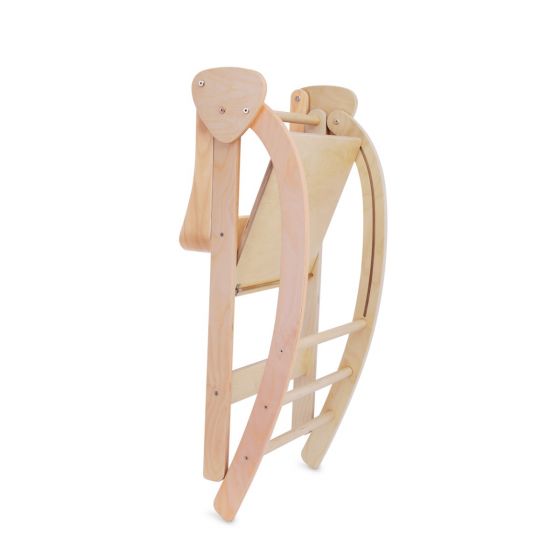
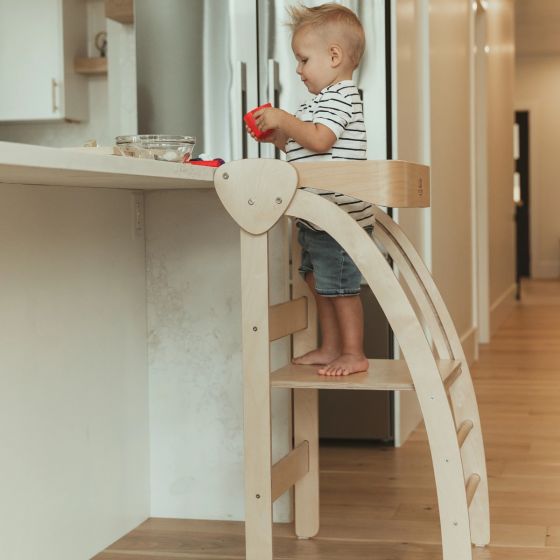


Observation and Learning Tower
Observation and Learning Tower
SKU:KF076
In stock
Couldn't load pickup availability
Overview
Overview
Give your child a safe, elevated view of their world with the Kinderfeets Learning Tower.
Designed for toddlers 18 months and older, this foldable, Montessori inspired helping tower encourages independence, motor skill development, and imaginative play. Perfect for helping in the kitchen, exploring household activities, or enjoying pretend adventures, it connects seamlessly with other Pikler items to expand play possibilities.
Crafted from responsibly sourced FSC-certified birchwood with sturdy safety rails, the Observation Tower supports up to 45 kg and folds flat for easy storage and transport. Its clean, timeless design fits naturally into your home, making it a functional, educational, and stylish addition to any playroom or kitchen.
Key Features
Key Features
Technical Specification
Technical Specification
Delivery and Returns
Delivery and Returns
- Delivery: Free within NZ on orders over $130 (excluding bulky items) or $8 standard shipping
- Returns: Accepted within 14 days of receipt with proof of purchase
- Some items are excluded from returns including sale items, hardware, car seats, prams, monitors and personal items - please click here for the full list.
Share this product
Recently Viewed Products
Related Blogs

Keep your Baby Close - Highchairs
Family Dinners are more important than you think. How eating together makes your baby smarter and healthier: There’s no denying it, the dinner table is the heart of family life. Research has also shown the critical role it plays in strengthening your bonds, and in helping your child’s development. Studies have shown that dinnertime chat is even more important for boosting your child's vocabulary than reading aloud. Young children learn 1,000 rare words at the dinner table, compared to only 143 from books. This increased vocabulary means your kids will read earlier and more easily. If your kids are school-aged, having them join you at the dinner table is possibly more important for their grades than making sure they get enough time in school, doing homework, playing sports or making art. There’s also a connection between family dinners and a bunch of health benefits – your kids will eat more fruit and veg , which may be why young adults who ate with their families as teens often have healthier eating habits and are less likely to be obese . Studies have also found that family dinners make kids happier , and less likely to suffer from depression or engage in risky behaviours . Embed family dinner habits early While you and your partner may have preferred to eat in front of the TV, your new baby should begin to change all that. The sooner you can establish the ritual of family dinners the better – ideally from infancy when they’re busy learning rules, words and habits. That can be easier said than done if you don’t have the right equipment. Highchairs are generally designed for older babies, and with little thought to facilitating family dinners. With bulky construction and a tray in the way, it’s almost impossible to get your baby close enough to the table to be part of the family dynamic. It’s why many parents end up feeding their babies separately and away from the table. For older children, adult chairs (even with boosters or cushions) can make dinner times just feel like hard work. Seated too low for their food, and with feet dangling, they can quickly become uncomfortable so they’re less able to concentrate on their meal, and on the family chit-chat going on around them. While you can find solutions for all of these issues for each stage, there are highchair systems that can grow alongside your baby, from infancy all the way to adulthood. Stokke® highchairs for easy family dinners from birth up The Tripp Trapp ® and Steps ™ highchairs from Stokke are designed to do just that, with fully adjustable seats and footrests. Clip on the safe, ergonomically designed Tripp Trapp or Steps Newborn Set and you can have your baby with you at the table right from the start. Perfect positioning and excellent leg support let your little one relax and enjoy the family time. It’s a great way to help your baby build strong relationships with the whole family – and means one parent isn’t absent from the dinner table. Once your baby can sit up unsupported, it’s time for the baby set for Tripp Trapp or for Steps to keep them safe, supported and comfortable at the table. Cushions are available for both the Tripp Trapp and Steps systems, too. Silicone EZPZ ™ mats for the Tripp Trapp and Steps chairs have built-in bowls to minimise spillage. They can be used with the Tripp Trapp or Steps trays or placed directly on your dinner table. Older children will also enjoy the Tripp Trapp Table Top Tray , with their suction bases and fun, educational motifs. The Tripp Trapp’s timeless Scandinavian design was first produced in 1976 and hasn’t changed since. Steps is a newer addition to the Stokke family, with a look to complement a range of interior styles. Both chairs come in a range of colours to mix and match to your home décor and with a warranty when you register your new chair’s serial number - Tripp Trapp is 7 years and Steps is 3 years. Get the best from your family meals Do yourselves and your children a big favour – don’t let television horn in on precious and valuable family meal times. The dinner table has been shown to be the best place for all kinds of learning and development, including vocabulary, eating habits, relationships and life-long health. Even when you understand the vital importance of family meals, it can be hard logistically to include your kids right from the start – tradition highchairs don’t help much! It’s good to know that Stokke® can provide a Tripp Trapp® or Steps™ seating system, allowing your kids to join the family meal right from newborn, and get the very best start possible.
Learn more
Healthy Eating - Kids in the kitchen
Kids in the kitchen – building a foundation of health I am hugely passionate about building a strong foundation of health for children, so that they don’t spend a large chunk of their lives attempting to undo bad habits or with chronic health conditions. One really impactful way to do this is to teach them how to cook nutritious home cooked meals from scratch. This builds confidence in the kitchen and is an incredibly valuable life skill to have so that when they eventually leave home they know how to cook and won’t need to rely on takeaways and nutritionally poor foods. It is also a really nice way to mindfully spend time with your children in a way that is really fun for the whole family. There is continually more emphasis being placed on the importance of teaching children to eat healthy nutritious foods, due to the prevalence of childhood obesity, the behavior and learning implications of nutritional deficiencies and obesity related health issues. Did you know that one in nine of our New Zealand children are classified as being obese? Our childhood obesity rates really highlight the importance of education for children about nutrition and how to cook homemade meals. As a parent it is often a battle to get children to eat healthy foods, they are inundated with advertising and clever marketing that promotes and encourages less than ideal foods, such as sugar laden cereals and juices with their favorite cartoon characters, or sports heroes on the packaging. It is everywhere you look, and in our busy modern society takeaways have become the norm and not just a treat anymore. As a busy mum of four myself I have felt plenty of mum guilt at times for looking for easy meal options that aren’t as nutritious as I would like out of time constraints and food preferences of my children. Thankfully now I have a far less idealistic view on nutrition for my family and realise that there is no such thing as being the perfect Mum and that it is perfectly healthy for families to also have treat foods, and to enjoy them occasionally without guilt while ensuring majority of the time they are eating well. Teaching my own children, and others at a local primary school how to cook different meals has been a really rewarding experience. Children love to learn through ‘doing’ and are far more receptive to trying new foods when they are involved in the cooking process. One of my favorite things to do it to write a list of their favorite foods, this is very predictable with kids and generally consists of pizza, burgers and fries then discuss how we can make these foods at home and what we can do to add in extra nutrients. For example, Pita pizzas with different herbs, vegetables and homemade pizza sauce, burger patties with mince and grated vegetables, hand cut and oven baked kumara fries etc. You can make this really fun by making a recipe together, formulating a shopping list and letting them help find the ingredients, my three-year-old loves this! There are so many great cookbooks and websites that offer great ideas and tips these days. Some of my favorites include. A great resource for all things vegetables including nutritional information, preparation tips, and educational resources https://www.vegetables.co.nz/ A great resource of recipes & children’s goal setting charts for healthy eating https://www.healthykids.org.nz/ A personal favourite for lots of delicious kid friendly nutritious recipes would have to be Nadia Lim’s Kid section on her website https://nadialim.com/?sfid=974&_sft_meals_courses=kid-friendly For my older boys one activity that they really loved from around the age of five was picking a country, then looking for one of their traditional dishes and cooking it. The most loved one that was often repeated was Mexican fiesta night with tacos, pepitas and guacamole. This is a really fun way to get children in the kitchen and trying new foods. I have also found meal subscriptions like HelloFresh great for the older kids as everything they need including a simple recipe card is all included. They get really excited when they are making dinner themselves and it creates a huge feeling of accomplishment in them and also as a mum! Other skills that are strengthened when it comes to cooking with children include basic maths in younger children through counting and measuring. This also builds communication and language skills by discussing ingredients and recipes. Pre-schoolers are well known for being fussy eaters, encouraging them to explore different foods and textures by involving them in meal time preparation can really help to broaden their palate. You can also talk about how healthy foods help us to grow and the differences between different foods such fruits and vegetables, or for older children carbohydrates, protein and fats. This can also be a great time to explore mindful eating by engaging the difference senses during food preparation. Exploring the different appearances, textures, smells, tastes and sounds of food, exploring this is a wonderful way to be engaged for children and parents Most importantly have fun with it, you’re teaching your children an incredibly important life skill that will benefit them for years to come, instilling independence and not to mention eventually some time out from cooking yourself – win,win! Kylie Stowe @melawholefoods Pita Pizza Serves 4 This is a firm favorite amongst my children and was also one of the most loved in my kids cooking & nutrition classes. It is really fun to head to your local farmers market on the weekend and let the kids pick some different ingredients to try, it is also a great way to learn about the different seasons when different produce is available. The recipe below is for a basic pita pizza as a guide but have fun with this and let the kids build their own and try new things. Ingredients - 4 wholemeal pita - 4 tbsp of tomato paste - 2 handfuls of basil leaves - 16 cherry tomatoes - 1 sliced smoked chicken breast - 1 sliced capsicum - 1c of mozzarella cheese Method 1. Preheat the oven to 180c fan bake, and line a baking tray with baking paper. 2. Place the pita bread on the tray, top with tomato paste, then basil. Equally arrange the other ingredients on the pita. Top with cheese. 3. Bake for 10 minutes, or until golden. Enjoy! These are really nice served with salad.
Learn more
Dimples Highchair Buying Guide
Choosing the Right Highchair for Your Baby 🍽️ When it comes time to start solids, your baby deserves only the best. A good highchair should be safe, ergonomic, and built to last — not just through the puree phase, but right through toddlerhood and beyond. One key feature to look for? A footrest. It might seem minor, but it plays a big role in supporting healthy hip development. Paediatricians note that having stable foot support helps babies build motor skills, which leads to better eating, improved concentration, and less fidgeting at mealtimes (win-win). At Dimples, we offer a carefully chosen range of highchairs that are beautifully designed and built with your baby’s comfort in mind. Here are some of our favourites: Stokke Tripp Trapp A timeless classic that grows with your child. The Stokke Tripp Trapp is fully adjustable, with height and depth settings on both the seat and footrest, so you can tailor the fit as your little one grows. The Tripp Trapp has two attachments available (see more on these below), so you can use the chair from birth - all the way through to adulthood! Designed to sit right up at the table, the Tripp Trapp helps make mealtimes feel like a family occasion, right from the start. It comes in a beautiful range of colours to match any home. Age range: From birth with newborn set; from 6 months with the baby set Weight limit: Up to 136 kg Tripp Trapp Newborn Set Suitable from birth up to 9 kg, the Newborn Set lifts your baby up to table height and surrounds them in a soft, nest-like seat. With two adjustable angles, great leg support, and a secure five-point harness, it’s perfect for safe and cozy bonding during mealtimes or family chats. Age range: 0–6 months (approx.) Weight limit: 9 kg Tripp Trapp Baby Set Once baby is ready to start solids, the Baby Set provides the right amount of support with a high backrest and secure harness. Add the Tripp Trapp Tray and Cushion for a complete mealtime setup that’s both practical and stylish. The cushions come in a range of lovely patterns to complement your kitchen décor. Age range: From 6–36 months (when baby can sit unaided) Weight limit: Up to 15 kg Stokke Nomi Highchair Designed by the same creator as the Tripp Trapp, the Stokke Nomi brings a modern twist to ergonomic seating. Lightweight yet incredibly sturdy, this highchair supports your baby from newborn through to adulthood. The flowing design offers excellent freedom of movement and encourages active sitting — important for developing posture and coordination. The footrest is easily adjustable without tools, and the chair's curved edges and organic shape make it a standout in any dining space. Age range: From birth with the Nomi Baby Set; from 6 months as a highchair Weight limit: Up to 150 kg Stokke Clikk Highchair Minimalist, modern, and made to make life easier. The Stokke Clikk arrives in one compact box and clicks together in minutes — no tools required. It includes everything you need: seat, tray, footrest, and harness. The ergonomic design supports your baby’s hips and posture, and the tray is dishwasher-safe for fuss-free clean-up. Add the Clikk Cushion for extra comfort, or get the Travel Bag if you’re heading away. Light, durable, and practical — this one’s a winner for home or holidays. Age range: 6 months to 3 years Weight limit: Up to 15 kg Nuna Bryn Highchair Sleek, sturdy, and thoughtfully designed — the Nuna Bryn is all about making mealtimes smoother. This highchair features an easy-to-adjust recline, a secure five-point harness, and a smooth seat surface that wipes clean in seconds. The tray is removable so baby can be brought closer to the table. With its clean lines and high-end materials, the Bryn blends beautifully into any home. Age range: 6 months to approximately 3 years Weight limit: Up to 15 kg Find Your Perfect Fit at Dimples Whether you’re after a highchair that grows with your child, fits your décor, or travels easily, Dimples has a range of safe, stylish, and practical options to suit your family’s lifestyle. Shop online or visit us in-store — we’re here to help you find the perfect seat for your little one’s next stage.
Learn more
Pretty Brave Shoes: A Guide to Little Feet
Little feet have a lot of growing and exploring to do! From those first little steps to running, playing and discovering the world, choosing shoes that are comfortable and designed to move with them is an important part of every stage.
Learn more