



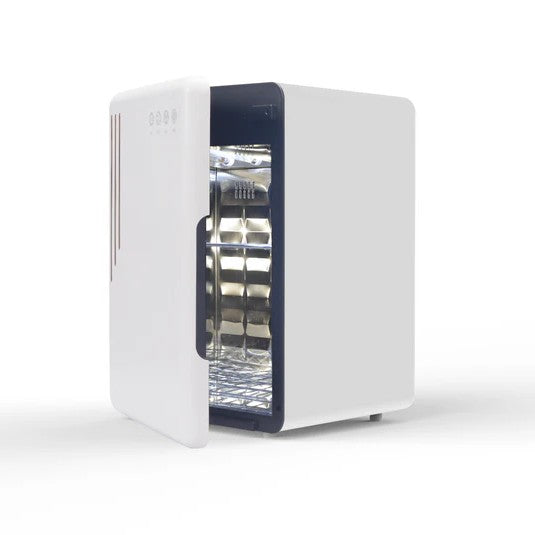
More than Milk UV Steriliser
More than Milk UV Steriliser
SKU:MTMsteriliser
Out of stock
Couldn't load pickup availability
Overview
Overview
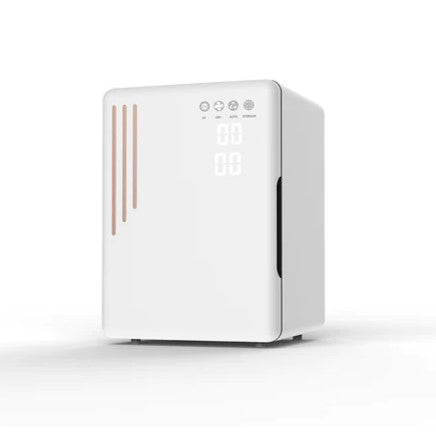
Say goodbye to boiling, scrubbing, and benchtop clutter with this All-in-One Steriliser. This versatile unit sterilises, dries, and stores bottles, pump parts, toys, teethers, and even electronics - all in one tidy, convenient system.
Using UV-C light, it naturally kills 99.9% of germs without water or chemicals, giving you a safe and hygienic solution for your baby and beyond.
Designed for busy parents, the steriliser fits up to 12 standard bottles (20 L capacity) and runs a sterilise only cycle in just 6 minutes, or a full sterilise, dry, and store cycle in 31 minutes. It’s a faster, tidier alternative to traditional boiling or steaming.
Key Features
Key Features
Technical Specification
Technical Specification
Delivery and Returns
Delivery and Returns
- Delivery: Free within NZ on orders over $100 (excluding bulky items) or $8 standard shipping
- Returns: Accepted within 14 days of receipt with proof of purchase
- Some items are excluded from returns including sale items, hardware, car seats, prams, monitors and personal items - please click here for the full list.
Share this product
Recently Viewed Products
Related Blogs

Breastfeeding Basics and Tips
Understanding the Fundamentals of Breastfeeding Breastfeeding might seem straightforward, but many new moms find it challenging. Patience is essential, and being well-prepared can make the process smoother. Here, we break down the basics to help you get ready for this journey. The Three Stages of Breast Milk Colostrum: The First Stage When your baby is born, your body produces colostrum, a clear or yellowish liquid packed with nutrients, proteins, and vitamins. This small amount is perfect for newborns, helping to protect their digestive tract and immune system. Transitional Milk: The Second Stage Regular breastfeeding will stimulate the production of transitional milk, which appears around the third to fifth day. It looks like a mix of milk and orange juice, rich in lactose, fat, and calories. Mature Milk: The Third Stage By the second week, mature milk replaces transitional milk. This pale, sometimes bluish milk provides all the nutrients, fat, and proteins your baby needs, adjusting its water content in hot weather and boosting antibodies when needed. Achieving a Good Latch Proper latching is crucial to prevent discomfort. A good latch covers both the nipple and the areola and shouldn't be painful. Here’s how to ensure a successful latch: Positioning Your Baby Hold your baby tummy-to-tummy with your breasts, keeping their head aligned with their body. Mouth to Nipple Tickle your baby’s lips with your nipple or express a bit of milk to encourage the rooting reflex. When your baby opens wide, bring them to your breast. Ensuring Proper Attachment A proper latch involves the baby’s chin and nose touching your breast. If necessary, adjust the bottom lip to ensure it isn’t tucked in. Watch for a steady suck-swallow-breathe pattern. Trying Different Positions If you encounter difficulties, experiment with different breastfeeding positions like the football hold or side-lying. Consult a lactation consultant if needed. Maintaining Comfort and Milk Supply Relax and Feed on Demand Stay calm and relaxed to enhance milk production. Allow your baby to feed without time limits, ensuring one breast is fully drained before switching to the other. Recognizing Hunger Cues Signs of hunger include nuzzling your breasts, rooting, sucking on hands or clothing, and making lip-smacking noises. Crying is a late hunger cue. Feeding Frequency Newborns typically feed 8-12 times a day. Some may need to be woken up for feeds if they sleep for more than six hours. Patience and Persistence Breastfeeding takes time and practice. Be patient with yourself and your baby, seeking professional help if needed. With time, breastfeeding will become more natural and enjoyable for both of you. By following these tips, you can create a calm and successful breastfeeding experience, eventually making it look effortless.
Learn more
Tips for Successful Breast Pumping
How to express breast milk minus the stress 10 simple tips to get the pumping party started Whether a return to work is calling, you’re desperate for a night out or just keen to share the responsibility of feeding your baby, most new mamas eventually need some time off from breastfeeding. Enter the breast pump. While it might seem daunting at first, with tubes, suction and strange noises, it’s not so complicated once you get the hang of it. And just like any new skill, it can take a bit of time to learn. So how do you become a pumping pro? Read on to find out… Get started with the right pump : Before you meet your new baby, it’s a good idea to research, purchase and familiarise yourself with your breast pump. Depending on whether you’re planning on being an occasional pumper or pumping regularly, manual pumps like this one from Haaka and electric pumps like this one from Vital Baby each have different merits. That’s a whole other blog! The pre-pump clean-up : Before you get started, thoroughly wash your hands with soap and water, and ensure you’ve cleaned and sterilised your pump as per the manufacturer’s instructions. If you’re planning on storing the milk, cleanliness is super important to avoid passing any nasties on to your baby. Create a designated pumping spot : Whether it’s at work or home, find a comfortable, quiet spot where you can have some uninterrupted pumping time. Make your go-to spot cosy and relaxing, with everything you need on hand. You’ll want a good book (or your phone) to pass the time, snacks (lactation cookies are perfect), a bottle of water and some soothing nipple cream. Think of pumping as an opportunity for some precious time out rather than a dreaded chore. Get your seating right : Once you’ve found your spot, get your seating sorted. A comfy chair that supports your back is a must for pumping sessions that won’t leave you aching. Make sure your feet are flat on the floor and have a cushion or nursing pillow handy to support your pump-holding arm. Dress for pumping success : A feeding-friendly wardrobe is essential for easy pumping or breastfeeding access. Get the basics right, starting with a comfortable nursing bra like this one from Body Silk and then layer with buttoned shirts from your existing wardrobe or specific nursing tops or dresses. Breathe deeply and relax : Expressing can be a stressful experience until you get the hang of it, so once you’re in position and have your pump ready to go, take some slow, relaxing breaths. Slow breathing calms your nervous system and is a good way to get yourself in the zone. Try breathing in for the count of 5, pausing, then exhaling for the count of 6. Repeat until relaxed. Encourage let-down : In the absence of a sucking baby, encouraging let-down can be one of the trickiest parts of pumping. A soft massage before pumping coupled with a warm compress like a wheat bag can help get your milk-makers ready to go. Thinking about your baby (if he’s not with you) or looking through photos or videos (you’ll likely have a few) will also assist. Resist bottle-watching : While it’s tempting to stare at the bottle, obsessing over how quickly (or slowly) it’s filling up – it won’t help! Just like the old saying ‘A watched pot never boils’, a watched bottle doesn’t fill. It’s tough to be relaxed while compulsively watching your milk ducts do their thing. If you really can’t resist the urge, throw a blanket over the bottle, and go for the big reveal several minutes later. Don’t waste a drop : Seeing any of that precious milk wasted is slightly soul-destroying, so be prepared to catch leaks and spills. Haaka has produced a clever little milk collector called the Ladybug that allows you to capture every last drop. You can use it between feeds, or place on your other breast while pumping to capture excess milk that would usually be resigned to a nursing pad. There’s an app for that : If you’re planning on being a regular pumper, an app like Milk Maid will help you keep track of how much you pump, when you’ve pumped and how much you have stored. That’s one less thing for a tired mama to try and remember! Be consistent and persistent Just like anything new, breast pumping has its learning curve. It involves a bit of trial and error to find out what works best for you, and a degree of persistence. And while it might feel strange and uncomfortable early on, the above tips will have it feeling like just another part of your normal baby routine soon enough. Remember, professional help is always available too if you need it.
Learn more
Rotating car seats – should you choose one?
Getting a wriggly toddler into a car seat shouldn’t feel like a workout. That’s why rotating car seats are quickly becoming a go-to for modern parents. In this blog, we explore how they work and why so many families are making the switch. From extended rear and front facing options to reducing back strain, we’ll help you decide whether a rotating car seat is the right choice for your growing family. Benefits of a Rotating Car Seat Easier access in and out of the car - The swivel function turns the seat towards the door, making it easier to get your child in and out of the car without awkward angles. With the seat facing you, it is easier to correctly position and tighten the harness, helping ensure your child is safely secured every time. Reduced strain on your back - Rotating the seat towards you helps minimise bending, twisting, and reaching, which can help prevent back and shoulder strain, especially with growing toddlers. This also helps parents (or grandparents) recovering from birth, injury, or surgery, or those with limited mobility, who often find rotating seats easier and more comfortable to use. Rear and front facing options - While your child is young, rear facing car seats are recommended for their safety. Though you want to keep them rear facing as long as possible (according to weight and height restrictions), you will eventually need to switch to forward facing, which is made incredibly easy with the swivel feature. You also have multiple angle options to recline the seat and can change all of these settings without having to re-install the entire seat. Things to Consider Before Buying Weight limits - Most (though not all) rotating car seats have a weight limit of 18kgs because of the isofix installation. On average, that’s around four years old, and while many parents are happy to switch to a booster seat after that, others just want one seat that goes all the way. If you’d prefer to buy a single seat with more longevity, a non-rotating option may suit you better. The Nuna Rava Next goes up to 29.4kgs (seven or eight years on average), and the Exec Next has a booster seat conversion, meaning that it lasts right from newborn up to 49.9kgs, around 12 years old! Space in your car - If you have multiple kids and multiple car seats in the car, having one that rotates might be a bit tricky. Rotating seats generally have a larger base, and the swivel motion itself can be blocked if there are other seats in the way. If you plan on having three seats side by side in the back row, swivelling is a no-go. If you have two seats, then a rotating seat might be a good option depending on how it fits into your car. If you’re not sure, give us a call at our Newmarket or Christchurch stores, and book in a time to try out some options and see what works best. What Are the Rotating Car Seat Options? Nuna NEXT System Built to work together seamlessly, the Nuna NEXT System offers flexibility, longevity, and peace of mind in one refined package. With two different base options (Base Next & Base Curv), two capsules (Pipa Next & Arra Flex), a unique lie-flat car seat (Cari Next), and a toddler seat for good measure (Todl Next), the NEXT System gives you a range of options for travelling in style. The bases come equipped with True Lock™ technology and coloured installation guides for your peace of mind, and one base can be used for all compatible products (keeping you covered for the first four years of baby’s life). Maxi Cosi Pebble 360 Pro Capsule & Maxi-Cosi Pearl 360 As part of the 360 Pro Family range, the Pebble and Pearl (when on the Family Fix 360 Pro Base) not only rotate 360°, but also slide towards you to eliminate the awkward reaching that usually comes with buckling in a little one. While the Pearl must be attached to the base in order to go in the car, the Pebble can also be seatbelt installed by itself. Nuna Pruu If you love the Todl but don’t want to bother with the separate base, the Pruu might be the seat for you. With the same detachable Side Impact Protection, integrated rebound bar, and smart-swivel lock, your little one will be travelling in stylish safety from start to finish. The big difference? The Pruu is one piece, with no separate base, making it a bit heavier to carry around, but super convenient for those who’d rather not bother with the extra pieces. We also have the new Nuna Pruu Aire with a retractable sun canopy. Nuna Rylo A new and popular choice is the Nuna Rylo. This seat has it all: 360° rotation, seat belt installation capability, and premium materials. Certified to the AS/NZS standard, it’s perfect for Trans-Tasman travellers, or anyone who’s after the latest version of Nuna’s award winning technology. Not sure which seat is right for you? Visit us in Auckland or Christchurch to see them in person. You can also book in a fitting with our team - we’ll help you find the safest, easiest option for your car and your family.
Learn more
Understanding The Psychology Of Potty Training Toddlers
Potty training isn’t just about learning a new skill - it’s a big emotional and developmental milestone. Understanding what’s happening in your child’s mind can transform the experience from a power struggle into a confidence-building journey.
Learn more