




Nuna Cudl Clik
Nuna Cudl Clik
SKU:NBC17202DNM
Clothing Prem to 18 Months
| Size | Age Guide | Weight | Height |
|---|---|---|---|
| Premature | Premature or Small Newborn | Up to 4Kg | Up to 55cm |
| Newborn | 0-3 months | 4-6Kg | Up to 62cm |
| 3 Month | 3-6 months | 6-8Kg | Up to 68cm |
| 6 Month | 6-12 Month | 8-10Kg | Up to 76cm |
| 12 Month | 12-18 Month | 10-12Kg | Up to 84cm |
| 18 Month | 18-24 Month | 12-14Kg | Up to 92cm |
Clothing 2 to 6 Years
| Size | Age Guide | Height | Chest | Waist | Hip |
|---|---|---|---|---|---|
| 2 Year | 2-3 Years | Up to 100 cm | 56 | 51 | 58 |
| 3 Year | 3-4 Years | Up to 105 cm | 58 | 53 | 60 |
| 4 Year | 4-5 Years | Up to 110 cm | 60 | 55 | 62 |
| 5 Year | 5-6 Years | Up to 115 cm | 62 | 57 | 64 |
| 6 Year | 6-7 Years | Up to 120 cm | 64 | 59 | 66 |
Beanie Size Guide
| Size | Head Circumference | Age Guide |
|---|---|---|
| Premature | 31-35 cm | Premature or Small Newborn |
| Newborn | 35-40 cm | Newborn |
| Small | 40-43 cm | 3-6 Months |
| Medium | 43-47 cm | 6-18 Months |
| Large | 47-52 cm | 18-3 Years |
Sunhat Size Guide
| Size | Head Circumference | Age Guide |
|---|---|---|
| Newborn | 37-40 cm | Newborn |
| Small | 40-43 cm | 3-6 Months |
| Medium | 43-46 cm | 6-12 Months |
| Large | 46-49 cm | 12-24 Months |
| Xtra Large | 49-54 cm | 2-4 Years |
Sleep Pods Size Guide
| Size | Weight | Age Guide | Measurement(Back to Hem) |
|---|---|---|---|
| Newborn | 0-6 kgs | 0-3 Months | 60.5 cm |
| Small | 0-8 kgs | 3-6 Months | 66 cm |
Booties Size Guide
| Size | Age Guide |
|---|---|
| Newborn | 0-3 Months |
| Small | 3-6 Months |
| Medium | 6-12 Months |
| Large | 12-18 Months |
Pretty Brave Baby
| Foot Length (mm) | Insole Length (mm) | EU | UK | Age | INT |
|---|---|---|---|---|---|
| 95-104 | 110 | 16/17 | 2 | 0-6m | S |
| 104-114 | 118 | 18 | 3 | 6-12m | M |
| 114-123 | 127 | 19/20 | 4.5 | 12-18m | L |
| 123-137 | 142 | 21/22 | 5.5 | 16-22m | XL |
Pretty Brave 1st Walker
| Foot Length (mm) | Insole Length (mm) | EU | UK | Age |
|---|---|---|---|---|
| 114-120 | 125-128 | 19 | 3 | 1 yr |
| 120-126 | 132-135 | 20 | 3.5 | 1-2 yrs |
| 126-132 | 138.5-141.5 | 21 | 4.5 | 1-2 yrs |
| 132-138 | 145-148.5 | 22 | 5 | 2 yrs |
Crywolf Swim Nappy
| Size | Length (waist to crotch) | Crotch Width (side to side) |
|---|---|---|
| 0-1 yr | 1-2 yrs | |
| 37 | 38 | |
| 14.5 | 15.5 |
Crywolf Rash Suit
| Size | Length (back neck to crotch) | Chest (arm to arm) | Waist (side to side) | Sleeve (neck to cuff) | Neck Opening(diameter) |
|---|---|---|---|---|---|
| 6-12 Months | 1 yr | 2 yrs | 3 yrs | ||
| 40 | 42 | 44 | 46 | ||
| 25 | 26 | 27 | 28 | ||
| 24 | 25 | 26 | 27 | ||
| 30 | 31.5 | 33 | 34.5 | ||
| 13.25 | 13.25 | 13.8 | 14.3 |
In stock
Couldn't load pickup availability
Overview
Overview
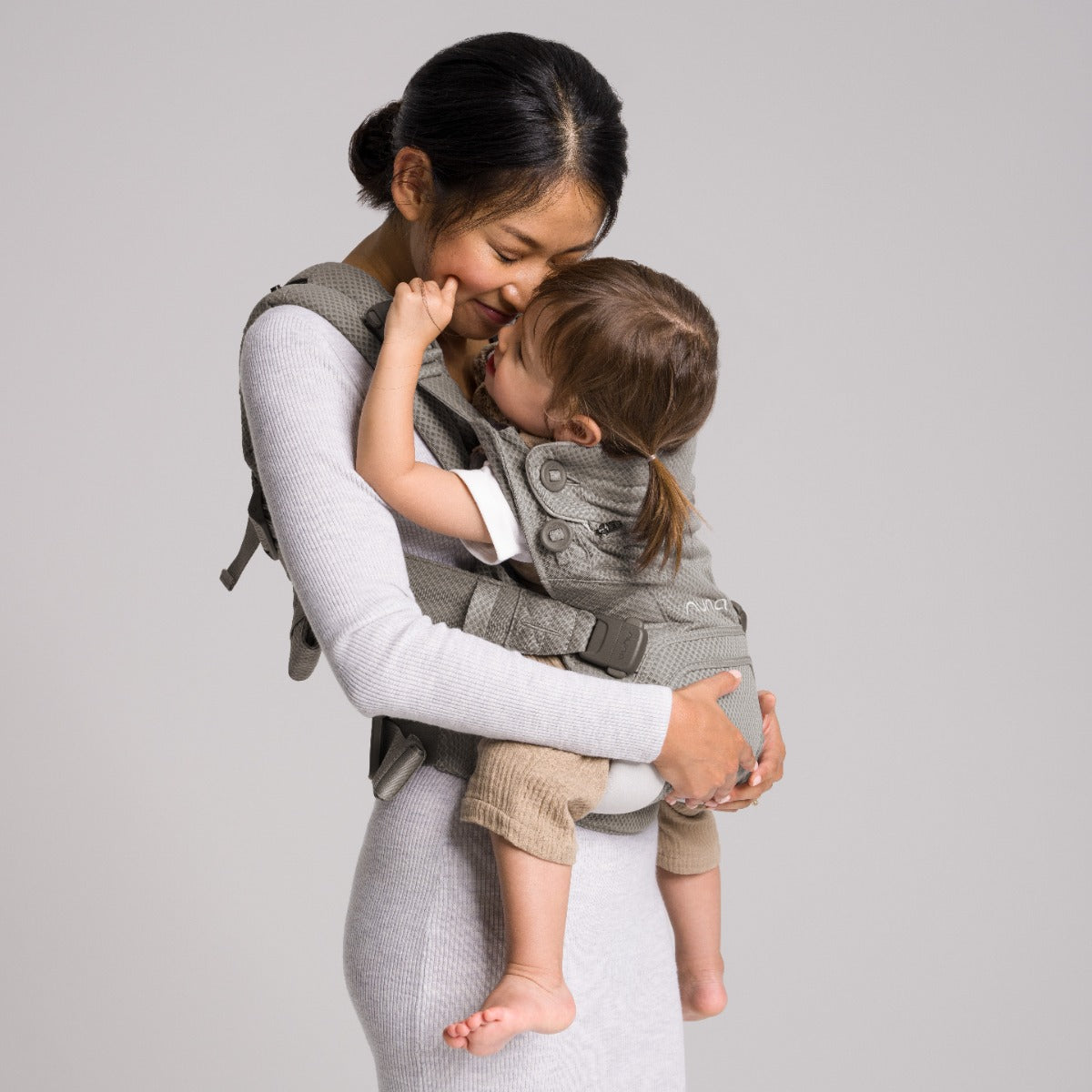
Life as a parent can be overwhelming but keeping your baby close and going through it together makes the journey so much more special. The Nuna CUDL™ Clik 4-in-1 ergonomic baby carrier provides the cuddly closeness you crave with the hands-free freedom you need to enjoy those small everyday moments that become the big ones.
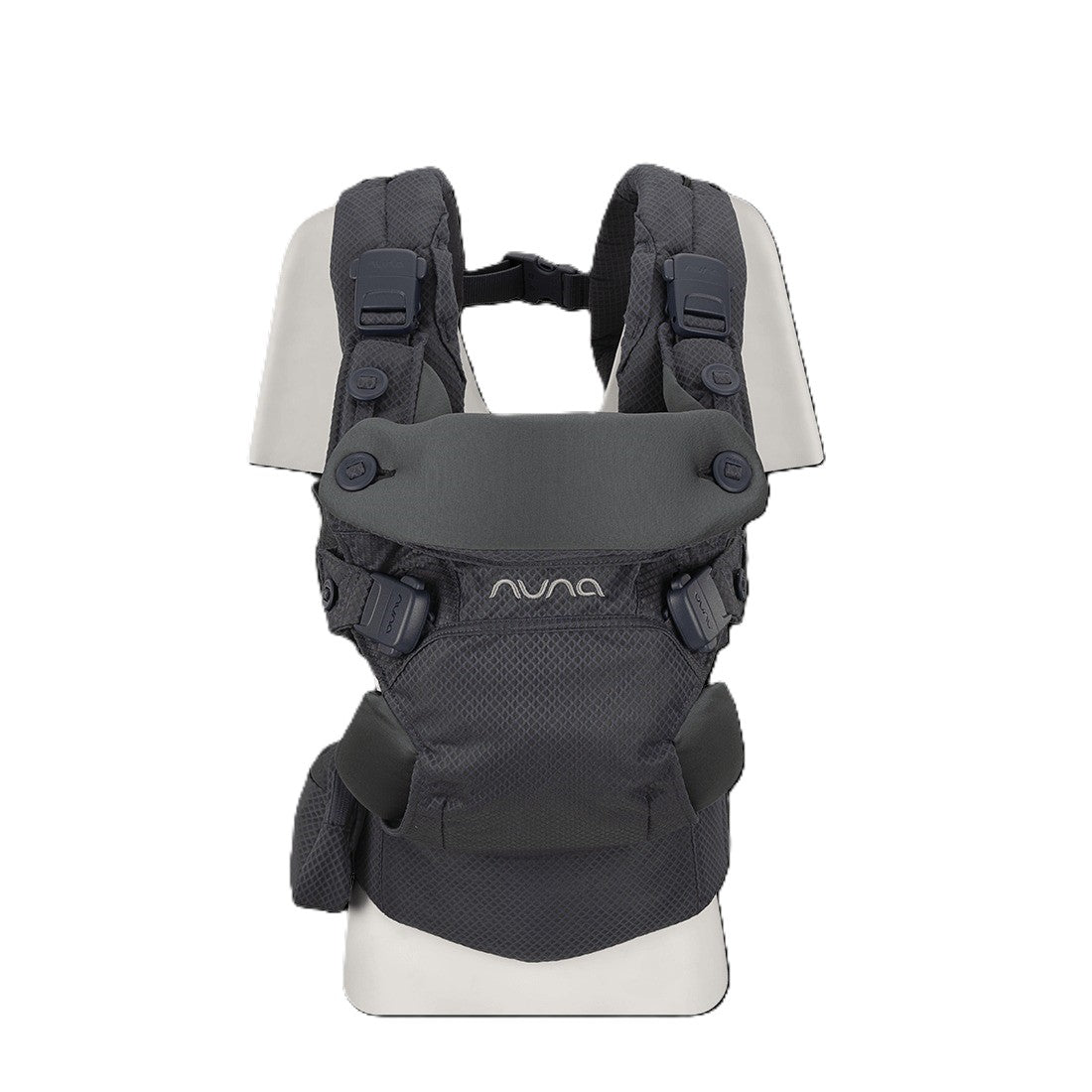
The CUDL Clik in Denim colour features breathable mesh fabric and padded shoulder and waist straps and is designed to make babywearing cool and comfy for both parent and baby. The buckled waistband clicks together in a snap and is adjustable for parents of all sizes. It’s accented with a removable wristlet pouch for on-the-go essentials, so just like that you are ready for the day’s adventures.
Say hello to self-guiding magnetic buckles that make securing baby in the carrier simple and safe. The attached hood shades baby, while the integrated breeze cover provides extra protection when out and about. The CUDL clik ergonomically adapts from the close to your heart newborn days to explore the world toddler stage, so you can go about the day-to-day together.
Because together is always better.
What's Included
What's Included
Key Features
Key Features
Technical Specification
Technical Specification
User Guide
User Guide
Delivery and Returns
Delivery and Returns
- Delivery: Free within NZ on orders over $130 (excluding bulky items) or $8 standard shipping
- Returns: Accepted within 14 days of receipt with proof of purchase
- Some items are excluded from returns including sale items, hardware, car seats, prams, monitors and personal items - please click here for the full list.
Share this product
Recently Viewed Products
Related Blogs

Choosing the right baby carrier
Here’s everything you need to know about baby carriers Becoming a new parent comes with an overwhelming number of unanswered questions – one of which is how to choose the right baby carrier. Keeping your little bundle of joy close to you while running errands, visiting the grandparents or doing chores around the house might seem like a far-fetched idea at first, but with a baby carrier, you don’t have to choose between doing one or the other. There is a huge selection of baby carriers to choose from – everything from smaller models best suited to newborn babies through to adaptable carriers which can be used even into the toddler years. With so many options, it can make deciding on which one to buy a little daunting – especially if you’re a first-time parent. Let’s take a look at different styles of carriers, as well as a few tips for how to pick the right one for you and your baby. Types of baby carriers Ring slings Ring slings are a well-known and versatile style of baby carrier. They’re made from a length of fabric threaded through two rings. Ring slings are worn on one shoulder, spreading widely across your back to create a pouch for baby to sit in. With some models, extra shoulder padding can be added for long-term wearing. Because a ring sling offers a variety of different carrying positions, it can be used from newborn through to toddlerhood. For young babies, it supports the ‘C-shape’ curve they’re born with. Once the sling has been adjusted to fit you and bubs, it’s a simple matter of popping baby in and out. Ring slings are a great introductory carrier for new parents because they’re easy to use and can be stored in your nappy bag. Soft-structured carriers This style of carrier is a favourite with parents because of how easy it is to use and adjust. The basic design is a front panel where baby will be ‘seated’, a waist strap and two padded shoulder straps – all of which can be adjusted and secured with buckles to achieve a comfortable fit. Soft-structured carriers can be used for front, hip and back carrying, from newborns to toddlers. They carry your baby in an ergonomic upright position (rather than a hammock or cradle position), evenly distributing his weight over both your shoulders. Many have additional head support for younger babies or integrated infant boosters which can be easily removed as your baby grows – like this Nuna Cudl Carrier. They’re not quite as snuggly as wraps and can take time to work out the most comfortable position, but they’re super-quick to pop on and provide fantastic support for long-term wearing. Wrap slings or carriers A wrap – like this Aura Baby Wrap – is one of the most comfortable baby carriers to wear. For young babies, the swaddle-like design mimics the feel of the womb. The design consists of a long piece of specially-woven fabric that is wrapped, tied and moulded to your body and baby. You can use it in lots of different styles – front, side or back, on one shoulder or two. Some wrap snugly around your chest to distribute weight and others are more like a backpack. Most will fit all sizes, shapes and ages of babes. You’ll need to learn how to wrap, but with a little practice and patience, you’ll have it mastered in no time. Tips for choosing a baby carrier Baby carriers come in a wide variety of styles and features. Whatever carrier you choose, follow the usage instructions and safety advice in the manual, and always monitor baby when in the carrier to ensure proper airflow is maintained. When shopping for a baby carrier, here are some things you should consider: Longevity As your baby grows, your carrier will need changing features. Newborns like to snuggle in close with their head on your chest; toddlers want to see the world! Most carriers come with generous age and size ranges but it's essential to choose a carrier designed to fit your baby's size and age. Some parents opt for two carriers and others look for an alternative that can adjust to different ages. Fit and comfort One of the most important factors of a baby carrier is how well it fits. You want one that fits your newborn well and supports her safely. This means you’ll need to factor in weight, height, physiology and build. It should also be comfortable for both you and your baby. The seat of any carrier should allow your baby’s legs to be in the hip-healthy ‘M’ position. For you, think about how much back and shoulder support you’ll need for long-term wearing comfort. Most carriers are one-size-fits-most, can be easily adjusted and shared between parents. Other options come in different size ranges. Ease of use Regardless of what type of carrier you buy, it may take a little practice before using one becomes second nature. Some carriers require a multi-step process to get set up but can be easily stored in a nappy bag. Others may be easier to use but bulkier to transport. Easy to clean If you didn’t already know – babies are messy! Not all carriers can be machine-washed for easy cleaning – some need to be hand-washed or dry-cleaned. Be sure to check labels for washing instructions. Climate While physical contact is great for a boost of oxytocin (the love hormone) and bonding, all carriers will add heat. For warmer climates, lightweight and breathable fabrics are essential. For colder climates, heavier materials and padding are more appropriate. Organic and eco-friendly For those parents and babies with sensitive skin, or anyone looking for an eco-friendly carrier option, consider carriers with organic fabrics, colour grown cotton, unbleached fabrics, recycled materials, and non-toxic dyeing processes. Pick what’s right for you and your family Baby carriers are a great alternative to lugging a stroller in and out of your boot and navigating crowds. They’ve been shown to help promote bonding, improve postpartum depression and anxiety, and reduce crying. But ultimately, the perfect carrier for you and your bouncing baby is the style that you both find most comfortable. All carriers provide exactly what your baby is looking for – being close to you. Look at your budget, lifestyle, and who will be using the carrier to help you decide which styles to consider.
Learn more
Babywearing made easy - New Limas Carriers
What are the benefits of babywearing? Baby carriers help you stay close and build a strong bond with your baby. The physical closeness can also help regulate the baby's heartbeat, body temperature, and breathing, all while providing them with a sense of security and comfort. Being hands-free while parenting is another great benefit. This convenience is great for everyday tasks around home. It also makes it easier to navigate crowded spaces, travel, or use public transport. A further benefit is that it frees parents to spend quality time with older siblings while keeping baby close and included. Babywearing has also been shown to ease discomfort and reduce crying. The gentle rocking motion mimics the womb and constant contact with a parent can have a soothing effect, helping to calm a fussy or colicky baby. Babies thrive on stimulation. Being in a carrier allows them to observe and engage with the world around them. They’ll get valuable sensory input from observing facial expressions, body language, and listening to the parent's conversations. Babywearing can also be beneficial for breastfeeding mothers with the close contact stimulating milk production. Babies' hips aren't fully developed when they're born. Babywearing supports healthy development of the hips. Our range of ergonomic carriers encourage the correct spread-squat position that is recommended by experts. New Limas Carriers The new Stokke Limas and Limas Plus are half-buckle carriers that combine the advantages of a baby wrap with an ergonomic carrier for optimal comfort & support. Both offer front, back (for 5+ months), and hip carrying options. The Limas Flex is a full buckle carrier with no straps to tie. It offers front and back carrying. In addition, the waistbelt can be easily removed, allowing it to be used as an onbuhimo - a traditional Japanese style for toddler back carrying Safety checks Ensure baby's airways are always clear and that they fully supported by the carrier. Make sure you keep one or both arms on your baby to secure them when fitting the carrier and when you bend over. And remember that if you wouldn’t do something with a baby in your arms, you probably shouldn’t do it while babywearing either – that includes anything involving hot liquids, running or jumping, or slippery surfaces. A great way to make sure your newborn is safely seated within their carrier is the T.I.C.K.S Rule. This stands for Tight , In view at all times, Close enough to kiss, Keep chin off the chest, Supported back. How to choose To make sure you’re choosing the right carrier for you and your baby it can help to try before you buy. The wide range of carriers we have available are all on display within our Dimples stores and we have amazing staff that can help fit the carrier for you.
Learn more
All about Baby Wearing – Finding the Right Baby Carrier for you
All About Babywearing: Finding the Right Fit for You and Baby 👶 Babywearing is a beautiful way to stay connected with your little one while keeping your hands free for everyday life. Whether you're folding washing, grabbing groceries, or just enjoying a walk, having your baby close can offer comfort, ease, and reassurance for you both 🤱. Carriers are designed to support your baby while reducing the strain on your arms and back. They also help foster that deep bond in those early months – especially when your baby simply wants to be held close. For breastfeeding parents, babywearing can also offer a practical way to nurse on the go. It may take a little practice at first, but with some patience, it can become second nature – a gentle rhythm of feeding and cuddling, all while moving through your day. Safety First: Babywearing with Confidence Wearing your baby safely is the most important part. You should always be able to see your baby’s face, and they should be positioned so their hips are spread in the “M” position, with knees higher than their bottom. To help guide safe babywearing, keep the T.I.C.K.S. rule in mind: Tight In view at all times Close enough to kiss 😘 Keep chin off the chest Supported back These five simple points help ensure baby is secure, well-positioned, and comfortable in any carrier. Carrier Options at Dimples At Dimples, we stock a thoughtfully chosen range of baby carriers to suit different lifestyles, preferences, and parenting styles. Whether you’re looking for a soft wrap for newborn snuggles or a structured carrier for extra support, our team can help find the right fit for you. Nuna CUDL Clik The Nuna CUDL Clik is designed to make babywearing feel natural and easy – right from day one. With four magnetic buckles, it’s quick to put on and adjust, even if you’re flying solo. The breathable mesh keeps you and baby cool, while padded shoulder and waist straps offer extra support for longer days on the go. Suitable from newborn up to 16kg, the CUDL Clik offers four carry positions and ergonomic support to encourage healthy hip development. Crafted with OEKO-TEX® certified fabric, it’s soft, safe, and gentle against baby’s skin. Ergobaby Omni Deluxe The Ergobaby Omni Deluxe is a great option if you're after a versatile, all-in-one carrier. It supports newborns through to toddlers (up to 20.4kg), with four carry positions including front and back. With padded, adjustable shoulder straps (which can be worn crossed or straight), this carrier is designed with your comfort in mind too. It’s recognised by the International Hip Dysplasia Institute for its ergonomic design, and is available in soft, breathable mesh or classic cotton fabrics. Boba Wrap For those early days, the Boba Wrap Carrier offers a wonderfully cosy and supportive option. Made from soft, stretchy fabric, this wrap moulds gently to your baby’s shape while giving you the freedom to move. It’s ideal for newborn cuddles, and with a one-size-fits-most design, it’s simple to learn and easy to wear 🤍. Try Before You Buy at our Dimples store Choosing the right carrier is a personal decision, and it's important to find one that works for both you and baby. At our Dimples stores in Auckland and Christchurch, all of our carriers are on display and ready to try. Our experienced team will be there to help guide you through the options, show you how each carrier fits, and answer any questions you might have about babywearing. We’re here to support you – every step of the way 💛
Learn more
Baby Swimming Lessons: When to Start & What to Expect
Baby Swimming Lessons: Building Water Confidence from an Early Age Living in New Zealand means water is never far away! We've got beaches, we've got lakes and we've got rivers, not to mention our swimming pools and backyard water play. Learning how to feel confident and safe around water is an important life skill for our Kiwi kids. Introducing your little one to the water from an early age can be a lovely experience for the whole family. Swimming lessons can support coordination, movement and confidence, while also giving parents and caregivers a special opportunity to have fun, connect and learn together. Most importantly, early positive experiences around water can help lay the foundations for lifelong water safety. Water Safety New Zealand says drowning remains a leading cause of death for New Zealand children aged under five, making active supervision and age appropriate water skills incredibly important. Start with water confidence Your baby's first introduction to water doesn't need to happen at a swimming pool. Bath time is a great place to start. Allow your baby to enjoy splashing, kicking and gradually becoming familiar with water around their face and body. As they become more comfortable, trips to the local pool can introduce them to a completely different environment with new sounds, sensations and movements plus a whole lot of fun! The aim at this stage isn't to turn your baby into a swimmer. It's simply about helping them feel happy and secure around water. When can babies start swimming lessons? There isn't one set age that suits every baby or every swimming programme. Some specialist swim schools offer parent and baby classes from around three months, while others begin from six months. The best option is to check the starting age and requirements of your chosen swim school. Finding swimming lessons in New Zealand If you're looking for somewhere to start, there are plenty of great options. Dean Greenwood Swim School has several Auckland locations and offers programmes ranging from babies through to adults. Hilton Brown Swimming offers lessons for babies, children, teenagers and adults across locations in Auckland, Waikato, Hawke's Bay and Manawatū. Their infant programme focuses on water confidence, movement, safety awareness and introducing skills such as floating. Many local leisure centres and community swimming pools also offer learn-to-swim programmes for babies, preschoolers, school aged children and even adults, so it's totally worth checking what is available close to home. What happens at baby swimming lessons? Baby swimming lessons are usually much more about water familiarisation and confidence than traditional swimming. A parent or caregiver will generally get into the pool too, helping baby feel secure while the instructor introduces activities through play, songs and movement. Depending on your baby's age and the programme, lessons may gradually introduce skills such as: Becoming comfortable with water around the face and head Kicking and moving through the water Floating and rolling Breath control and gentle submersion Moving towards or returning to a safe position Learning to feel calm and confident in the pool It's also valuable learning for parents. You'll become more confident handling your baby in the water and learn ways to continue practising positive water experiences together. And remember - swimming lessons build skills and confidence, but they never replace active adult supervision around water. Tips for making swimming lessons easier Give yourself plenty of time Getting yourself and a baby changed can sometimes take longer than the swimming lesson itself! Arrive early enough that you don't need to rush. Family changing rooms are especially helpful, and if your pool allows strollers inside, having somewhere safe for baby to sit while you get changed can make things much easier. Pack for afterwards Swimming can be tiring, particularly for little ones. Have everything ready for a feed or snack afterwards depending on your baby's age. Keep them warm Moving from a warm swimming pool into a cooler changing room or outside air can feel like a big temperature change. Have a cosy towel and dry clothing ready so you can get your little one comfortable quickly. Bring another pair of hands If you're taking more than one child to lessons, another adult can make changing, feeding and getting everyone safely to and from the pool considerably easier. It can totally be done with one caregiver if you're game... but four hands are easier than two. Don't worry if every lesson isn't perfect Some days your baby might love the pool. Other days they may be tired, hungry or simply not interested. That's completely normal. Building water confidence is a gradual process, so keep the experience positive rather than trying to push through when they've had enough. What to pack for baby swimming lessons A little preparation makes getting in and out of the pool much easier. Baby swimwear Start with comfortable baby swimwear and swimming essentials suitable for your little one's age and the type of swimming you'll be doing. Our new Baby Swimwear Collection brings together the swim essentials you need for trips to the pool, beach and summer days by the water. Shop our full range of Baby Swim Essentials here Swim nappies Most pools require babies who aren't toilet trained to wear an appropriate swim nappy, so check your swim school's requirements before your first lesson. A warm towel A soft towel or hooded towel is ideal for wrapping baby up as soon as they leave the water. A change mat Pool changing rooms aren't always the easiest place to change a baby, so having your own change mat can be incredibly useful. The Purely Baby Disposable Change Mats are particularly handy for swimming lessons because you can create a clean changing surface and simply dispose of the mat afterwards. Don't forget Pack a few extra essentials too: Dry clothes Spare nappies Wipes A wet bag or waterproof bag for wet swimwear Milk, a bottle or snacks depending on baby's age Your own swimwear and towel - surprisingly easy to forget! Water safety always comes first Swimming lessons are valuable, but no swimming lesson or floatation device can replace close adult supervision. Water Safety New Zealand recommends keeping babies and young children within arm's reach whenever they're in or around water. This applies everywhere - the swimming pool, beach, bath, paddling pool, lake or river. Stay focused on your child rather than relying on lifeguards, older siblings or floatation toys to supervise them. It's also important to look for potential water hazards around your own home. In New Zealand, residential pools that can hold water to a depth of 400 mm or more are subject to requirements for physical barriers designed to prevent unsupervised access by children under five. Enjoy the water together Learning to swim is a journey, and it begins long before your child is swimming independently. Positive bath times, trips to the pool and regular swimming lessons can all help your little one develop confidence and respect for the water while creating plenty of special memories along the way. Keep it fun, follow their pace and, above all, stay close whenever water is around.
Learn more