


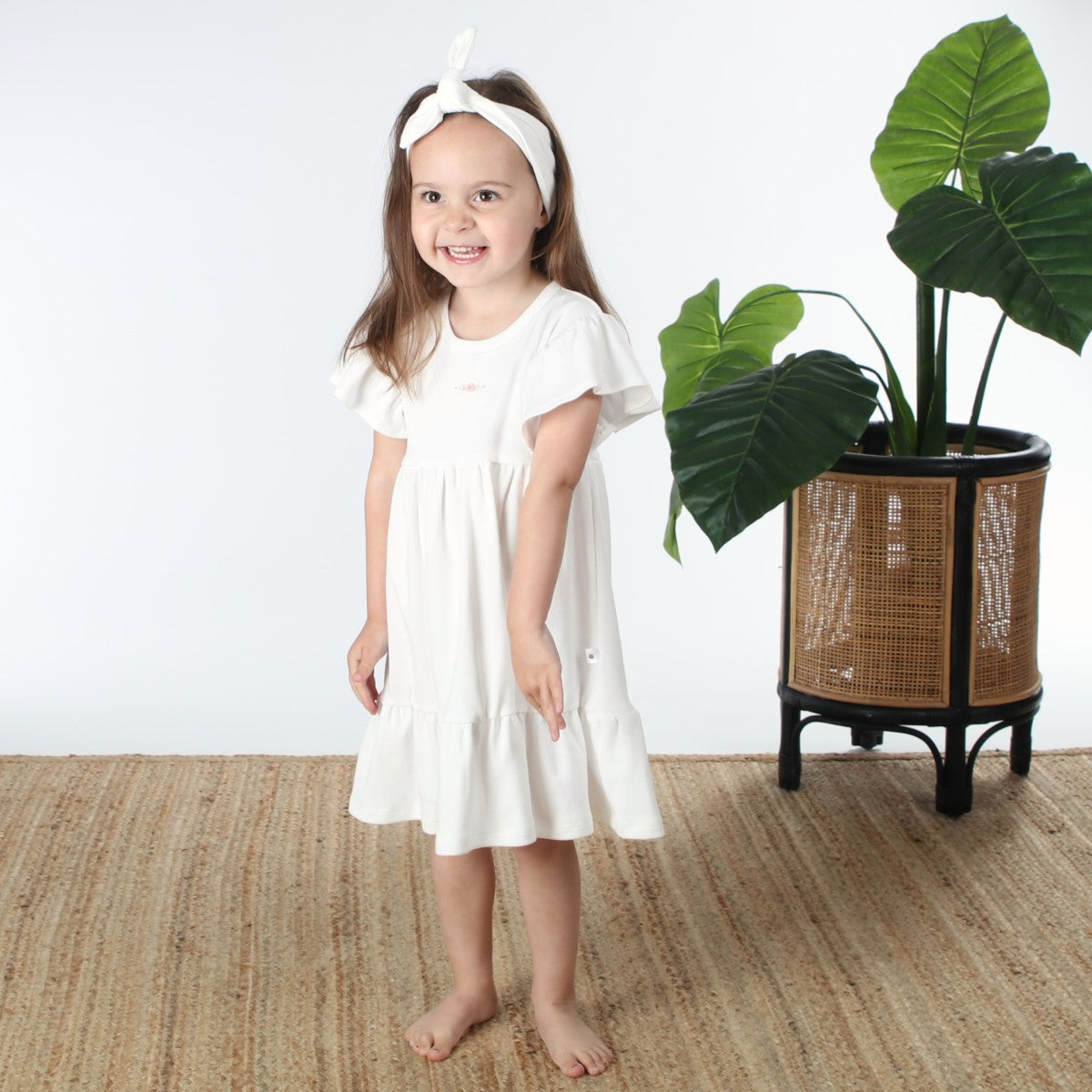
Cotton Tiered Dress
Cotton Tiered Dress
SKU:CCLR378WR-2yr
Low stock
Couldn't load pickup availability
Overview
Overview
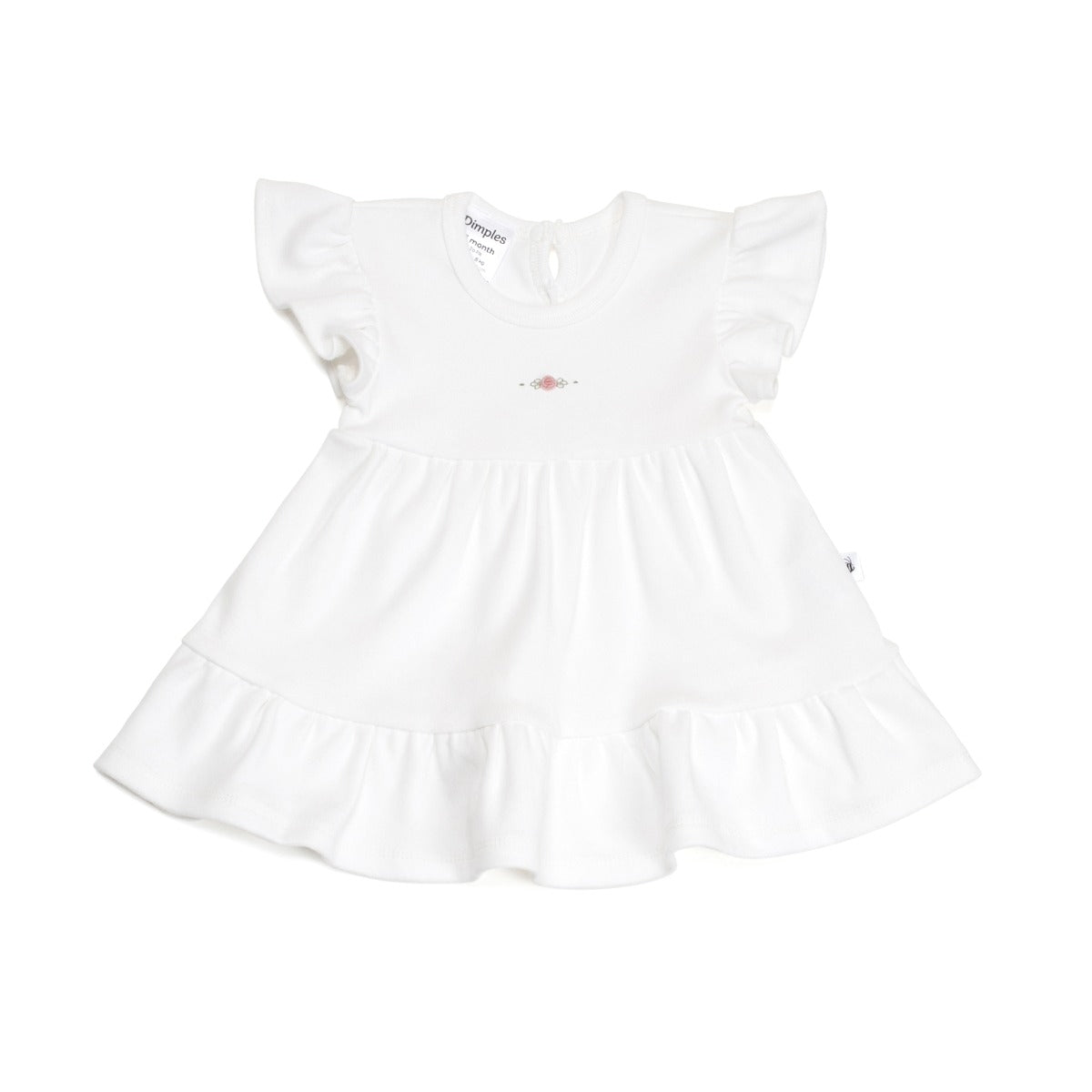
Wrap your little one in pure love with our timeless Dimples Cotton Classics. This all-white cotton babywear collection is made and hand-embroidered in NZ and features the iconic Dimples Rose. We love natural fibres for baby clothing. This collection is made from 100% certified organic cotton that's oh-so-soft on your little one's delicate skin.
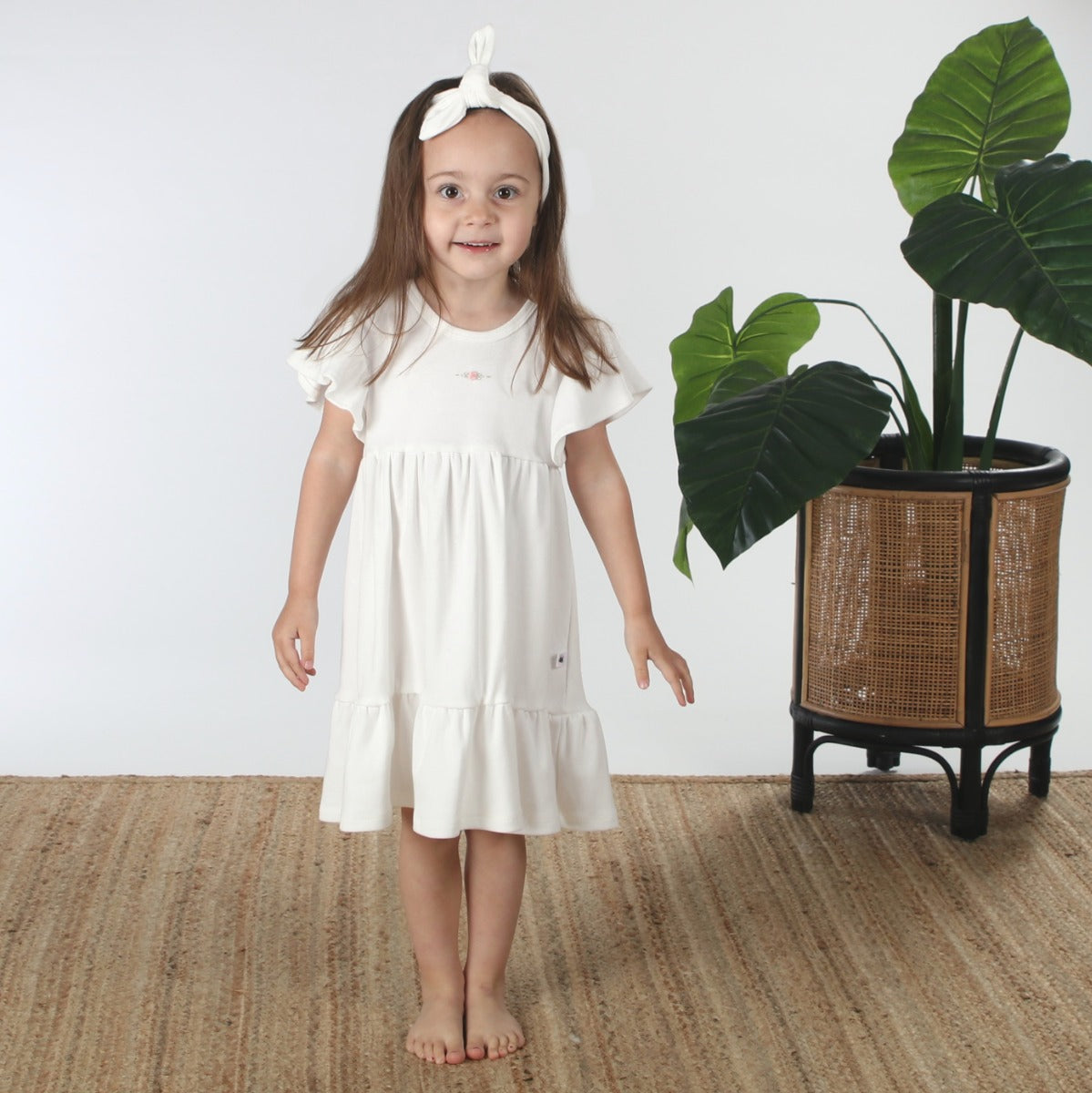
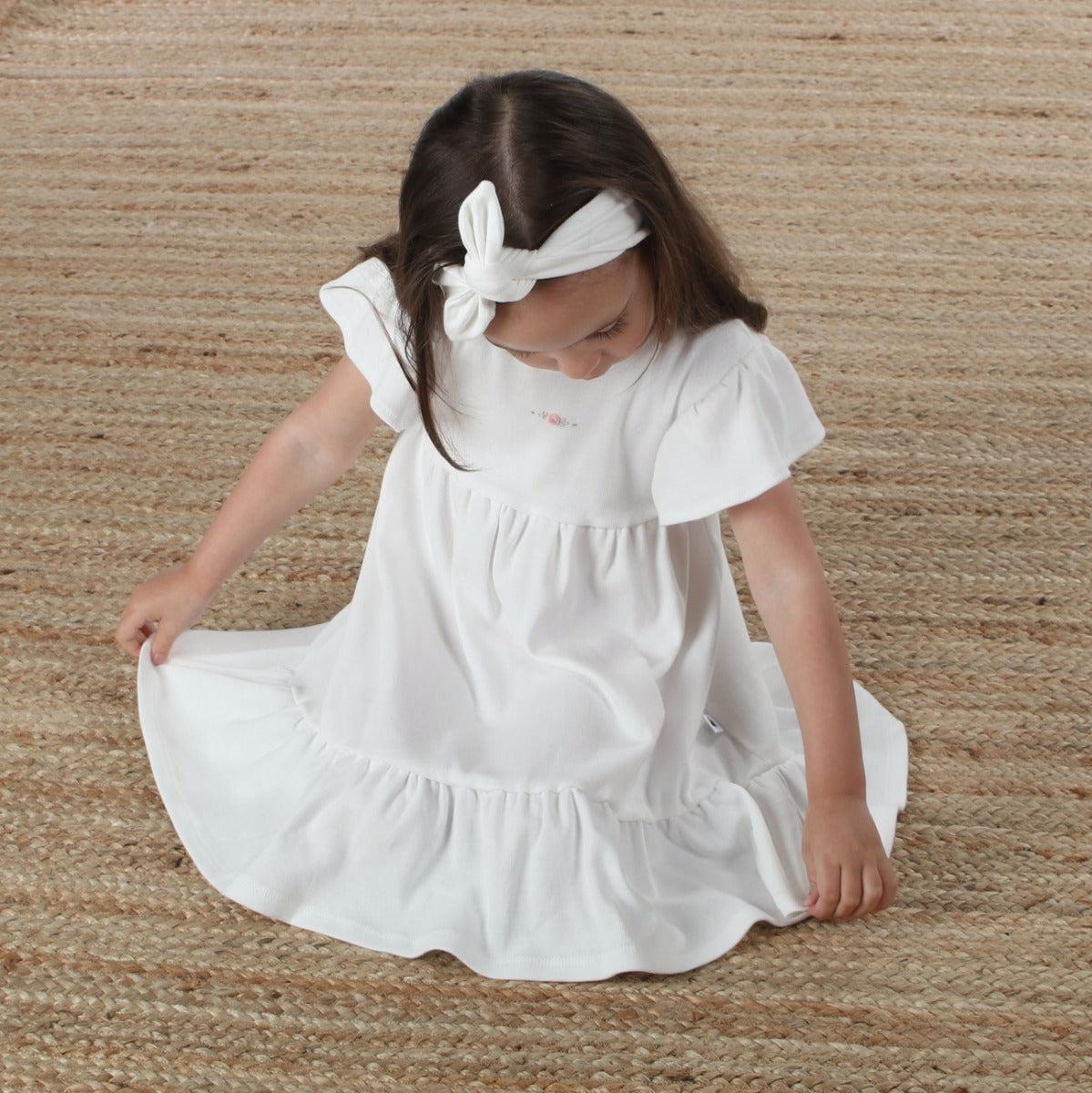
This tiered dress is the perfect piece to add to your little girl's summer wardrobe. With flowing frill sleeves, this dress is suitable for any occasion. It is the type of dress you can mix and match with anything, It's full, it's floaty, and it’s a gorgeous look for these stunning summer days!
Fabric Information
Fabric Information
Fit & Care
Fit & Care
Delivery and Returns
Delivery and Returns
- Delivery: Free within NZ on orders over $130 (excluding bulky items) or $8 standard shipping
- Returns: Accepted within 14 days of receipt with proof of purchase
- Some items are excluded from returns including sale items, hardware, car seats, prams, monitors and personal items - please click here for the full list.
Share this product
Recently viewed products
Related Blogs

No matter the colour, all our clothes are green on the inside
Dimples has always been a proud New Zealand brand, with strong Kiwi values. Protecting the environment is one of them. Even as we’ve grown from a home business to a larger company, that commitment hasn’t changed. The clothing industry is notoriously hard on the environment – and on the people involved. It can cause incredible environmental and social damage worldwide: from cotton farms that suck up huge amounts of valuable water, to clothing factories using harsh chemicals and exploiting their workers; from the use of fossil fuels for shipping, to ‘fast fashion’ that ends up in landfills after a few wears. We work hard to minimise our impact on the environment by keeping our production in New Zealand, using local materials as much as possible, and avoiding the factory system altogether. It’s about protecting our world long term – and making adorable, high quality baby gear at the same time. Made here, sold here Dimples clothing is produced right here in New Zealand. This lets us avoid shipping product across the world using harmful fossil fuels – it’s one of the most important ways that we reduce our environmental impact. Making our clothes in New Zealand also means that we can control the quality of our product, and the working conditions of our sewers. We know that all our clothing is produced to an extremely high standard, by workers who are paid well and treated fairly. That’s incredibly valuable. Starting from scratch Where clothing is assembled isn’t the only factor when it comes to the environment. Sourcing the raw materials – merino wool and cotton , in our case – is also important. Our merino comes from a mix of New Zealand and Australian sheep, which means the raw materials don’t have to travel very far, and we can keep an eye on the quality. New Zealand’s climate isn’t suitable for large-scale cotton production, so we import only pure, organic-certified cotton to make sure the impact of cotton farming is minimal. Small scale production Dimples started out as a home-based business, and although we’ve grown, we haven’t changed all that much. We don’t have a huge factory producing our clothing – instead, our expert sewers work from their homes. It’s essentially a scaled-up version of the small home workshop where it all started. The classic Dimples bee and rose are still hand-stitched onto every garment. This system doesn’t just result in a better quality product, it also helps us avoid the environmental costs of factory production – we don’t use huge amounts of power to run machinery, or process our materials using harsh chemicals. Made to last The end result of our high-quality materials and high production values is hard-wearing, long-lasting clothing. Our customers find that our clothing lasts through wash after wash without fading, stretching or pilling. Many customers use our clothing for multiple children, then pass it on to friends or family. This is environmentally friendly in itself – the more your child or children can wear each garment, the less you’ll need to throw away. This reduces the need for production and reduces the amount of landfill. It’s all part of our ongoing commitment to our beautiful world. We’re not green because it’s trendy or expected, we’re green because we care – and we always will. Take a look at our NZ made clothing now
Learn more
How to Dress your baby for Sleep
Dressing Your Baby for Sleep – A Seasonal Guide Knowing how to dress your baby at bedtime can feel like a bit of a guessing game – especially when the seasons start to change. Should you add another layer? Is the room too cool? Are their hands meant to be that cold? To help take the guesswork out, we’ve put together a simple guide to dressing your little one for sleep using our Dimples sleeping bags and sleepwalkers, without any additional blankets. A Gentle Reminder Every baby is different, so this guide is just that – a guide. The best way to check if your baby is at a comfortable temperature is by feeling the back of their neck. It should feel warm, not hot or sweaty. Hands and feet can feel cooler and aren't always a reliable indicator. Baby’s body temperature naturally dips during the early morning hours, so if your little one is waking more often than usual, it might be worth checking if they’re feeling a bit chilly. And remember – when it comes to sleep, it’s safer for babies to be slightly cool rather than too warm. Choosing the Right Layers When dressing your baby, natural fibres like Merino wool or cotton are best. These breathable fabrics help regulate temperature and keep your baby comfortable through the night. Merino in particular is a year-round superstar – its clever fibres trap warm air on cooler nights and allow heat to escape on warmer ones, making it ideal for all seasons. At Dimples, all of our garments are designed especially for keeping little ones cosy and safe. We recommend having at least two sleeping bags or sleepwalkers on hand for each season, so you’re always prepared for the inevitable midnight messes. Ideal Room Temperature The ideal temperature for a baby’s room is between 16–20°C. If you’re using a heater or heat pump, setting the thermostat to 18°C will help maintain a steady climate through the night without overheating. Monitoring the Room Many baby monitors display room temperature, which can be a helpful reference.Alternatively, something like the Shnuggle Moon Nightlight can be used to keep an eye on the room temperature. It uses a handy colour display to show whether the room is sitting within the ideal range. Signs Your Baby May Be Too Warm Waking more frequently than usual Sweaty back or neck Damp hair Shallow or rapid breathing If you notice these signs, try removing a layer or adjusting the room temperature. A cool, damp cloth on the back of their neck can help if they’re feeling very warm – and always check for fever if you’re concerned. Signs Your Baby May Be Too Cold Restless sleep or unusual movement around the cot Rolling onto their stomach Catnapping during the day Waking around 5am If any of these sound familiar, consider adding a layer, using a warmer sleeping bag, or gently warming the room. Dressing your baby for sleep doesn’t have to be stressful. With a few key pieces and a little trial and error, you’ll find the sweet spot that keeps them cosy and safe – all night long 😴 Explore our full sleepwear range to find breathable, natural fibre options for every season.And if you’re ever unsure, we’re here to help.
Learn more
The Power of Gratitude
The Power of Gratitude Parenting can be incredibly rewarding – but let’s be honest, it’s also really hard. Becoming a mum changes almost every part of your life: your body, your routine, your social life, even your sense of self. And while dads may not go through the physical toll of pregnancy, birth or breastfeeding, they still feel the effects of broken sleep, lifestyle changes, and the loss of independence. When you’re deep in the trenches of early parenting, being told to “count your blessings” can feel irritating at best. But frustrating as it is, there’s some truth to it. Research shows that practising gratitude can genuinely boost your mental health – and even shift the way your brain works. The power of positive language You can’t just switch on feelings of gratitude like a light. Emotions don’t work that way. But you can start building habits that encourage a more grateful mindset. A study from the University of Indiana found that writing about things you feel thankful for – even small ones – can help rewire your thinking over time. Focusing on positive words and thoughts, whether through journaling or writing gratitude letters, helps nudge the brain away from negativity and towards contentment. If you’ve got time, jotting down a few lines in a journal can be helpful. But even if you’re juggling a million things, you can still give it a go – a scribbled post-it, a chalkboard note, or adding to a family gratitude jar are all simple ways to start. Some parents even use social media as their own mini gratitude log. Whatever method works for you, the key is to do it regularly. Over time, it really can make a difference. Gratitude takes practice People who practise gratitude tend to cope better with stress, feel more optimistic, and have greater self-esteem. That said, it’s probably not the gratitude alone that makes life feel easier – it’s the long-term shift in how they view the world. Gratitude isn’t a magic fix. The change happens slowly, as your brain gets used to noticing and appreciating the good. By practising now, even in small ways, you may find you’re better able to enjoy the everyday moments later on. That said, if you’re feeling low for an extended period, or struggling with sadness or anxiety, it’s important to reach out. A gratitude journal is lovely, but it’s not a substitute for professional help. Talk to your midwife or GP – they’re there to support you. Give it a try Gratitude doesn’t have to be another thing on your already long to-do list. And there’ll definitely be days where you won’t feel remotely thankful for the mountain of laundry or a toddler’s meltdown. But on the days you can, take a moment – maybe when they’re finally asleep – to notice what you do feel grateful for. It might just make the ride a little smoother.
Learn more
Best Travel Strollers in NZ: Lightweight & Compact Picks for 2026
Travelling with a baby or toddler is much easier with a lightweight, compact stroller. Whether you’re navigating airports, hopping on and off trains or exploring a new city, the right stroller can make all the difference. We’ve compared some of the best travel strollers available in New Zealand, including the Stokke YOYO3, Nuna VIAA CABN, Nuna TRVL dubl and Edwards & Co Lucci. Why Choose a Travel Stroller? Everyday strollers tend to be packed with extra features that are great for everyday usage but can make them more bulky. When it comes to travel, compact and lightweight is the way to go. Travel strollers are designed to be easy to carry, fold, and store – perfect for life on the move. What to Look For Foldability: Look for a stroller that’s easy to fold – ideally one-handed. Weight: A lighter stroller is easier to lift into car boots, overhead lockers, or up stairs. Compact Size: Check the folded dimensions – the smaller, the better for travel. Portability: Is there a carry strap or handle? This makes a big difference on the go. Manoeuvrability: Smooth steering and good suspension can help you navigate tight spaces and bumpy pavements. Comfort: Reclining seats, padded cushions, and a sun canopy keep your little one happy on the move. Storage: A basket underneath for snacks, nappies, and must-haves is a handy bonus. Accessories: Travel bags, rain covers, and cup holders can all add extra convenience. Plane Travel Suitability: If you want to carry your stroller onboard, check its folded dimensions. IATA (the International Air Transport Association) suggests 56 x 45 x 25 cm for carry-on. But cabin baggage and stroller rules vary between airlines, routes and aircraft. Always check directly with your airline before flying. You may also be able to use your stroller right up to the gate and have it stored in the hold – ask your airline in advance. Even strollers designed to fit in overhead lockers may need to be gate-checked on full flights. Our Top Picks for Travel Strollers STOKKE YOYO3Weight: 6.2 kg (6+ pack)Folded Size: 52 x 44 x 18 cm The YOYO3 folds easily and opens in seconds. Its compact size makes it a favourite for airline travel, and it can be set up with a bassinet, newborn pack, or 6mths+ seat. The YOYO3 is also compatible with a variety of capsules using the YOYO Adapters (which are purchased separately). The slim frame and smooth steering are ideal for city life, and it’s customisable with colour/seat packs in a range of colours. It even has a padded shoulder strap so you can carry it hands-free. Perfect for: Urban adventures and families who travel often. NUNA VIAA CABN Weight: 7.6 kgFolded Size: L 20 x W 42.5 x H 62 (52 without armbar) cm The Nuna Viaa Cabn is compact, lightweight and designed to meet IATA cabin guidelines, fitting into the overhead locker. With a quick, compact fold, smooth manoeuvrability and all the premium details you expect from Nuna, it’s ready for airport dashes, city exploring and everyday outings. Perfect for: Those who want a high-end, luxurious stroller with all the comfort of a full-size model. NUNA TRVL DUBLWeight: 12.8 kgFolded Size: L 41 x W 78 x H 74 cm Travelling with two? The Nuna TRVL dubl offers the convenience of a travel stroller in a side-by-side design. At 78cm wide, it's designed to move through standard doorways and narrow spaces, while each seat reclines independently - handy when one child wants to nap and the other wants to see the sights. It folds one-handed, stands on its own when folded and is surprisingly lightweight for a double stroller. The TRVL dubl even fits a Nuna Pipa capsule on one side, so the whole family can travel together. Perfect for: Families travelling with twins, a baby and toddler, or two young children. EDWARDS & CO LUCCIWeight: 7.3 kgFolded Size: 57cm H x 46cm W x 24cm D The Lucci’s one-handed auto-fold makes travel easy. Ergonomic seat with 3 recline options including lie-flat. Meets IATA guidelines for the overhead plane lockers in Travel Mode (wheels/bumper removed). Perfect for: Families looking for a lightweight, compact travel stroller that won’t break the bank. Shop stroller accessories Which Travel Stroller Is Right for You? The best travel stroller depends on where you're going and how you'll use it. Flying frequently? Folded size and weight may be your priority. Exploring cities? Look for smooth steering, suspension and a comfortable recline. Travelling with two children? A lightweight double stroller can make getting around much easier. Shop our range of strollers online, or visit Dimples Newmarket or Christchurch to fold, carry and test-drive them for yourself. Our team can help you find the best stroller for your family and your next adventure. Happy travels! FAQs Can you take a travel stroller on a plane?Often, but it depends on the airline, aircraft and stroller's folded dimensions. Some compact strollers may be accepted as cabin baggage, while others need to be checked or left at the aircraft door. What size stroller fits in an overhead compartment?There isn't one universal size. Many airlines use cabin-bag dimensions around 56 × 45 × 25cm as a general reference, but individual airline rules apply. Can a travel stroller be used as an everyday stroller?Yes. Many modern travel strollers offer features such as reclining seats, good suspension, storage baskets and sun canopies, making them practical for everyday use as well as holidays. And they don't take up too much space in your car boot. However you should consider how much storage and all-terrain capability you need before choosing one as your main stroller. Travel strollers typically have smaller wheels making a slight less smooth ride. Can you use a travel stroller from birth?Some travel strollers are suitable from birth thanks to a lie-flat seat, newborn insert, bassinet or compatible infant capsule. Always check the manufacturer's age, weight and configuration guidelines for the specific stroller.
Learn more