




Waffle Cotton Placket Romper
Waffle Cotton Placket Romper
SKU:SWB384C-18mth
Low stock
Couldn't load pickup availability
Overview
Overview
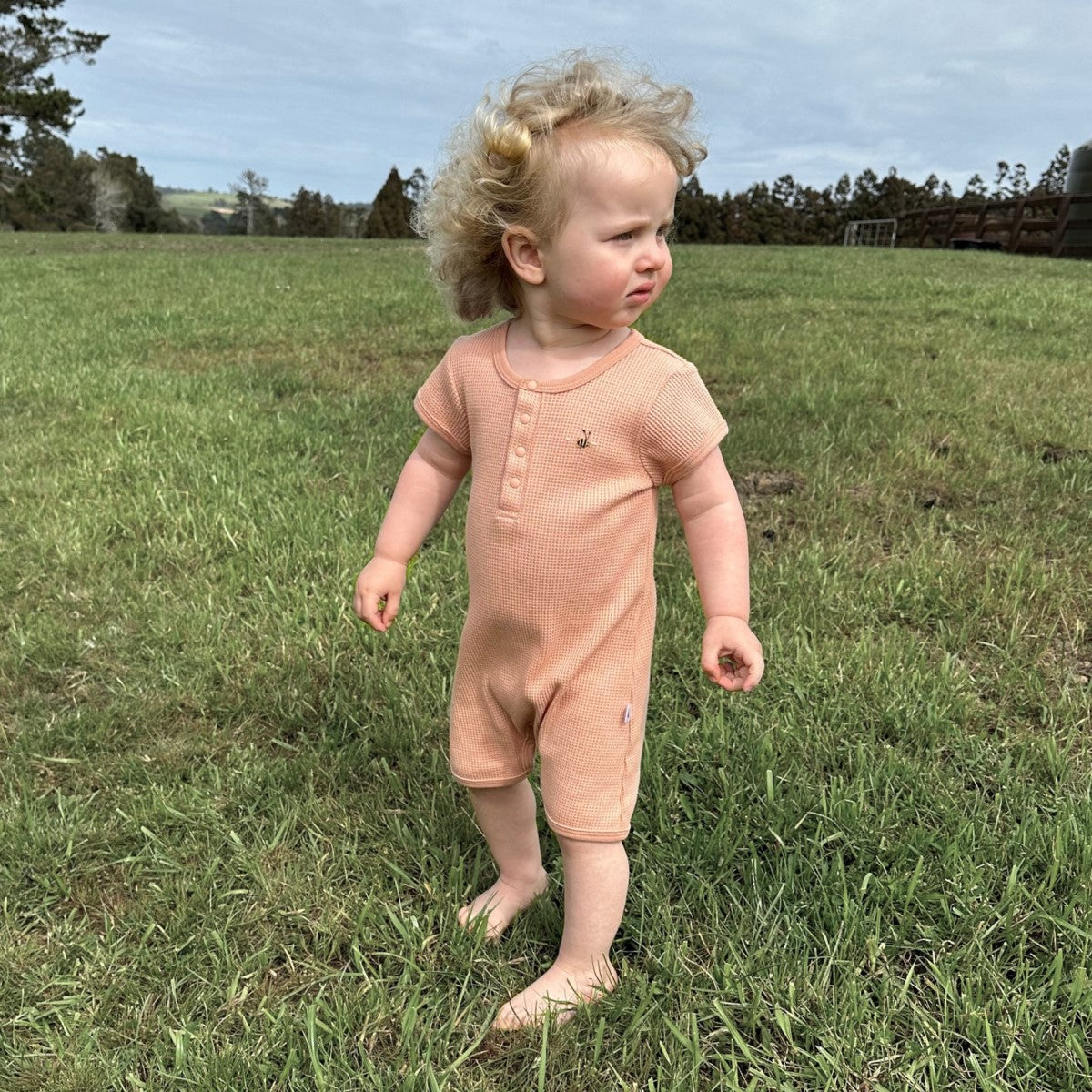
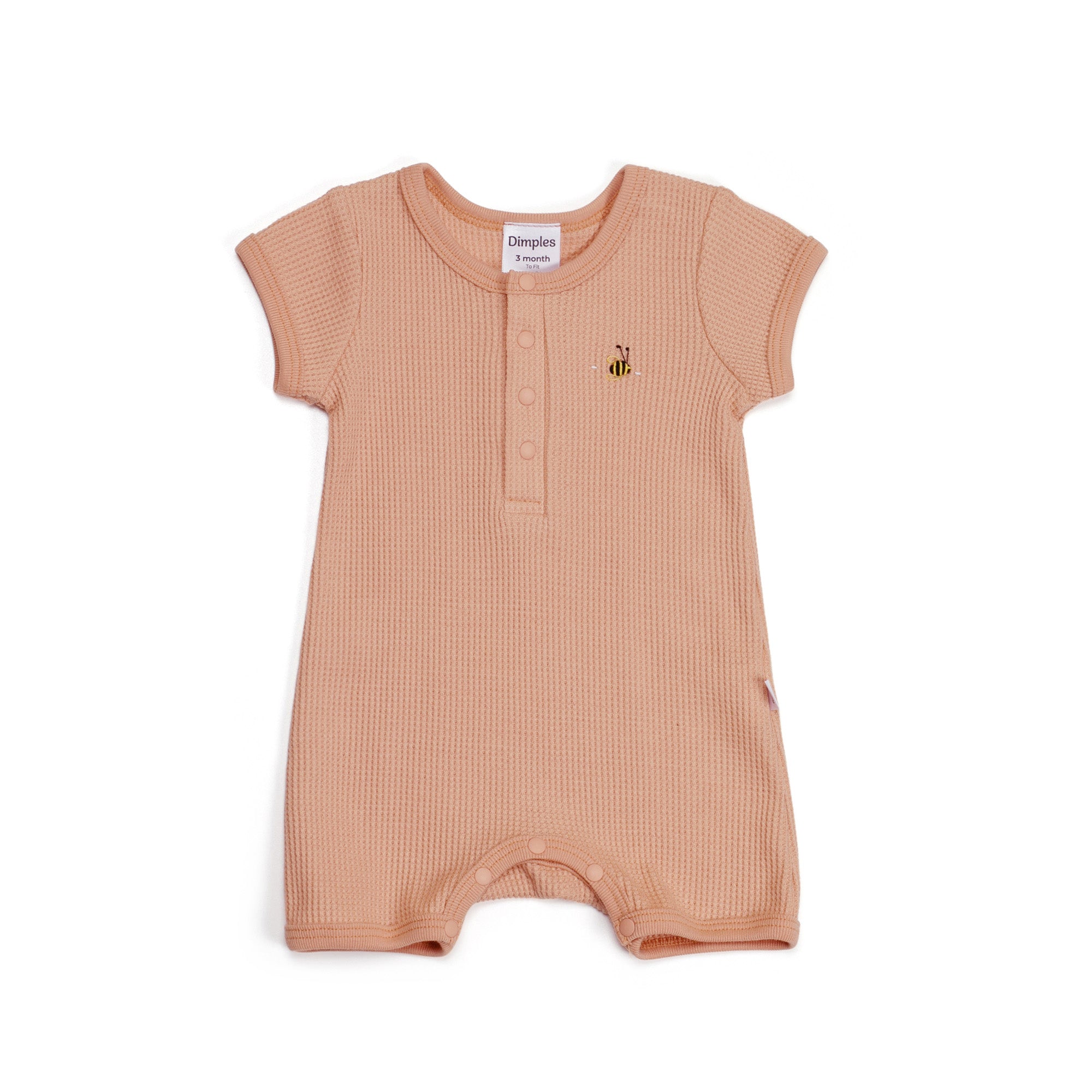
This organic cotton textured romper is made and hand emboidered in NZ and features the iconic Dimples Bee. We love natural fibres for baby clothing. This collection is made from 100% certified organic cotton that's oh-so-soft on your little one's delicate skin.
This short-sleeved romper is perfect for summer days at the beach. The placket front and the domed crutch make this romper easy to slip on and off, while the soft fabric makes it easy for baby to move around and they will love the comfort they bring.
Fabric Information
Fabric Information
Fit & Care
Fit & Care
Delivery and Returns
Delivery and Returns
- Delivery: Free within NZ on orders over $130 (excluding bulky items) or $8 standard shipping
- Returns: Accepted within 14 days of receipt with proof of purchase
- Some items are excluded from returns including sale items, hardware, car seats, prams, monitors and personal items - please click here for the full list.
Share this product
Recently viewed products
Related Blogs

How to Dress your baby for Sleep
Dressing Your Baby for Sleep – A Seasonal Guide Knowing how to dress your baby at bedtime can feel like a bit of a guessing game – especially when the seasons start to change. Should you add another layer? Is the room too cool? Are their hands meant to be that cold? To help take the guesswork out, we’ve put together a simple guide to dressing your little one for sleep using our Dimples sleeping bags and sleepwalkers, without any additional blankets. A Gentle Reminder Every baby is different, so this guide is just that – a guide. The best way to check if your baby is at a comfortable temperature is by feeling the back of their neck. It should feel warm, not hot or sweaty. Hands and feet can feel cooler and aren't always a reliable indicator. Baby’s body temperature naturally dips during the early morning hours, so if your little one is waking more often than usual, it might be worth checking if they’re feeling a bit chilly. And remember – when it comes to sleep, it’s safer for babies to be slightly cool rather than too warm. Choosing the Right Layers When dressing your baby, natural fibres like Merino wool or cotton are best. These breathable fabrics help regulate temperature and keep your baby comfortable through the night. Merino in particular is a year-round superstar – its clever fibres trap warm air on cooler nights and allow heat to escape on warmer ones, making it ideal for all seasons. At Dimples, all of our garments are designed especially for keeping little ones cosy and safe. We recommend having at least two sleeping bags or sleepwalkers on hand for each season, so you’re always prepared for the inevitable midnight messes. Ideal Room Temperature The ideal temperature for a baby’s room is between 16–20°C. If you’re using a heater or heat pump, setting the thermostat to 18°C will help maintain a steady climate through the night without overheating. Monitoring the Room Many baby monitors display room temperature, which can be a helpful reference.Alternatively, something like the Shnuggle Moon Nightlight can be used to keep an eye on the room temperature. It uses a handy colour display to show whether the room is sitting within the ideal range. Signs Your Baby May Be Too Warm Waking more frequently than usual Sweaty back or neck Damp hair Shallow or rapid breathing If you notice these signs, try removing a layer or adjusting the room temperature. A cool, damp cloth on the back of their neck can help if they’re feeling very warm – and always check for fever if you’re concerned. Signs Your Baby May Be Too Cold Restless sleep or unusual movement around the cot Rolling onto their stomach Catnapping during the day Waking around 5am If any of these sound familiar, consider adding a layer, using a warmer sleeping bag, or gently warming the room. Dressing your baby for sleep doesn’t have to be stressful. With a few key pieces and a little trial and error, you’ll find the sweet spot that keeps them cosy and safe – all night long 😴 Explore our full sleepwear range to find breathable, natural fibre options for every season.And if you’re ever unsure, we’re here to help.
Learn more
Why Buy New Zealand Made Clothes?
From garments more well-travelled than most of us to clothing produced in factories not quite up to scratch – the backstory of what we buy has become an increasingly hot topic. Keeping shopping habits local is an easy way to not only do your bit for the environment but also support the New Zealand economy and the people who live here. Better still, buying New Zealand-made no longer means compromising on quality or choice – in fact, it’s typically quite the opposite! Do it for the birds and the bees (literally) The environmental impact of clothing sourced overseas is huge. Buying local often means reducing ecologically unfriendly packaging, and will certainly cut out vast amounts of fossil fuels in transport. Clothing made in New Zealand also complies with strict guidelines, which is a big win for the environment in an industry that is notoriously hard on the planet – no pesticide and fabric-dye-filled runoff contaminating water supplies here thanks! Feelgood tip – swap those well-travelled goods with locally-made merchandise. Fast fashion or future-friendly? The days of patching worn jeans and sewing up holes in socks are long gone – popping to the shops for a wallet-friendly replacement is just too easy. But with prices so low, something’s got to give – whether it’s the quality of raw materials, worker conditions, or the standard of the finished product. This fast-fashion movement ironically has you popping to the shops for replacements a whole lot more often! All this disposable fashion also becomes a major landfill problem. Synthetic fabrics are much cheaper to produce (they make up about 60% of a typical closet) and can go on to live hundreds of years after parting ways with your wardrobe. On the flip side, buying New Zealand-made means these items live up to local production standards, and are far more likely to survive playground adventures and multiple trips through the washing machine. They might even look good enough to pass on to family or friends once you’re done with them – recycling at its best! Feelgood tip – invest in quality, locally made items that can be passed on. Guilt and hassle-free shopping Shop-a-holics rejoice! If you’re buying locally produced goods, pat yourself on the back for your contribution to the local economy. You’re supporting fair, local employment and helping to keep New Zealand businesses alive and able to compete with the big guys. Shop-a-holics rejoice some more! If you’re buying locally produced goods and have accidentally bought the wrong size for your little one, it’s as easy as popping into a store or a local phone call to fix your problem. Local businesses are usually happy to help (as each customer is important) whereas it’s likely you’re literally one in a million for big global companies. Even finding contact details can be a challenge! Feelgood tip – shopping local simply supports New Zealanders. Dimples' does it differently No compromises here, just adorable, high-quality clothing, using high-quality raw materials, produced by fairly treated Kiwi workers! Our commitment to the environment hasn’t changed as the business has evolved and grown, and neither has our commitment to our workers. All Dimples clothing is made here in New Zealand from locally sourced merino (or from our neighbouring Australian sheep) and pure organic certified cotton (to ensure the impact of cotton farming is minimal). We don’t have a huge factory producing our clothing – instead, our expert sewers work from their homes. It’s essentially a scaled-up version of the small home workshop where it all started. The end result is hard-wearing, long-lasting clothing – that stays looking super cute for longer. Feelgood tip – buy New Zealand made.
Learn more
No matter the colour, all our clothes are green on the inside
Dimples has always been a proud New Zealand brand, with strong Kiwi values. Protecting the environment is one of them. Even as we’ve grown from a home business to a larger company, that commitment hasn’t changed. The clothing industry is notoriously hard on the environment – and on the people involved. It can cause incredible environmental and social damage worldwide: from cotton farms that suck up huge amounts of valuable water, to clothing factories using harsh chemicals and exploiting their workers; from the use of fossil fuels for shipping, to ‘fast fashion’ that ends up in landfills after a few wears. We work hard to minimise our impact on the environment by keeping our production in New Zealand, using local materials as much as possible, and avoiding the factory system altogether. It’s about protecting our world long term – and making adorable, high quality baby gear at the same time. Made here, sold here Dimples clothing is produced right here in New Zealand. This lets us avoid shipping product across the world using harmful fossil fuels – it’s one of the most important ways that we reduce our environmental impact. Making our clothes in New Zealand also means that we can control the quality of our product, and the working conditions of our sewers. We know that all our clothing is produced to an extremely high standard, by workers who are paid well and treated fairly. That’s incredibly valuable. Starting from scratch Where clothing is assembled isn’t the only factor when it comes to the environment. Sourcing the raw materials – merino wool and cotton , in our case – is also important. Our merino comes from a mix of New Zealand and Australian sheep, which means the raw materials don’t have to travel very far, and we can keep an eye on the quality. New Zealand’s climate isn’t suitable for large-scale cotton production, so we import only pure, organic-certified cotton to make sure the impact of cotton farming is minimal. Small scale production Dimples started out as a home-based business, and although we’ve grown, we haven’t changed all that much. We don’t have a huge factory producing our clothing – instead, our expert sewers work from their homes. It’s essentially a scaled-up version of the small home workshop where it all started. The classic Dimples bee and rose are still hand-stitched onto every garment. This system doesn’t just result in a better quality product, it also helps us avoid the environmental costs of factory production – we don’t use huge amounts of power to run machinery, or process our materials using harsh chemicals. Made to last The end result of our high-quality materials and high production values is hard-wearing, long-lasting clothing. Our customers find that our clothing lasts through wash after wash without fading, stretching or pilling. Many customers use our clothing for multiple children, then pass it on to friends or family. This is environmentally friendly in itself – the more your child or children can wear each garment, the less you’ll need to throw away. This reduces the need for production and reduces the amount of landfill. It’s all part of our ongoing commitment to our beautiful world. We’re not green because it’s trendy or expected, we’re green because we care – and we always will. Take a look at our NZ made clothing now
Learn more
Natural Clothing and Allergies
The best clothing choices for allergies Soft, natural, gentle Babies’ skin is soft, gorgeous – and sensitive. When they’re young, their skin is much thinner and more permeable than that of an adult, which is why it’s so susceptible to irritation and dryness. Although all babies have delicate skin, some have more serious skin conditions like eczema, hives, and other irritations. These increasingly common conditions can be caused or exacerbated by food allergies, and environmental triggers like laundry powders, soaps, and clothing. While the right clothing can’t cure eczema or allergies, it can help reduce the symptoms and make your baby more comfortable. Soft, natural fibres, organic fabrics, chemical-free processing and quality craftsmanship can help. Here’s what to look for: Naturally gentle Eczema-prone skin is irritated by harsh fibres and heat. Synthetic fabrics and thick weaves – like denim or hand-knitted wool – can trap heat, rub against the skin, and make symptoms worse. Look for clothing made of soft, naturally breathable fabric like cotton, linen, and hemp. Although thick wool can be irritating, finely woven merino clothing is gentle enough for most eczema-prone babies. In fact, because merino helps wick away moisture and regulate temperature, it can actually help reduce skin irritation caused by overheating. Choose organic Because babies’ skin is so permeable, it can absorb harsh chemicals from clothing. That’s why it’s important to choose organic fabrics as much as possible. Conventional cotton crops are treated with a range of pesticides, fungicides, and herbicides while they’re growing. No matter how much you wash clothing before wear, traces of these chemicals can remain in the fibres and transfer to your baby’s skin, potentially causing allergic reactions or general irritation. Avoid the issue by choosing pure, certified organic cotton as much as you can. Soft colours for soft skin During processing, cotton and other fabrics may be bleached, dyed, and treated with chemicals like softeners, fire retardants, and wrinkle or stain guards. These chemicals are designed to stay in the fibres of the fabric, which means they end up pressed against your baby’s skin, potentially triggering eczema flare-ups or irritation. Often, high-quality organic cotton and merino products are made without these chemicals to avoid these issues, and some manufacturers will list clothing as allergy-friendly or chemical-free. If you’re unsure, choosing white or undyed organic cotton or merino is the best option. Made with care Good craftsmanship is just as important as quality materials. Cheaply made baby and children’s clothing is often ill-fitting, with rough seams and scratchy labels – all highly irritating to sensitive skin. Quality clothing, on the other hand, is designed to fit comfortably. Look for clothing without tight sleeves, elastic at the cuffs, or high necklines – these can all chafe and irritate sensitive skin. Seams should be sewn flat and labels should be printed on the fabric or easy to remove. Go natural for extra care Whether your baby has allergies or not, you can’t go wrong choosing gentle, natural, soft clothing. You’ll keep them warm and comfortable, avoid harsh chemicals, protect their skin, and reduce the risk of irritation. At Dimples, all our baby clothes are made of natural fibres, with quality craftsmanship, comfortable, classic designs and minimal chemicals used in processing. Take a look now.
Learn more