


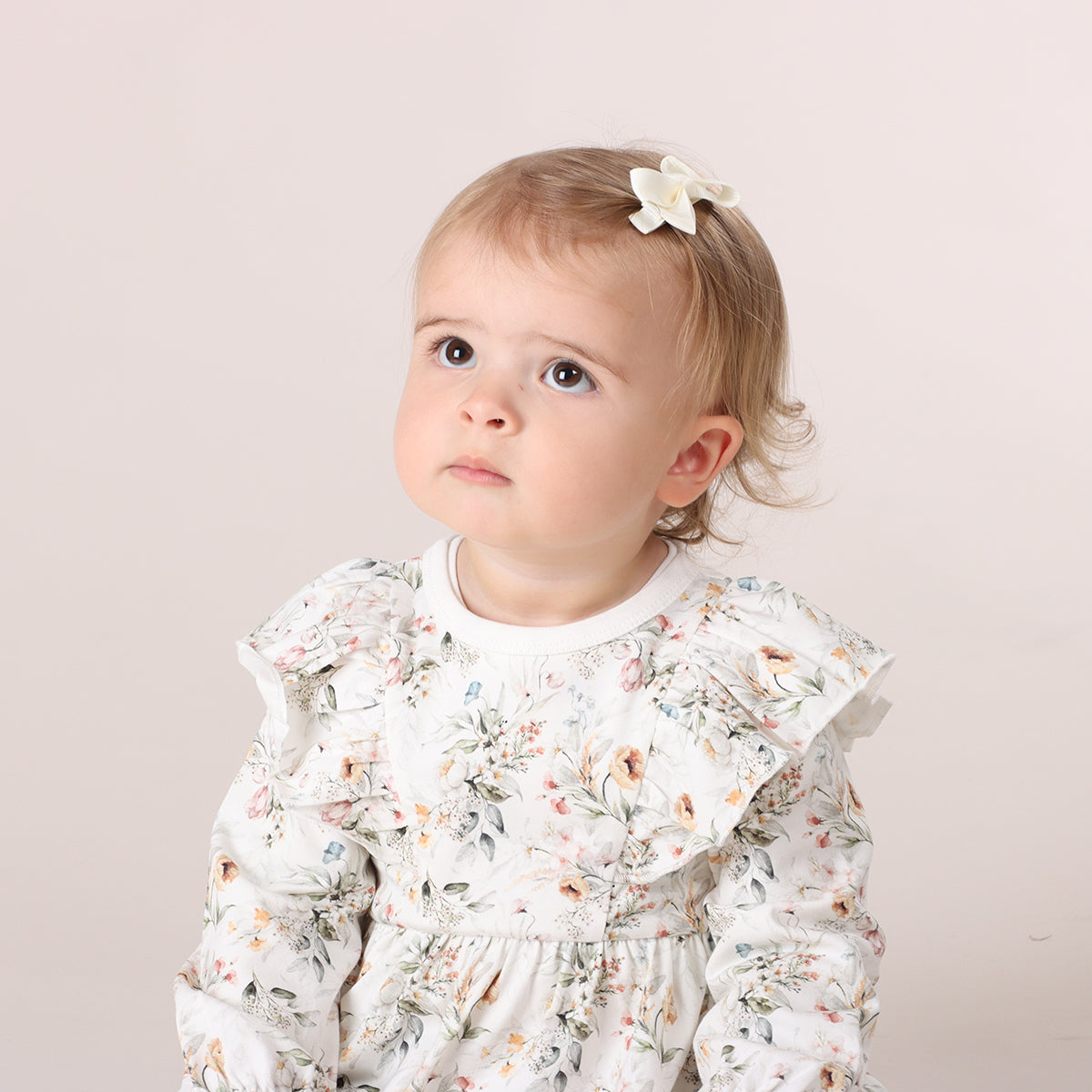
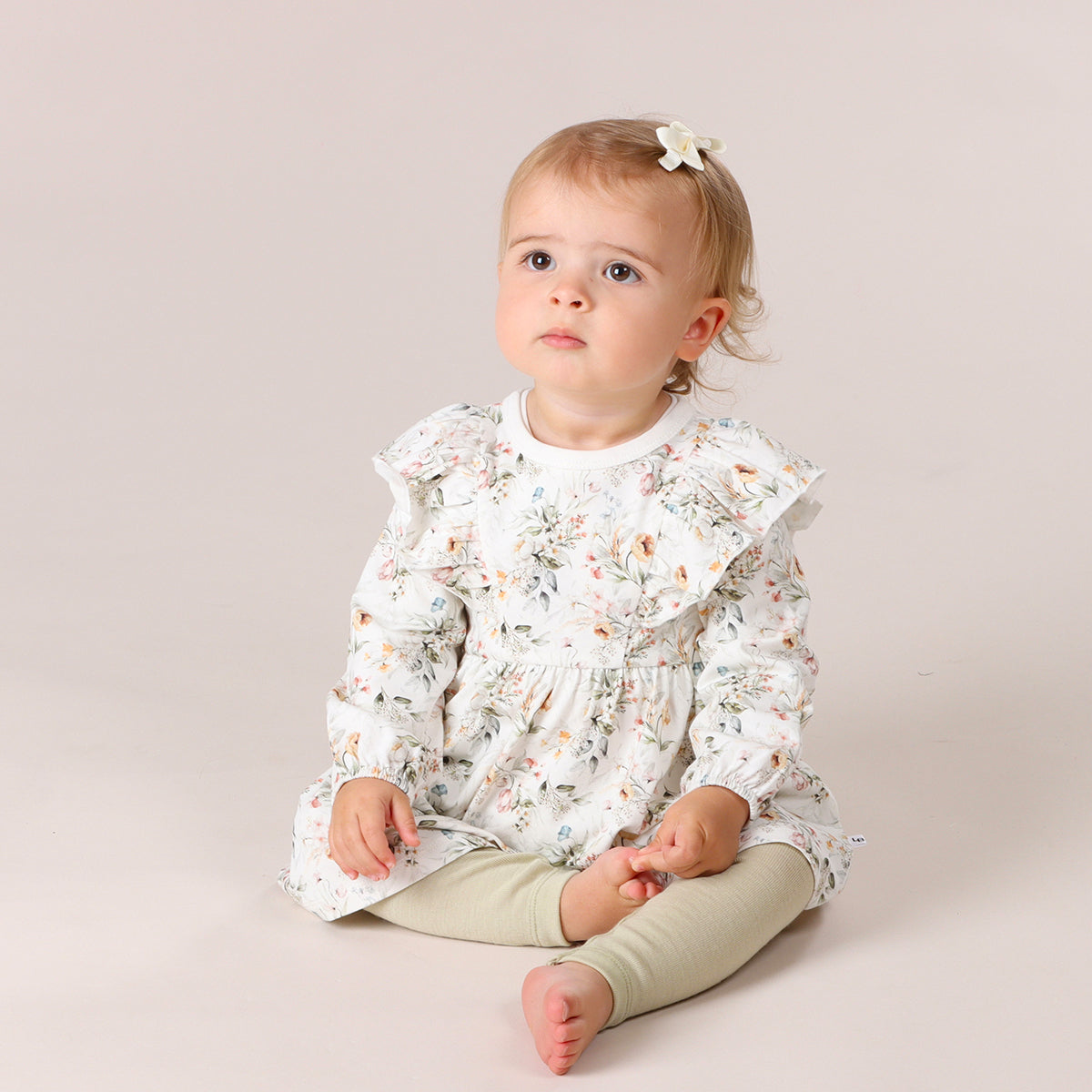
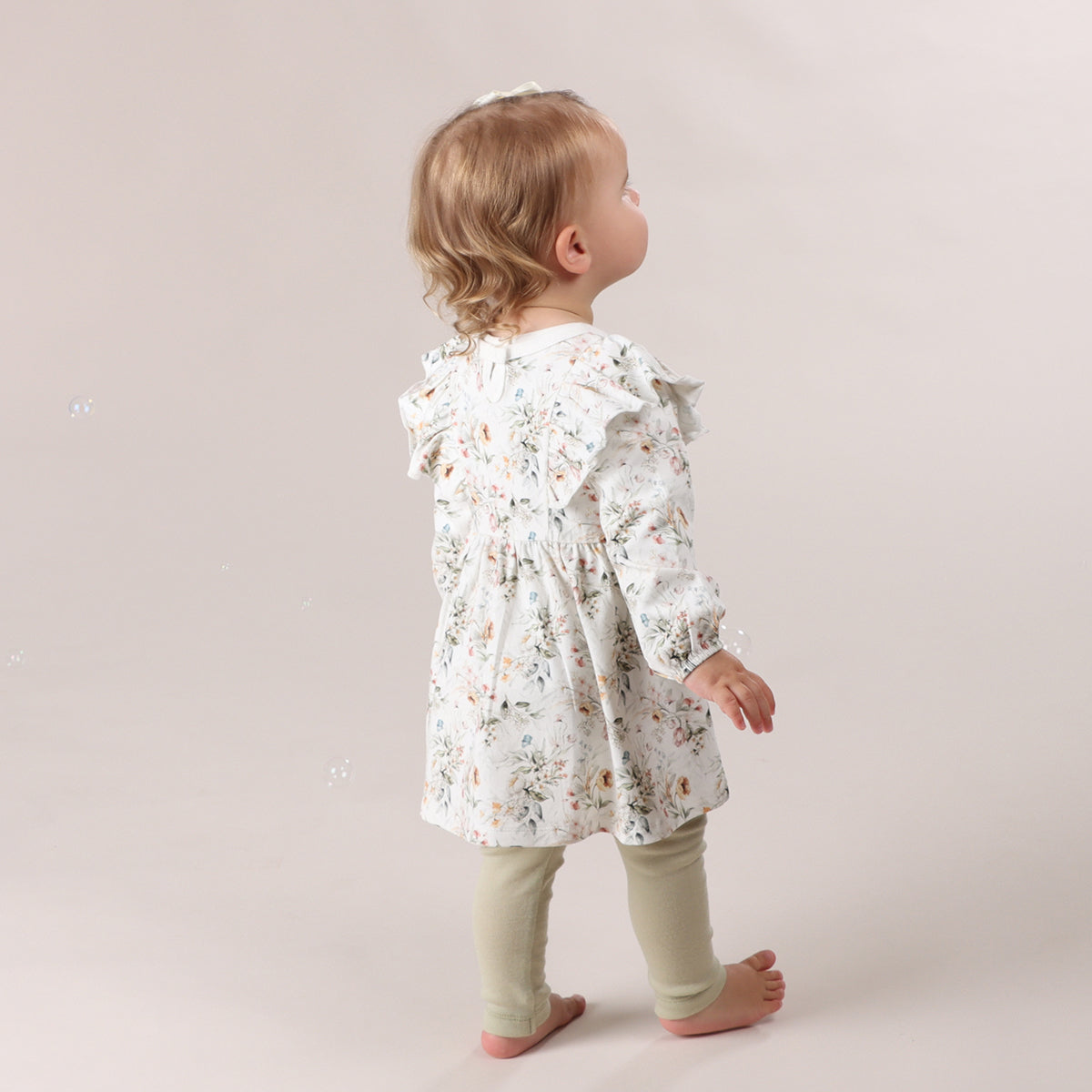

Long Sleeve Cotton Frill Dress
Long Sleeve Cotton Frill Dress
SKU:BL363-12mth
Clothing Prem to 18 Months
| Size | Age Guide | Weight | Height |
|---|---|---|---|
| Premature | Premature or Small Newborn | Up to 4Kg | Up to 55cm |
| Newborn | 0-3 months | 4-6Kg | Up to 62cm |
| 3 Month | 3-6 months | 6-8Kg | Up to 68cm |
| 6 Month | 6-12 Month | 8-10Kg | Up to 76cm |
| 12 Month | 12-18 Month | 10-12Kg | Up to 84cm |
| 18 Month | 18-24 Month | 12-14Kg | Up to 92cm |
Clothing 2 to 6 Years
| Size | Age Guide | Height | Chest | Waist | Hip |
|---|---|---|---|---|---|
| 2 Year | 2-3 Years | Up to 100 cm | 56 | 51 | 58 |
| 3 Year | 3-4 Years | Up to 105 cm | 58 | 53 | 60 |
| 4 Year | 4-5 Years | Up to 110 cm | 60 | 55 | 62 |
| 5 Year | 5-6 Years | Up to 115 cm | 62 | 57 | 64 |
| 6 Year | 6-7 Years | Up to 120 cm | 64 | 59 | 66 |
Beanie Size Guide
| Size | Head Circumference | Age Guide |
|---|---|---|
| Premature | 31-35 cm | Premature or Small Newborn |
| Newborn | 35-40 cm | Newborn |
| Small | 40-43 cm | 3-6 Months |
| Medium | 43-47 cm | 6-18 Months |
| Large | 47-52 cm | 18-3 Years |
Sunhat Size Guide
| Size | Head Circumference | Age Guide |
|---|---|---|
| Newborn | 37-40 cm | Newborn |
| Small | 40-43 cm | 3-6 Months |
| Medium | 43-46 cm | 6-12 Months |
| Large | 46-49 cm | 12-24 Months |
| Xtra Large | 49-54 cm | 2-4 Years |
Sleep Pods Size Guide
| Size | Weight | Age Guide | Measurement(Back to Hem) |
|---|---|---|---|
| Newborn | 0-6 kgs | 0-3 Months | 60.5 cm |
| Small | 0-8 kgs | 3-6 Months | 66 cm |
Booties Size Guide
| Size | Age Guide |
|---|---|
| Newborn | 0-3 Months |
| Small | 3-6 Months |
| Medium | 6-12 Months |
| Large | 12-18 Months |
In stock
Couldn't load pickup availability
Overview
Overview
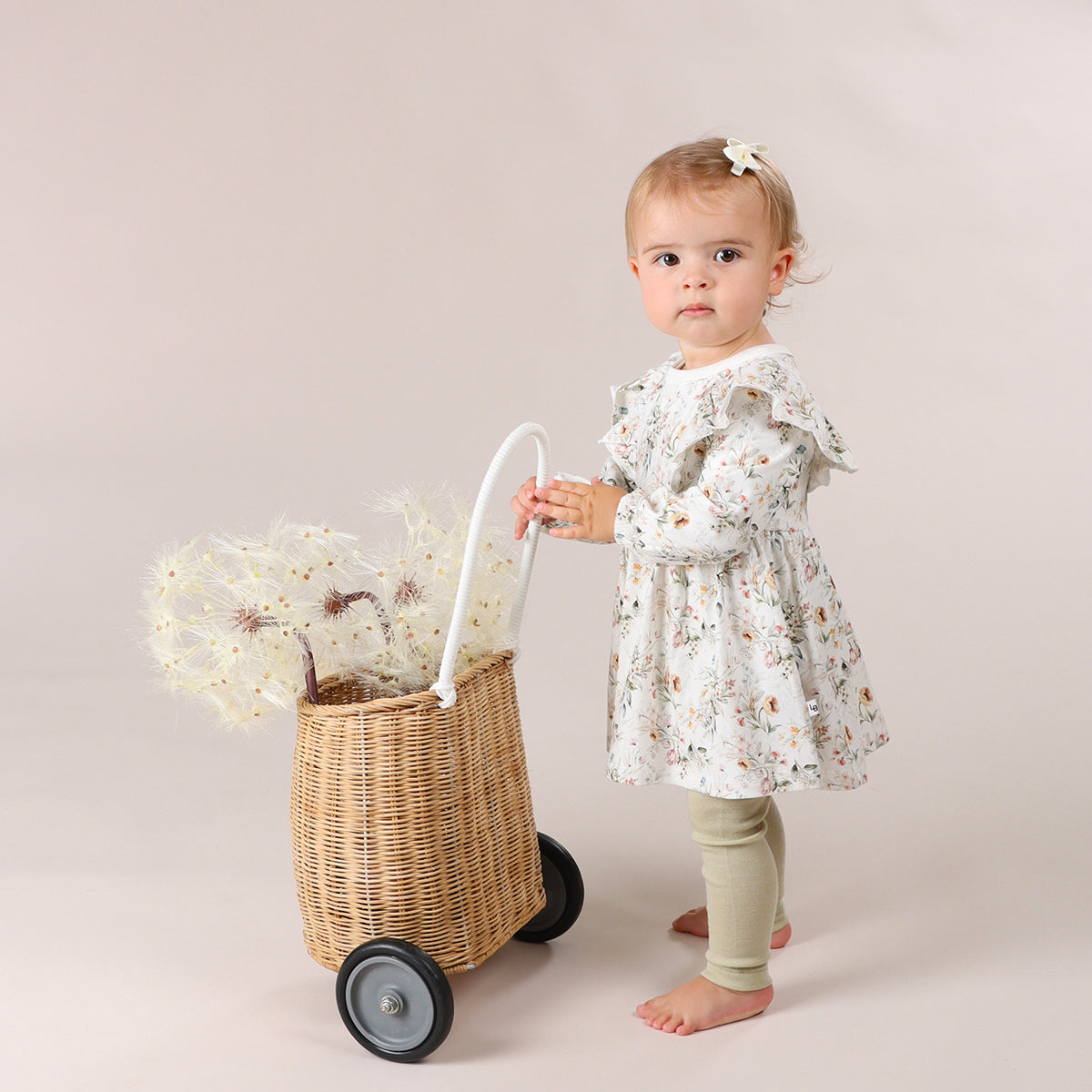
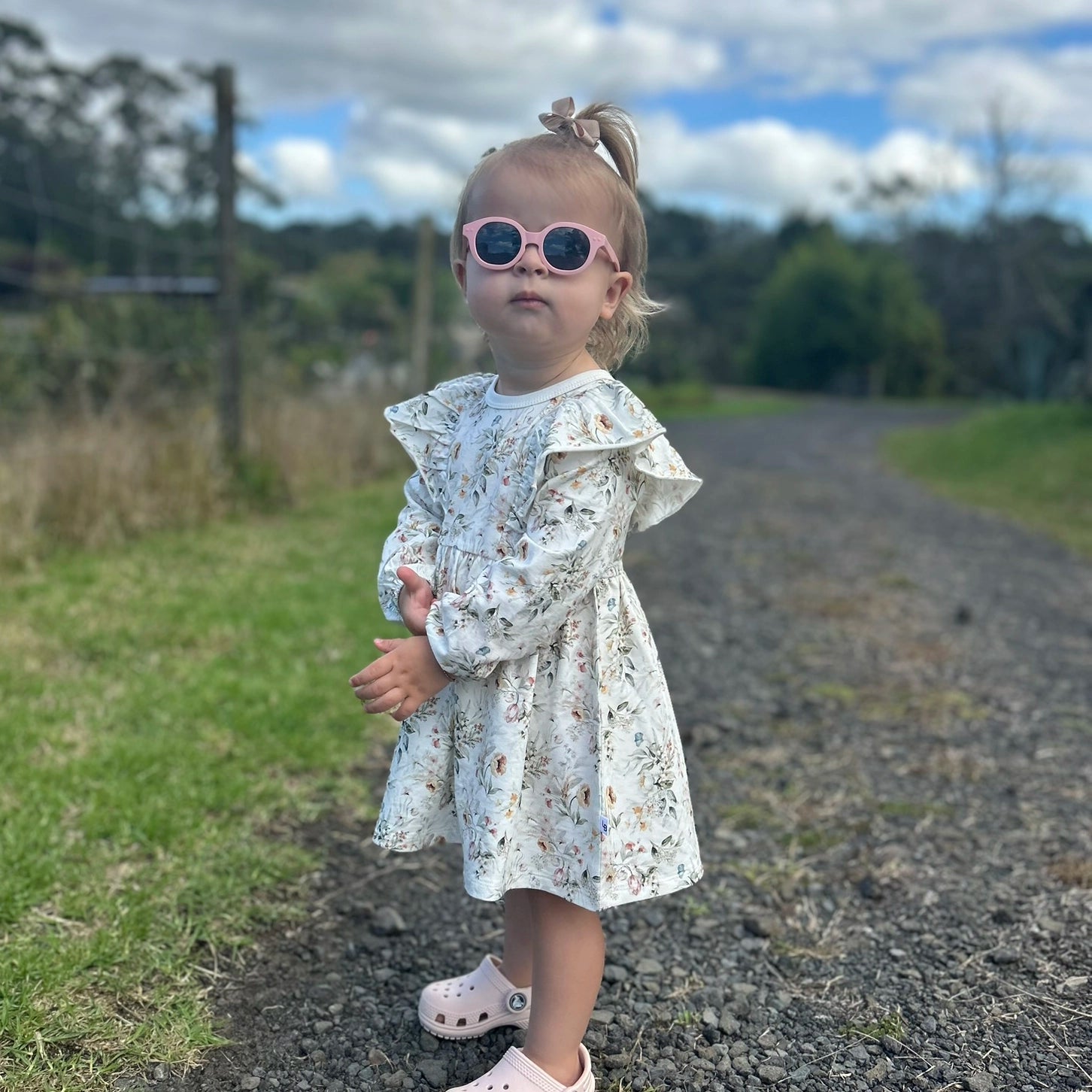
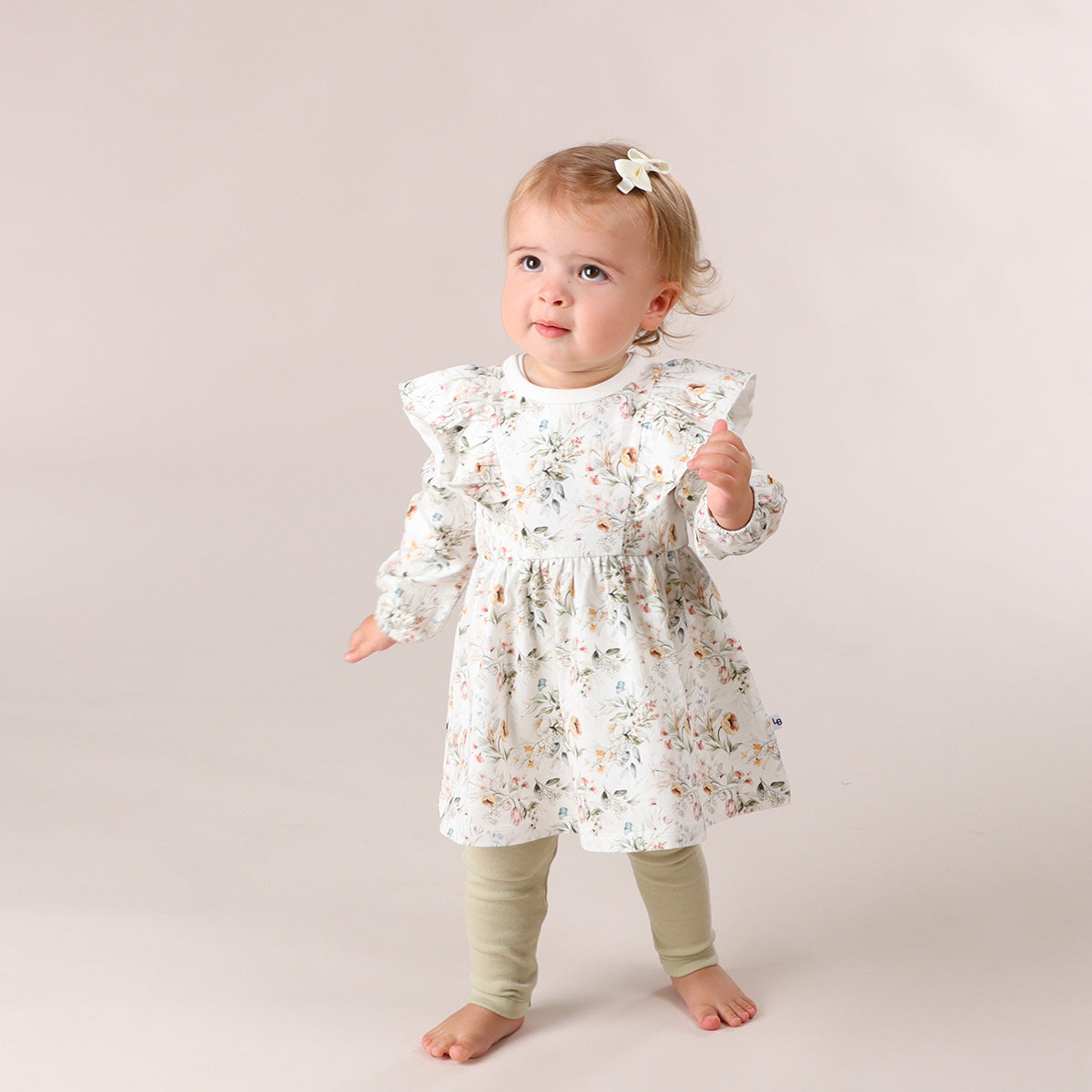
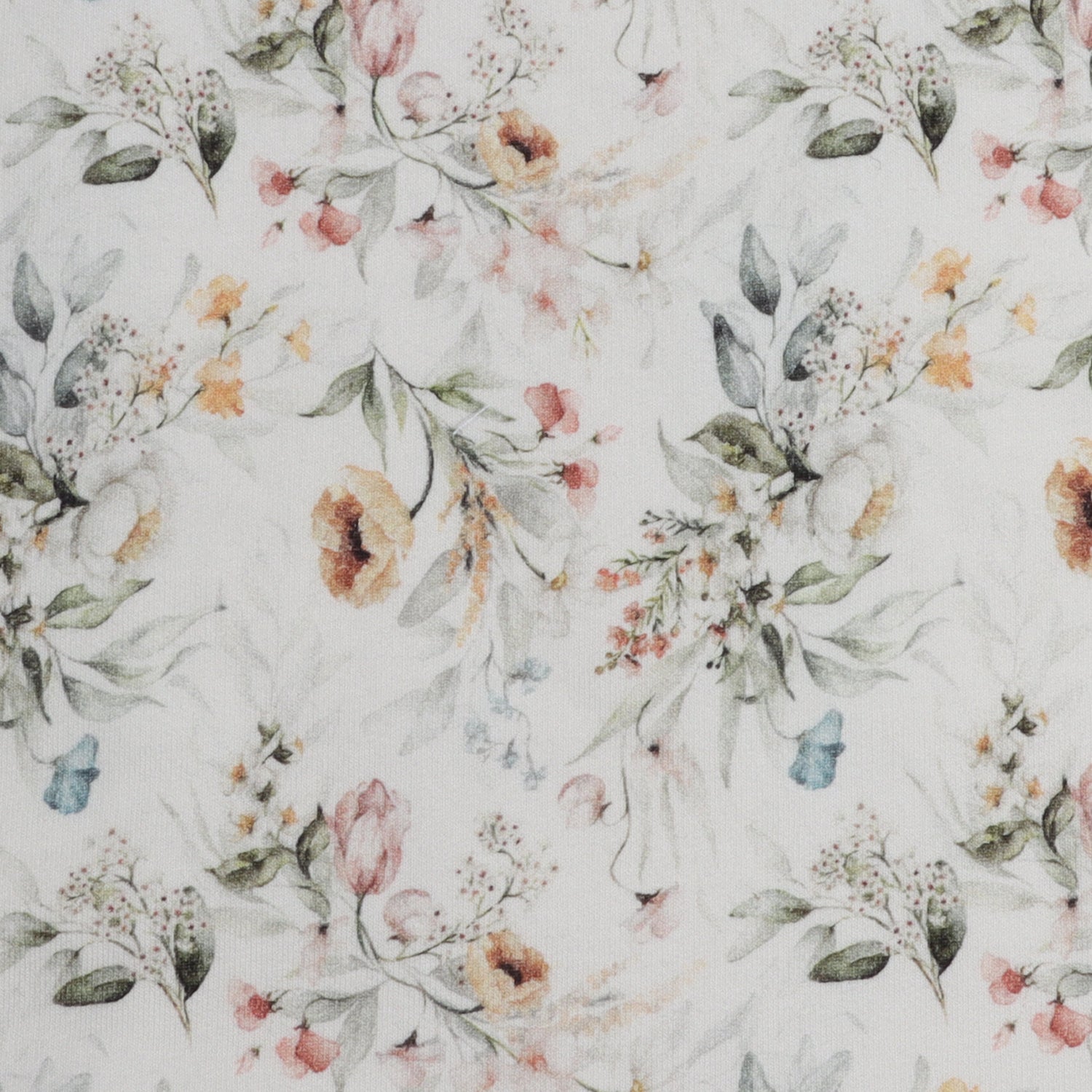
Embrace the beauty of nature with our Blossom Belle collection, featuring a vintage-inspired floral print. It’s super soft and beautifully crafted for sweet moments with your little petal as it is made using Oeko-Tex Certified Organic Cotton.
Introducing our Long Sleeve Cotton Frill Dress—a delightful fusion of warmth and style for your little one. Crafted with soft, breathable fabric, it ensures your baby stays comfortable while looking adorable. The dress features charming frill accents adding a playful and adorable detail to your baby's attire. Crafted with soft, breathable fabric, it ensures your baby stays comfortable while looking adorable.
Fabric Information
Fabric Information
Fit & Care
Fit & Care
Delivery and Returns
Delivery and Returns
- Delivery: Free within NZ on orders over $130 (excluding bulky items) or $8 standard shipping
- Returns: Accepted within 14 days of receipt with proof of purchase
- Some items are excluded from returns including sale items, hardware, car seats, prams, monitors and personal items - please click here for the full list.
Share this product
Recently viewed products
Related Blogs

Natural Clothing and Allergies
The best clothing choices for allergies Soft, natural, gentle Babies’ skin is soft, gorgeous – and sensitive. When they’re young, their skin is much thinner and more permeable than that of an adult, which is why it’s so susceptible to irritation and dryness. Although all babies have delicate skin, some have more serious skin conditions like eczema, hives, and other irritations. These increasingly common conditions can be caused or exacerbated by food allergies, and environmental triggers like laundry powders, soaps, and clothing. While the right clothing can’t cure eczema or allergies, it can help reduce the symptoms and make your baby more comfortable. Soft, natural fibres, organic fabrics, chemical-free processing and quality craftsmanship can help. Here’s what to look for: Naturally gentle Eczema-prone skin is irritated by harsh fibres and heat. Synthetic fabrics and thick weaves – like denim or hand-knitted wool – can trap heat, rub against the skin, and make symptoms worse. Look for clothing made of soft, naturally breathable fabric like cotton, linen, and hemp. Although thick wool can be irritating, finely woven merino clothing is gentle enough for most eczema-prone babies. In fact, because merino helps wick away moisture and regulate temperature, it can actually help reduce skin irritation caused by overheating. Choose organic Because babies’ skin is so permeable, it can absorb harsh chemicals from clothing. That’s why it’s important to choose organic fabrics as much as possible. Conventional cotton crops are treated with a range of pesticides, fungicides, and herbicides while they’re growing. No matter how much you wash clothing before wear, traces of these chemicals can remain in the fibres and transfer to your baby’s skin, potentially causing allergic reactions or general irritation. Avoid the issue by choosing pure, certified organic cotton as much as you can. Soft colours for soft skin During processing, cotton and other fabrics may be bleached, dyed, and treated with chemicals like softeners, fire retardants, and wrinkle or stain guards. These chemicals are designed to stay in the fibres of the fabric, which means they end up pressed against your baby’s skin, potentially triggering eczema flare-ups or irritation. Often, high-quality organic cotton and merino products are made without these chemicals to avoid these issues, and some manufacturers will list clothing as allergy-friendly or chemical-free. If you’re unsure, choosing white or undyed organic cotton or merino is the best option. Made with care Good craftsmanship is just as important as quality materials. Cheaply made baby and children’s clothing is often ill-fitting, with rough seams and scratchy labels – all highly irritating to sensitive skin. Quality clothing, on the other hand, is designed to fit comfortably. Look for clothing without tight sleeves, elastic at the cuffs, or high necklines – these can all chafe and irritate sensitive skin. Seams should be sewn flat and labels should be printed on the fabric or easy to remove. Go natural for extra care Whether your baby has allergies or not, you can’t go wrong choosing gentle, natural, soft clothing. You’ll keep them warm and comfortable, avoid harsh chemicals, protect their skin, and reduce the risk of irritation. At Dimples, all our baby clothes are made of natural fibres, with quality craftsmanship, comfortable, classic designs and minimal chemicals used in processing. Take a look now.
Learn more
Making a Baby First Aid Kit
10 essentials for your baby’s first aid kit Be ready for emergencies and trips away You’ve Pinterested your dream nursery, sussed the decor and ticked off all the big purchases like a cot, pram and capsule. The reality of being responsible for a tiny person can take a while to sink in, and usually, a first aid kit for your baby isn’t top of mind. While you might have a couple of items like a thermometer and tiny nail clippers on your radar, a comprehensive first aid kit will set you up for years to come. It’s also easy to pop in your bag for trips away. Be sure to include these ten essentials: Thermometer – a thermometer you can trust can give you so much assurance. A non-contact thermometer like the NUK Baby Flash Thermometer makes the process super easy, and can even be used to see how hot your baby’s bath or food are too! Nasal decongestant and saline spray – unfortunately, it's only a matter of time before your little one gets their first cold and it usually means trouble feeding and sleeping. Since it’s a good few years until they can learn to blow their nose (usually around aged 2), a nasal decongestant combined with a saline nasal spray can help de-stuff and make feeding and sleeping a little easier. Nail clippers – cutting tiny nails for the first time can be a truly frightening experience and even worse, they seem to grow at lightning speed! Having some specific clippers on hand to keep nails short will prevent him from scratching himself. Emergency contacts – avoid scrambling on your phone by keeping important numbers like PlunketLine , Healthline and your local GP in an easy-to-find spot in your first aid kit – consider taping them to the inside of the lid. Pain relief – some form of over-the-counter pain relief such as liquid paracetamol or ibuprofen in your baby first aid kit can come in handy at all hours of the day or night. While you should always consult a professional (either your GP or an after-hours service) before administering any type of medicine, having this at the ready for fevers and minor aches and pains saves a trip to the pharmacy. An oral syringe – getting medicine into a baby can be tricky. The Haakaa Oral Syringe is an affordable, reusable syringe that is easy to use and easy to clean. Tweezers – even babies can get splinters! Rubbing alcohol swabs – grab a stash of these sterilising wipes to keep thermometers, tweezers and scissors clean. Plasters and antiseptic spray – even before they’re on the move, cuts and scrapes can happen. When they start moving, cuts and scrapes seem to happen every day! Disinfecting these and covering them with a small plaster will help them heal much faster. Gas relief drops – when burping doesn't seem to cut it, try infant gas relief drops. Learn more – take a course In addition to a well-stocked first aid kit for your baby, going along to a course specifically designed for dealing with littlies in an emergency is a great investment. Organisations like Plunket and Red Cross regularly hold affordable short courses designed to give you the confidence and basic skills needed to deal with emergencies until help arrives.
Learn more
Summer Sleep
Keeping your baby safe and comfortable when it’s hot Summer brings holidays, beach trips, swims and sunshine – but it also brings higher temperatures, which can be hard on your baby’s sleep. Make sure you’re ready by organising your baby’s room, sorting out summer clothing and bedding, and being aware of summer sleep safety while you’re out and about. Cool, comfortable, controlled Babies sleep best at 18-20 degrees Celsius (use a room thermometer to keep track). In the summer months, a baby’s room can rise above this temperature very quickly, even without direct sunlight. Fortunately, there are a few ways to keep your baby’s bedroom cool and comfy. If you have air conditioning or a heat pump with cooling function, simply set it at the right temperature before baby’s bedtime, so the room has time to cool down. If you don’t, a small fan can help with temperature and airflow – just don’t point it directly at your baby. Bonus – the noise of a fan can help some babies drift off. You can also keep the temperature down by leaving the windows open and curtains closed – this lets air circulate, but keeps sunlight out. Just remember to use mesh screens to prevent mosquitoes and other insects coming in. The best baby bedding Summer bedding is pretty straightforward. You’ll need light cotton sheets for the cot, bassinette, or Moses basket, and not much else. Depending on the temperature, your baby may need a cotton top sheet or a light muslin sleeping bag as well. Avoid synthetic fabrics, as these don’t breathe, and can make babies sweaty and uncomfortable. If your baby is very young and still needs to be swaddled, use a thin cotton swaddle , and consider leaving their legs free to regulate temperature. As always, keep unnecessary toys and blankets out of the bed. Clothing choices For clothing, think loose, light, and cotton. Depending on the heat in your house, your baby can sleep in just a nappy and singlet, or a light sleepsuit. Avoid synthetics, and keep everything loose and breathable. If you’re not sure, check the back of your baby’s neck – if it’s sweaty or hot, remove a layer of clothing or bedding. Out and about Summer means outings and disrupted sleep schedules. If your baby is happy to sleep in the pram or car, you’re lucky – but don’t forget to think about the temperature. Prams can get hot and airless very quickly, so park yours in the shade if your baby is asleep. Carry a mesh pram cover or light muslin throw for extra shade, but always leave an opening to allow air to circulate in the pram. Never use a heavy blanket or cover, as this could prevent airflow – which can be dangerous. In the car, use a sunshade over the window to keep direct sunlight off your baby’s skin. Crack a window or use the air conditioning to keep air flowing inside the car, and never, ever leave your baby asleep in the car alone. The temperature can rise to dangerous levels extremely quickly, even with a window open. Keeping your baby cool and comfortable should help them sleep better and feel happier during the day – so you can both enjoy the fun parts of summer. Get sorted for summer with Dimples’ range of clothing, bedding, and sleep accessories.
Learn more
Pretty Brave Shoes: A Guide to Little Feet
Little feet have a lot of growing and exploring to do! From those first little steps to running, playing and discovering the world, choosing shoes that are comfortable and designed to move with them is an important part of every stage.
Learn more