






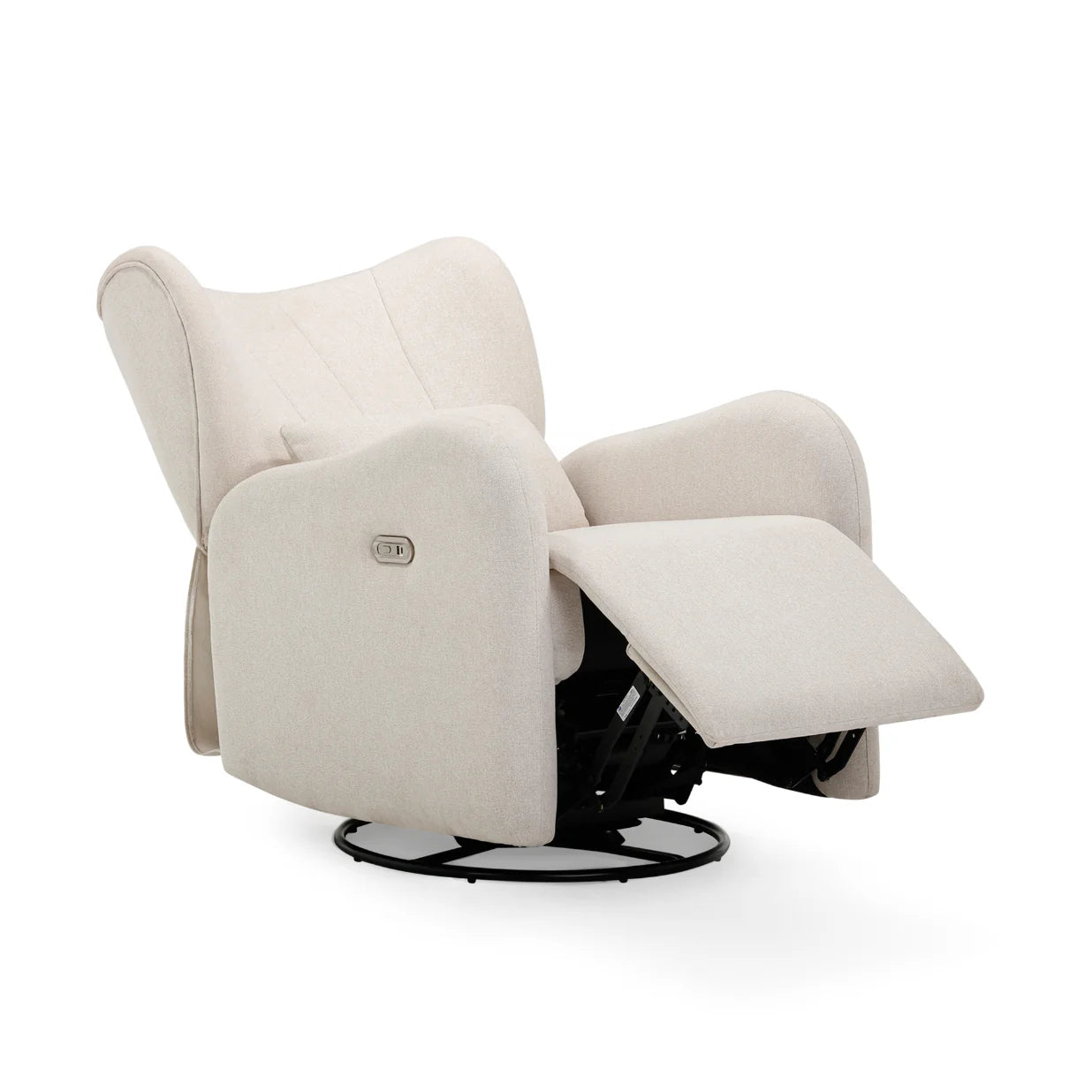
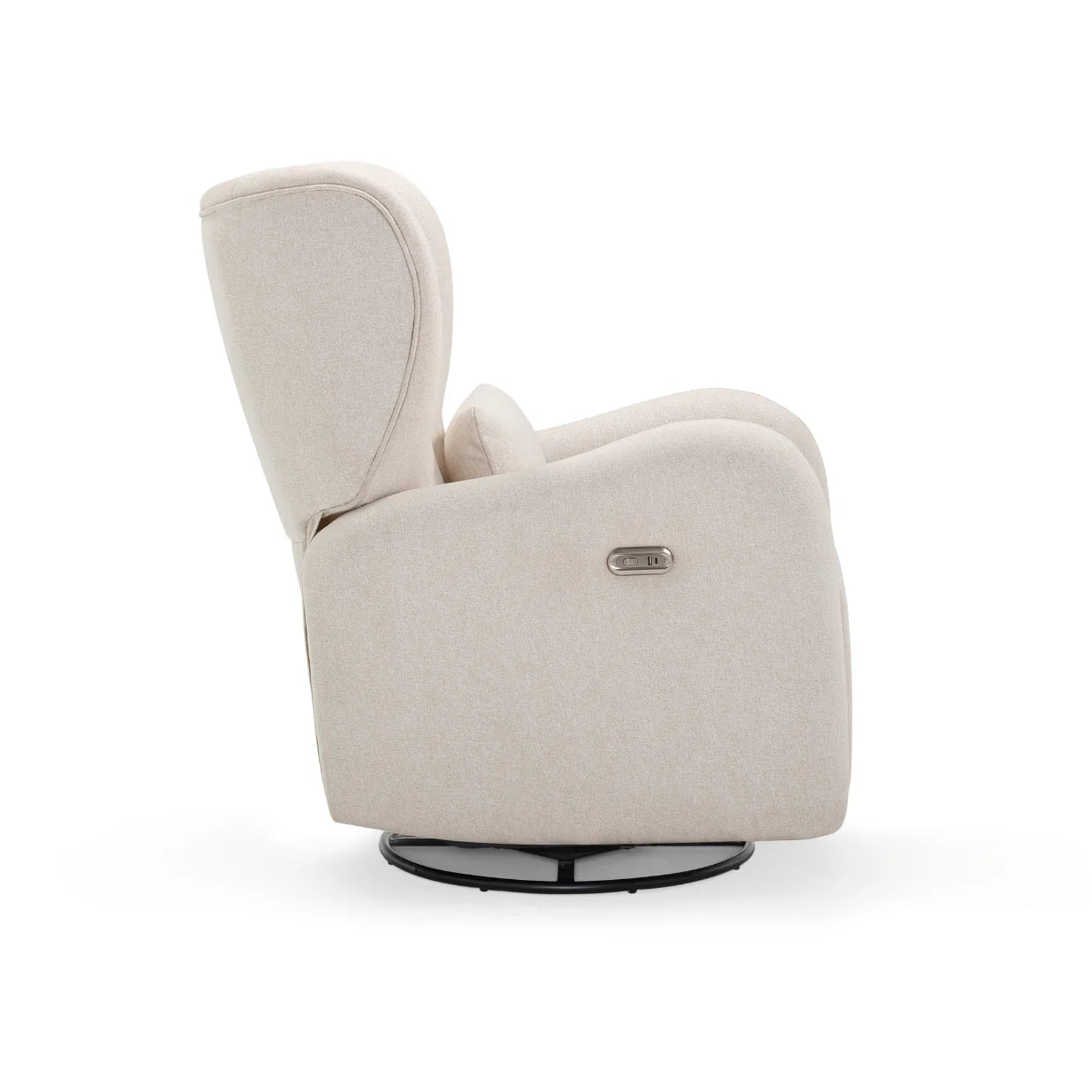
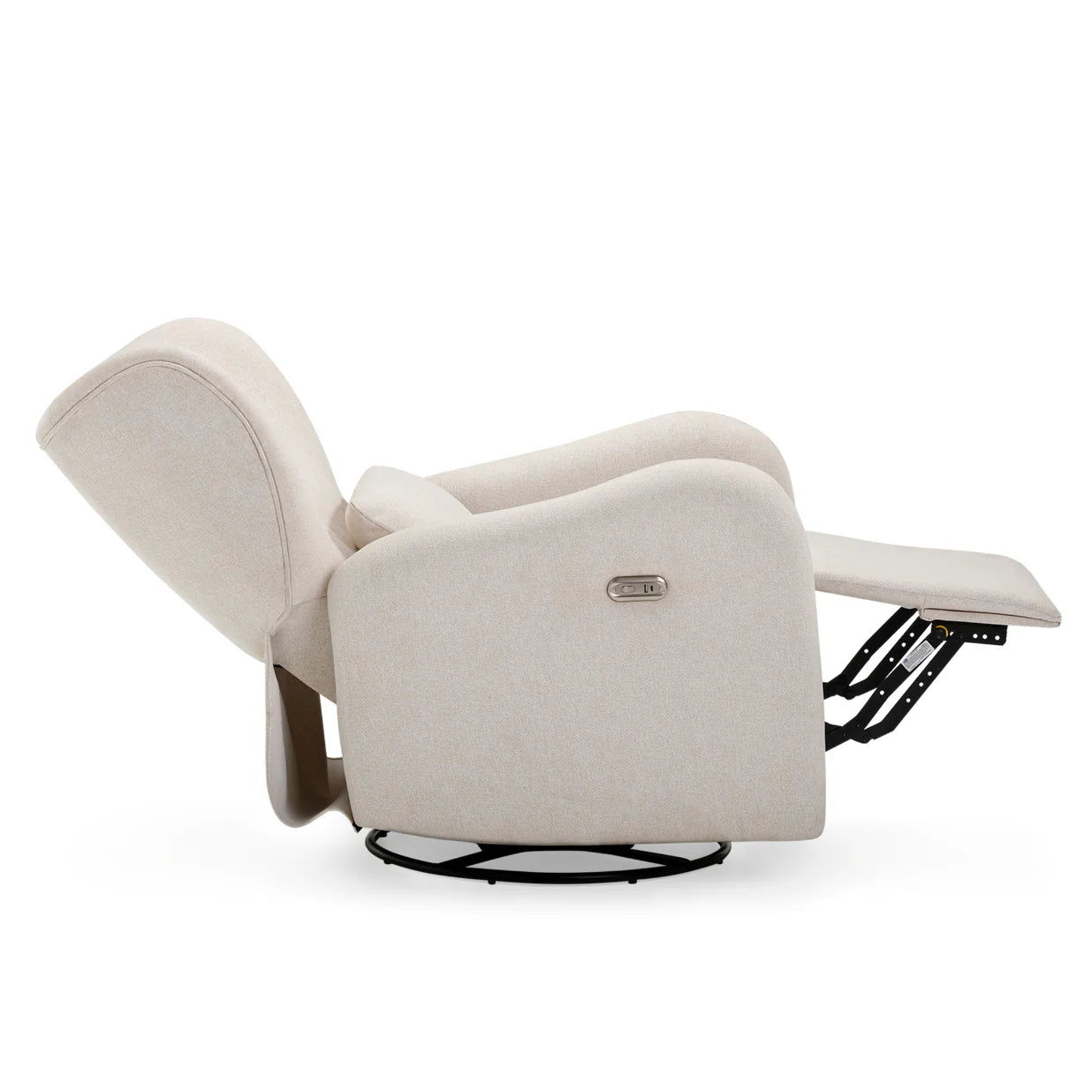


Celeste Electric Nursery Chair
Celeste Electric Nursery Chair
SKU:ABF-NC-CE/WM
In stock
Couldn't load pickup availability
Overview
Overview
Please note: This chair is classified as Imperfect Stock. It’s from a particular production batch which were packed too tightly in the box, which may have caused dents, creases, or pressure marks in the soft upholstery. Similar to circled marked in the images shown. This doesn’t affect the chair’s functionality.
Please choose carefully, as this item is final sale and cannot be returned or exchanged.
The Chair That Holds You Like a Hug
This is more than a rocking chair – it’s the embrace every parent-to-be longs for, and the unwavering comfort they didn’t know they needed. A hug in a chair.
Thoughtfully designed for the journey from bump to baby and beyond, the BabyRest Celeste Nursing Chair in Wheat Marle colour wraps you in comfort from the moment you sit down.
The cloud-soft headrest cradles your head and neck like the world’s gentlest hug because your rest matters too. Whether you're feeding at midnight or sneaking in a rare moment of calm, it’s your space to exhale.
The ergonomically sculpted armrests are perfectly positioned to support both you and baby – relieving tension in your shoulders and arms so you can feed, soothe, and snuggle in total comfort. It’s like the chair knows what you need before you do.
When your body is healing, every movement matters. That’s why it's been designed with a one-action recline feature, so the backrest and leg rest move smoothly, together, with a single motion. No pushing, no shifting, no awkward adjustments. Just thoughtful design for seamless support postpartum and relaxation at the touch of a button.
And because comfort should never come with compromise, it includes a premium cushion, meaning more ways to sink in and relax with baby.
The longer 3.4m power cord gives you more freedom to place your chair where it works for you, not your nearest power outlet. It’s a small detail that makes a big difference. More flexibility, less fuss - and a little more space to reconnect, recharge, and rest.
Whisper quiet glide and premium fabric that looks as beautiful as it feels, allows Celeste to blend seamlessly into your home, and your life.
This isn’t just furniture. It’s a sanctuary.
What's Included
What's Included
Key Features
Key Features
Technical Specification
Technical Specification
User Guide
User Guide
Delivery and Returns
Delivery and Returns
- Delivery: Free within NZ on orders over $130 (excluding bulky items) or $8 standard shipping
- Returns: Accepted within 14 days of receipt with proof of purchase
- Some items are excluded from returns including sale items, hardware, car seats, prams, monitors and personal items - please click here for the full list.
Share this product
Recently Viewed Products
Related Blogs

Introducing a bedtime routine with your baby
The Power of a Bedtime Routine for Your Baby Simple rhythms that can make bedtime calmer – for both of you In the early weeks with a newborn, life seems to find a rhythm all on it’s own! Feeds, naps, cuddles and nappy changes all blur into one another, and having anything that resembles a routine can feel a little out of reach… Don’t worry – that’s totally normal. As your baby grows, you might start to notice more predictable patterns start to emerge. This can be a lovely time to gently introduce a baby bedtime routine - a simple series of calming steps that helps signal to your little one that that the day is coming to an end. It doesn’t need to be complicated. In fact, some of the best bedtime routines are the simplest ones. Why a Bedtime Routine Matters Babies LOVE familiarity. Repeating the same gentle activities each evening can help your baby begin to recognise that sleep is coming, while creating a comforting transition between the day’s activities and bedtime. A bedtime routine can also be a really special opportunity to slow everything down together, creating a sense of calm, security and connection. And while your bedtime routine will naturally change as your baby grows, those familiar little rituals can continue well into childhood. When Should You Start a Bedtime Routine? There’s no exact age when you have to start. During the newborn stage, feeding and sleeping are naturally quite unpredictable, so there’s no need to worry about a strict schedule. From around six to eight weeks, you will probably notice your baby becoming more predictable, and you can begin introducing a few simple bedtime cues if it feels right for your family. At first, your routine might simply be a fresh nappy, sleepwear, a feed and a cuddle. You can always add more as your baby grows. How to Start a Baby Bedtime Routine There’s no “perfect” bedtime routine - what works beautifully for one family might not work at all for another. The important things are keeping it relatively simple, calm and consistent. Around 20 to 30 minutes is usually plenty, and where possible, try doing the final part of the routine in your babes room so they begin to associate that space with winding down and sleep. Here’s a simple bedtime rhythm you could try: Bath A warm bath (or shower with you!) can be a lovely way to end your day together. Keep the lights soft if you can, slow things down and let bath time become part of the transition from playtime to bedtime. Massage After the bath, a few minutes of gentle baby massage can be incredibly calming and is a beautiful opportunity for some quiet bonding time. You could use a baby massage product such as Scullys Massage Oil, or keep things very simple with Loloma Coconut Oil. Keep the movements very slow and gentle, talking quietly, humming or singing to your baby as you go. Over time, even the smell and feel of their usual massage can become another little signal that bedtime is approaching. A Little Extra Wind Down Support For particularly restless little ones, you may also like to add something like Magnesium Rescue into your bedtime routine. Magnesium can help regulate the nervous system, promote muscle relaxation, and support the production of melatonin. The important thing here is the ritual itself. Whether it’s massage, moisturising or simply a quiet cuddle after their bath, repeating the same calm steps each night is what helps make bedtime feel familiar. Sleepwear Changing into cosy sleepwear is another simple but powerful bedtime cue! Choose soft, breathable layers that are appropriate for the temperature of your baby’s room. Merino is one of our favourites for sleep because it makes layering easy throughout the year. Our baby sleepwear collection includes merino bodysuits, babygrows, gowns and other cosy layers for bedtime. 💛 Dimples Tip: Your baby’s room temperature is much more useful than the season when deciding what they should wear to bed. Feel their chest or back to check whether they’re comfortably warm rather than relying on their hands and feet, which can naturally feel cooler. Feeding For younger babies, a feed will naturally be an important part of bedtime. As your baby gets older, you might like to experiment with offering their final feed slightly earlier in the routine rather than making it the very last thing before sleep. Some families find this helps separate feeding from falling asleep. But don't stress if your baby loves feeding to sleep, especially in those early months. Every baby is different and your routine can evolve gradually. A Story or Song This is one of our favourite parts of a bedtime routine. Your baby certainly doesn’t need to understand the story yet to enjoy listening to your voice. Reading the same book each night, singing a lullaby or simply humming quietly can become a wonderfully familiar sleep cue. Reading together from an early age is also such a lovely habit to establish, and our children’s book collection has plenty of beautiful first books to choose from. One day they'll be choosing the bedtime story themselves - and probably asking you to read it agaaaaiiiin! Cuddles & Goodnight Finish with a cuddle, a quiet goodnight and plenty of reassurance. It sounds so simple, but that same kiss, phrase or cuddle each evening can become one of the most familiar parts of your baby’s bedtime routine. And even if you know you’ll probably be seeing them again in a few hours, it’s still a lovely way to finish the day together. Watch for Your Baby’s Sleepy Cues One of the best bedtime tips we can give is to watch your baby rather than becoming too attached to the clock. Yawning, rubbing their eyes, staring into the distance, becoming quieter or suddenly getting a little fussy can all be signs that your baby is getting tired. Starting your bedtime routine when you notice these early sleepy cues can often make settling easier than waiting until your baby is overtired. Create a Calm, Sleep Friendly Nursery As bedtime gets closer, gradually make the house feel a little quieter. Dim the lights, turn the television off and put away stimulating or noisy toys. These small environmental changes can become part of your baby’s bedtime cues too. A dark room is ideal for sleep, but a gentle night light can be super handy while you're feeding, settling or changing nappies overnight. 💛 Dimples Tip: Once bedtime begins, keep voices quieter and movements slower. Babies pick up on our energy surprisingly well, so turning your pace down can help make the whole room feel calmer. Putting Baby Down for Sleep As you get to know your baby, you may like to experiment with placing them into their sleep space when they're sleepy but still awake. Some babies take to this beautifully. Others need plenty of cuddling, rocking or feeding before they're ready to settle - particularly when they're very young. There's no need to turn bedtime into a battle. The aim of a routine is to make sleep feel calm and predictable, not to achieve a perfect settling technique. What works for your baby today may also be completely different in a few months time. Be Consistent, But Stay Flexible Consistency helps babies recognise their bedtime cues, but flexibility is just as important. There'll be evenings when your baby is overtired. There'll be illnesses, holidays, late dinners, visitors and nights where absolutely nothing goes according to plan. That's parenting! Rather than worrying about following your routine perfectly, think about having a few familiar rituals you can return to wherever you are. A fresh nappy, familiar sleepwear, the same book, a cuddle and your usual goodnight might be all your baby needs to recognise that it's bedtime. If more than one parent or caregiver can occasionally do the bedtime routine, that's great! It helps your baby become comfortable settling with the other special people in their life. And Don't Forget About Mum Once baby is finally settled, it can be surprisingly difficult to switch your own brain off. After spending all day feeding, changing, remembering, organising and looking after somebody else, having a tiny bedtime ritual of your own can be just as valuable. Make a warm drink, put your phone down, have a shower or simply sit somewhere quiet for ten minutes. For mums who enjoy something cosy before bed, Mamma's Milk Bar Moon Milk can become part of your own evening wind-down ritual. Prepare yourself a nice warm cup and enjoy a quiet moment once your little one is settled. Small Rituals With Lasting Benefits Your baby's bedtime routine doesn't need to be elaborate, and it certainly doesn't need to be perfect. It's simply a collection of familiar little moments that tell your baby: the day is finished, you're safe, and it's time to rest. Some nights it might be bath, massage, pyjamas, feed, story and bed. Other nights it might be clean nappy, feed, cuddle... bed. Both count! As your baby grows, the routine will grow with them. The massage might disappear, they'll choose their own pyjamas, and eventually they'll be the one reading the bedtime book. But that cuddle and goodnight kiss? That will still matter - even if one day you have to sneak them in after lights out. ❤️
Learn more
Breastfeeding Basics and Tips
Understanding the Fundamentals of Breastfeeding Breastfeeding might seem straightforward, but many new moms find it challenging. Patience is essential, and being well-prepared can make the process smoother. Here, we break down the basics to help you get ready for this journey. The Three Stages of Breast Milk Colostrum: The First Stage When your baby is born, your body produces colostrum, a clear or yellowish liquid packed with nutrients, proteins, and vitamins. This small amount is perfect for newborns, helping to protect their digestive tract and immune system. Transitional Milk: The Second Stage Regular breastfeeding will stimulate the production of transitional milk, which appears around the third to fifth day. It looks like a mix of milk and orange juice, rich in lactose, fat, and calories. Mature Milk: The Third Stage By the second week, mature milk replaces transitional milk. This pale, sometimes bluish milk provides all the nutrients, fat, and proteins your baby needs, adjusting its water content in hot weather and boosting antibodies when needed. Achieving a Good Latch Proper latching is crucial to prevent discomfort. A good latch covers both the nipple and the areola and shouldn't be painful. Here’s how to ensure a successful latch: Positioning Your Baby Hold your baby tummy-to-tummy with your breasts, keeping their head aligned with their body. Mouth to Nipple Tickle your baby’s lips with your nipple or express a bit of milk to encourage the rooting reflex. When your baby opens wide, bring them to your breast. Ensuring Proper Attachment A proper latch involves the baby’s chin and nose touching your breast. If necessary, adjust the bottom lip to ensure it isn’t tucked in. Watch for a steady suck-swallow-breathe pattern. Trying Different Positions If you encounter difficulties, experiment with different breastfeeding positions like the football hold or side-lying. Consult a lactation consultant if needed. Maintaining Comfort and Milk Supply Relax and Feed on Demand Stay calm and relaxed to enhance milk production. Allow your baby to feed without time limits, ensuring one breast is fully drained before switching to the other. Recognizing Hunger Cues Signs of hunger include nuzzling your breasts, rooting, sucking on hands or clothing, and making lip-smacking noises. Crying is a late hunger cue. Feeding Frequency Newborns typically feed 8-12 times a day. Some may need to be woken up for feeds if they sleep for more than six hours. Patience and Persistence Breastfeeding takes time and practice. Be patient with yourself and your baby, seeking professional help if needed. With time, breastfeeding will become more natural and enjoyable for both of you. By following these tips, you can create a calm and successful breastfeeding experience, eventually making it look effortless.
Learn more
Motherhood: Beyond the Fourth Trimester
Beyond The Fourth Trimester - A Sustainable Approach To Health Once the first few months with your new baby have passed you might be feeling like the haze of those early weeks has passed. You also might not be there just yet, just as each baby is different so is each pregnancy and the subsequent postpartum period. This is why it is important to be mindful of not judging how well you are doing based on other mothers who might appear to be completely back to normal with a baby who sleeps all night. If you are still breastfeeding, many mothers report a drop in milk supply at this point often saying that they no longer feel like their breasts are as full. This is something I experienced with my first baby and thought it meant I was losing my milk supply. It is normal for the initial fullness and engorgement to diminish as your milk supply is more established at this point, and your body has adjusted to supplying what your baby needs. If you do ever feel concerned by this your Plunket nurse, local lactation consultant or the La Leche league are a wonderful source of support & encouragement. Once those exhausting early months have passed many of the mothers I work with are keen to start focusing on reclaiming their pre-pregnancy bodies and to start dieting and exercising. Focusing on good nutrition and consistent exercise is hugely beneficial and has many positive health impacts such as increased energy, better sleep, improved mood and changes in body composition. What is really important to be mindful of, is that changes in diet and physical activity are best to be done with an incremental approach to minimise the chances of under-fuelling yourself, drops in milk supply, injuries and adding too much pressure on yourself. It also allows you to build sustainable health habits that you are more likely to maintain long term. I always recommend an appointment with a postpartum trained physiotherapist. They can assess your posture for diastasis recti (tummy muscle separation) and guidance on pelvic floor exercises. Women who have had caesareans often think because they haven't had a natural birth they don't need to worry about pelvic floor exercises - this isn't the case, pregnancy still takes its toll on the body so re-strengthening the pelvic floor after carrying a baby is important for all mothers. Working with a personal trainer that specialises in postpartum exercise is a great idea. They can ensure your exercise technique is correct to avoid injury and set an exercise program that is suitable for your current fitness level that will be mindful of the changes that need to be made to a fitness program based on your requirements postpartum. When looking at dieting I always encourage my Mum’s take a non-diet approach to focus on improving health not through restriction but with healthy nutritional choices that improve their health status not diminish it. To achieve this we focus on a nutritional approach that has a strong focus on nutrient repletion to help the body to replete nutrients that were preferentially supplied to their growing baby. Focusing on a diet full of whole unprocessed foods is the foundation for this. Most women find that this approach is very empowering, it leads to better satiety and self-regulation of eating over restriction then binge eating. When it comes to improving your diet always aim for progress, not perfection, and most importantly enjoy your meals! Adequate protein intake is essential for tissue repair and rebuilding especially when exercising. Sources of protein include meat, chicken, seafood, eggs, legumes nuts and seeds. Protein also helps to keep you feeling full for longer. I use and recommend Clean Lean Protein powder for smoothies as it is perfectly safe for breastfeeding mums. You can use the discount code ‘mela’ to save 15% at nuzest.co.nz . Eating plenty of colourful vegetables and some fruits (eat the rainbow!) is important to supply essential vitamins, minerals, phytonutrients, fibre and carbohydrate. I aim to have three fist-sized servings of vegetables with lunch and dinner. It is important to supply yourself with some complex carbohydrate for energy and to assist with glycogen repletion after exercising. Some good sources are pumpkin, yams, kumara, and whole grains such as brown rice and quinoa. Don't forget to incorporate healthy fats with each meal. Fats have been demonised and avoided for so long that many people are not aware of how important adequate fat intake is for health. Dietary fat is essential for the absorption of many nutrients, production of certain hormones, the supply of energy and support of cell growth. Good sources of healthy fats include oily fish such as salmon, extra virgin olive oil, hemp seed oil, avocado, nuts and seeds. Lastly don't forget to drink your water! Aim for two glasses on rising then another 2 litres throughout the day and more when exercising. If you are a breastfeeding mum aiming to have a glass of water with each feed I find keeping a water bottle close by during the day and for those night feeds is a great idea - it’s thirsty work! Kylie Stowe @melawholefoods Postpartum Nourish Bowl Serves 1 Ingredients 120-150 grams of cooked sliced meat (or vegetarian alternative) 2 cups of salad greens 1 cup of an assortment of diced colourful vegetables 1 palm-sized serve of cooked complex carbohydrate (pumpkin, yams, brown rice, quinoa, kumara) ¼ - ½ of an avocado or 40 grams of Feta 1 tbsp of hummus 1tbsp toasted pumpkin & sunflower seeds 2 tbsp of dressing of your choice. Method Arrange all of the ingredients in a bowl, season, drizzle with dressing and enjoy! My favourite dressing is made with extra virgin olive oil, apple cider vinegar & wholegrain mustard. To change up the flavours you can coat your protein in different herbs and spices the one pictured is Moroccan chicken.
Learn more
Pregnancy Pillows: Comfort for You, Your Bump & Beyond
During pregnancy, your body undergoes amazing changes to nurture and make space for your little one. As your pregnancy progresses, you may find it more challenging to get comfortable and restful sleep in preparation for the busy days ahead with your newborn. Weight gain during pregnancy can also put a strain on your joints, causing discomfort in your back, hips, knees, and ankles, making finding a comfortable position even harder. This is where a good pregnancy pillow becomes your best friend, offering the support you need to sleep more soundly and comfortably. Embrace Versatility with the 3-in-1 Buddy Supportive Pregnancy Pillow The Doomoo Buddy pillow offers full-body support, designed to relieve pressure on your hips and spine, whether you prefer sleeping on your side or your back. Its hypoallergenic micro pearl filling adjusts to your body’s shape, providing comfort throughout the night. But it’s not just for pregnancy! Once baby arrives, the Buddy becomes an excellent support for breastfeeding or bottle feeding, making those moments a bit more comfortable. It also serves as a soft cushion for your baby to rest or play on, making it a truly versatile product. For Extra Comfort: Doomoo Comfy Big & Doomoo Maxxy The Doomoo Comfy Big is designed for ultimate relaxation during pregnancy, with soft, supportive filling that allows you to find the perfect position for sleep or lounging. Whether you're supporting your growing bump or using it for added back support, the Comfy Big offers tailored comfort that adjusts to your body’s needs. The Doomoo Maxxy offers a versatile solution for both you and your baby. It’s perfect for sleeping, feeding, or even giving your baby a comfy place to rest and play. Its larger design makes it ideal for more support as your body changes during pregnancy, and it’s just as useful post-pregnancy when baby arrives. For feeding your little one Finally, the Doomoo Soft Feeding Pillow is a must-have for any new parent. Its soft, supportive design provides comfort during breastfeeding and ensures your little one is well-supported while feeding or relaxing. It can also double as a tummy time tool to help prop your baby up, or even a barrier for when they are learning to sit up on their own! We Love Doomoo! Softness and comfort are at the heart of everything Belgium-made brand Doomoo creates. Their products are designed with both you and your baby in mind, providing the perfect balance of support and relaxation. We love them for their thoughtful, high-quality designs that make pregnancy and postpartum life that much easier and more comfortable. They have a fantastic range of products designed to support both your and your baby’s sleep. Check out the full range here or visit us in-store at Dimples.
Learn more