




Cotton Bib
Cotton Bib
SKU:BL404
Clothing Prem to 18 Months
| Size | Age Guide | Weight | Height |
|---|---|---|---|
| Premature | Premature or Small Newborn | Up to 4Kg | Up to 55cm |
| Newborn | 0-3 months | 4-6Kg | Up to 62cm |
| 3 Month | 3-6 months | 6-8Kg | Up to 68cm |
| 6 Month | 6-12 Month | 8-10Kg | Up to 76cm |
| 12 Month | 12-18 Month | 10-12Kg | Up to 84cm |
| 18 Month | 18-24 Month | 12-14Kg | Up to 92cm |
Clothing 2 to 6 Years
| Size | Age Guide | Height | Chest | Waist | Hip |
|---|---|---|---|---|---|
| 2 Year | 2-3 Years | Up to 100 cm | 56 | 51 | 58 |
| 3 Year | 3-4 Years | Up to 105 cm | 58 | 53 | 60 |
| 4 Year | 4-5 Years | Up to 110 cm | 60 | 55 | 62 |
| 5 Year | 5-6 Years | Up to 115 cm | 62 | 57 | 64 |
| 6 Year | 6-7 Years | Up to 120 cm | 64 | 59 | 66 |
Beanie Size Guide
| Size | Head Circumference | Age Guide |
|---|---|---|
| Premature | 31-35 cm | Premature or Small Newborn |
| Newborn | 35-40 cm | Newborn |
| Small | 40-43 cm | 3-6 Months |
| Medium | 43-47 cm | 6-18 Months |
| Large | 47-52 cm | 18-3 Years |
Sunhat Size Guide
| Size | Head Circumference | Age Guide |
|---|---|---|
| Newborn | 37-40 cm | Newborn |
| Small | 40-43 cm | 3-6 Months |
| Medium | 43-46 cm | 6-12 Months |
| Large | 46-49 cm | 12-24 Months |
| Xtra Large | 49-54 cm | 2-4 Years |
Sleep Pods Size Guide
| Size | Weight | Age Guide | Measurement(Back to Hem) |
|---|---|---|---|
| Newborn | 0-6 kgs | 0-3 Months | 60.5 cm |
| Small | 0-8 kgs | 3-6 Months | 66 cm |
Booties Size Guide
| Size | Age Guide |
|---|---|
| Newborn | 0-3 Months |
| Small | 3-6 Months |
| Medium | 6-12 Months |
| Large | 12-18 Months |
In stock
Couldn't load pickup availability
Overview
Overview
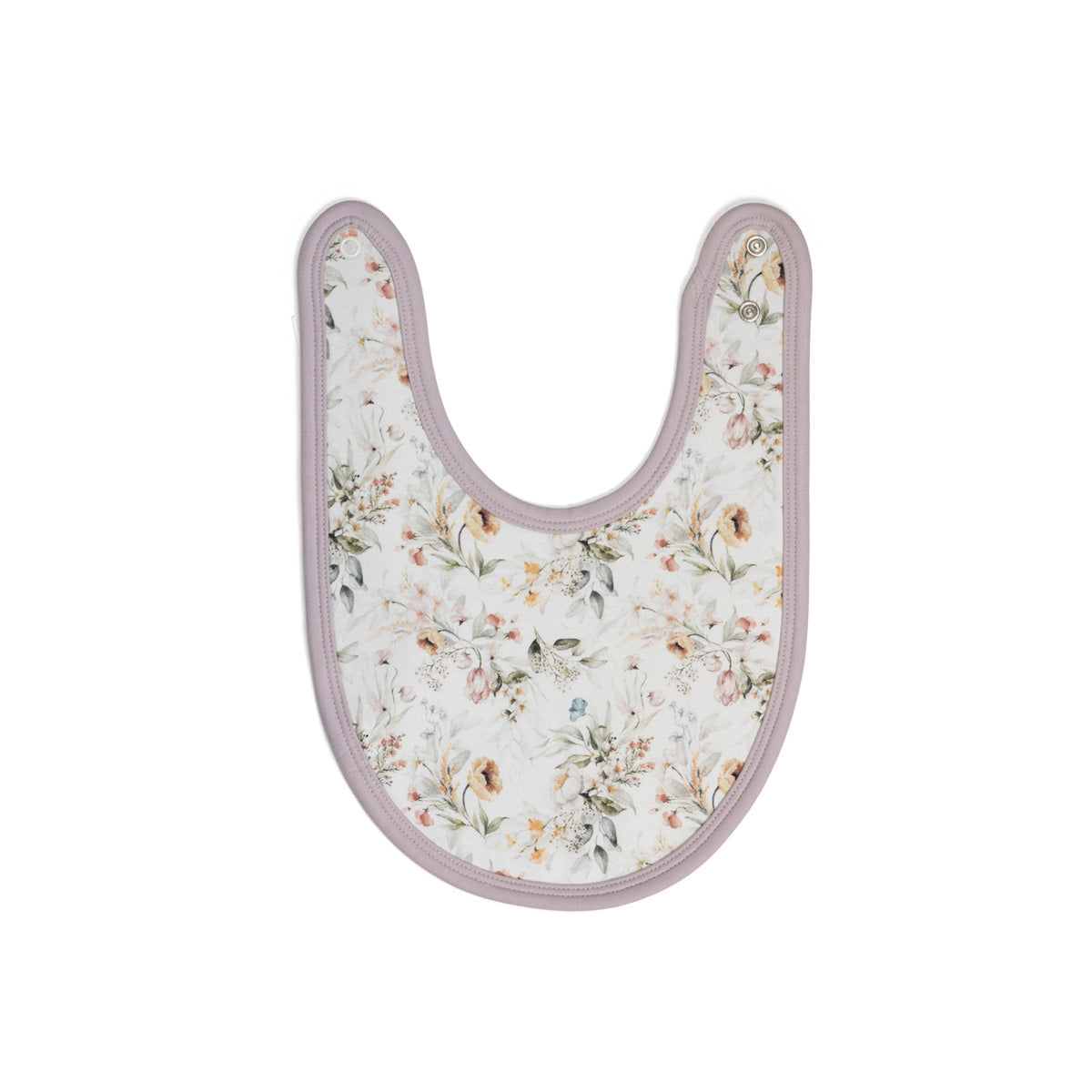
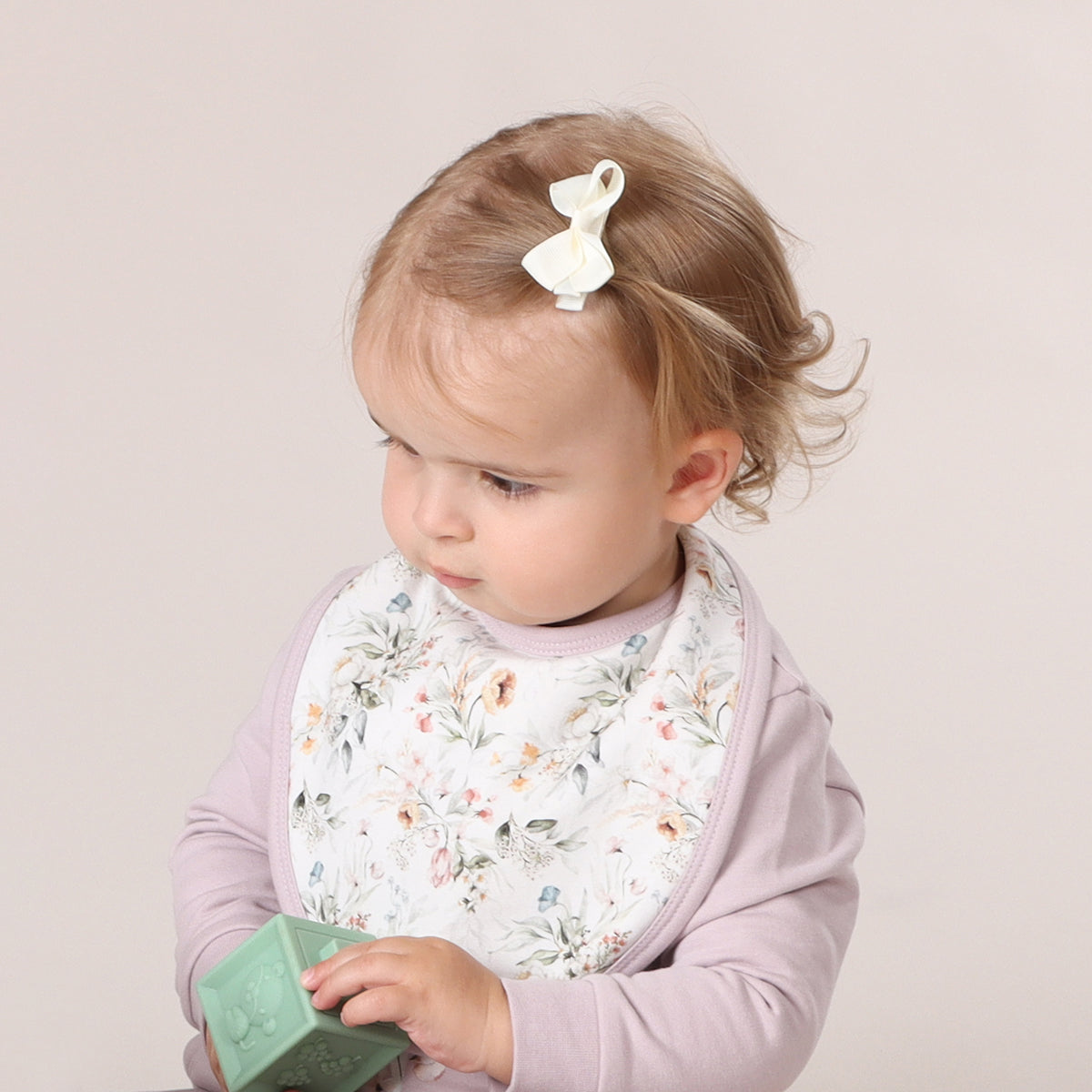
Embrace the beauty of nature with our Blossom Belle collection, featuring a vintage-inspired floral print. It’s super soft and beautifully crafted for sweet moments with your little petal as it is made using Oeko-Tex Certified Organic Cotton.
Keep your baby’s clothes free from dribbles or food with Dimples Cotton bib. They conveniently dome at the back of the neck making it easy to put on and off. Take this bib anywhere as it easily sips into any bag, and it is very stylish making it look great with any outfit.
Fabric Information
Fabric Information
Fit & Care
Fit & Care
Delivery and Returns
Delivery and Returns
- Delivery: Free within NZ on orders over $130 (excluding bulky items) or $8 standard shipping
- Returns: Accepted within 14 days of receipt with proof of purchase
- Some items are excluded from returns including sale items, hardware, car seats, prams, monitors and personal items - please click here for the full list.
Share this product
Recently viewed products
Related Blogs

Beginning your baby on solid foods
Starting Solids: A New Chapter in Your Baby’s Feeding Journey Introducing your baby to solids is an exciting milestone for both of you! It’s a time for new tastes, textures, and the inevitable messes that come with it. But as your baby reaches the six-month mark, it’s time to introduce them to new foods to complement their milk diet. For the first six months, your baby relies on iron stores from the womb and breast milk or formula. But as those iron stores begin to deplete, solids are needed to boost their nutrition. It’s recommended to continue breastfeeding or bottle-feeding alongside solids until your baby is 12 months old. Solids at this stage complement, rather than replace, their milk feeds. You can also start offering small amounts of water after six months, either in a sippy cup or with meals, to help your baby stay hydrated as they transition to solids. Signs Your Baby Might Be Ready for Solids Here are some signs to watch for that indicate your little one is ready to start eating solids: They seem hungry after milk feeds Can sit up with support and hold their head steady Show interest in your food, possibly reaching out or opening their mouth Make chewing motions when they see food Open their mouth when a spoon comes near The right Approach for Your Baby There are different ways to approach weaning. Spoon-feeding (offering purées or mashed foods), Baby-led weaning with finger food or a combination of both. There is no one "perfect" approach. The best method is the one that feels safe, enjoyable, and sustainable for your family. This book by Annabel Karmel is a great resource, filled with advice and recipes.. What matters most is offering nutritious foods (including iron-rich options), sharing pressure-free, positive mealtime experiences and supervising baby around food. With patience, consistency, and a little flexibility, you'll be helping your baby build a lifelong healthy relationship with food. Baby’s First Taste: Making Mealtimes Memorable Starting solids can be an exciting and slightly messy adventure! You can begin with simple, iron-rich foods to complement their milk diet, such as: Iron-fortified rice cereal mixed with breast milk or formula Purées of cooked vegetables like pumpkin, kūmara, or carrot Mashed avocado – easy to prepare and great for baby’s first tastes Purée of cooked apple or pear – mild, easy-to-digest options Purée of cooked chicken or beef – an excellent way to introduce iron A fantastic way to offer baby their first tastes is with the b.box Silicone Fresh Food Feeder. Simply pop in soft fruits or steamed vegetables, and let baby explore with a self-feeding method that doubles as teething relief. Make Mealtimes Easier with the Right Tools The right tools can make the journey into solids so much easier – and a little less messy! The Zazi Clever Spoon Set is designed for tiny hands, and paired with the Clever Bowl with Lid, they're perfect for portioning, feeding, and storing leftovers. The b.box Roll + Go Mealtime Mat keeps the mess contained, while the classic Mum2Mum Wonder Bib or the Mum2Mum Sleeved Wonder Bib makes sure your baby’s outfit stays clean, even on the messiest of days. After all, less laundry means more cuddle time! Moving to Mash As your baby approaches seven months, they’ll likely be ready to try foods with a thicker consistency. Offer them mashed or fork-mashed foods like ripe banana, avocado, small pasta pieces, or cooked egg. These textures are easy for your baby to swallow and great for practicing chewing. At this stage, avoid harder lumps like whole peas, which can pose a choking risk. Embracing Independence Around 8 Months Around eight months, your baby may begin showing an interest in feeding themselves. They may grab the spoon and try to feed themselves – it’s messy, but it’s also a great opportunity for developing their hand-eye coordination. Give them a chance to explore, but always stay close by to offer a helping hand (and a napkin)! We’re Here to Help At Dimples, we know starting solids can feel overwhelming. That’s why we’re always here to support you with expert advice and product recommendations. Visit us in-store or contact our friendly team for any questions – we’ve got everything you need to make this adventure as fun and easy as possible.
Learn more
Keep your Baby Close - Highchairs
Family Dinners are more important than you think. How eating together makes your baby smarter and healthier: There’s no denying it, the dinner table is the heart of family life. Research has also shown the critical role it plays in strengthening your bonds, and in helping your child’s development. Studies have shown that dinnertime chat is even more important for boosting your child's vocabulary than reading aloud. Young children learn 1,000 rare words at the dinner table, compared to only 143 from books. This increased vocabulary means your kids will read earlier and more easily. If your kids are school-aged, having them join you at the dinner table is possibly more important for their grades than making sure they get enough time in school, doing homework, playing sports or making art. There’s also a connection between family dinners and a bunch of health benefits – your kids will eat more fruit and veg , which may be why young adults who ate with their families as teens often have healthier eating habits and are less likely to be obese . Studies have also found that family dinners make kids happier , and less likely to suffer from depression or engage in risky behaviours . Embed family dinner habits early While you and your partner may have preferred to eat in front of the TV, your new baby should begin to change all that. The sooner you can establish the ritual of family dinners the better – ideally from infancy when they’re busy learning rules, words and habits. That can be easier said than done if you don’t have the right equipment. Highchairs are generally designed for older babies, and with little thought to facilitating family dinners. With bulky construction and a tray in the way, it’s almost impossible to get your baby close enough to the table to be part of the family dynamic. It’s why many parents end up feeding their babies separately and away from the table. For older children, adult chairs (even with boosters or cushions) can make dinner times just feel like hard work. Seated too low for their food, and with feet dangling, they can quickly become uncomfortable so they’re less able to concentrate on their meal, and on the family chit-chat going on around them. While you can find solutions for all of these issues for each stage, there are highchair systems that can grow alongside your baby, from infancy all the way to adulthood. Stokke® highchairs for easy family dinners from birth up The Tripp Trapp ® and Steps ™ highchairs from Stokke are designed to do just that, with fully adjustable seats and footrests. Clip on the safe, ergonomically designed Tripp Trapp or Steps Newborn Set and you can have your baby with you at the table right from the start. Perfect positioning and excellent leg support let your little one relax and enjoy the family time. It’s a great way to help your baby build strong relationships with the whole family – and means one parent isn’t absent from the dinner table. Once your baby can sit up unsupported, it’s time for the baby set for Tripp Trapp or for Steps to keep them safe, supported and comfortable at the table. Cushions are available for both the Tripp Trapp and Steps systems, too. Silicone EZPZ ™ mats for the Tripp Trapp and Steps chairs have built-in bowls to minimise spillage. They can be used with the Tripp Trapp or Steps trays or placed directly on your dinner table. Older children will also enjoy the Tripp Trapp Table Top Tray , with their suction bases and fun, educational motifs. The Tripp Trapp’s timeless Scandinavian design was first produced in 1976 and hasn’t changed since. Steps is a newer addition to the Stokke family, with a look to complement a range of interior styles. Both chairs come in a range of colours to mix and match to your home décor and with a warranty when you register your new chair’s serial number - Tripp Trapp is 7 years and Steps is 3 years. Get the best from your family meals Do yourselves and your children a big favour – don’t let television horn in on precious and valuable family meal times. The dinner table has been shown to be the best place for all kinds of learning and development, including vocabulary, eating habits, relationships and life-long health. Even when you understand the vital importance of family meals, it can be hard logistically to include your kids right from the start – tradition highchairs don’t help much! It’s good to know that Stokke® can provide a Tripp Trapp® or Steps™ seating system, allowing your kids to join the family meal right from newborn, and get the very best start possible.
Learn more
Dimples Cotton- High Quality Designed to Last
Dimples Cotton: Naturally Better for Summer As the weather warms up, it's the perfect time to refresh your little one’s wardrobe with breathable, natural fabrics. At Dimples, we’re passionate about creating clothing that not only looks beautiful but feels good and does good too for your baby and the planet. Our cotton is soft, strong, and certified to the highest global standards. The yarn carries GOTS (Global Organic Textile Standard) certification, and our dyeing process is certified by OEKO-TEX®, ensuring it's free from harmful substances and gentle on sensitive skin. Why Choose Cotton? Cotton is a natural fibre that’s ideal for dressing babies during warmer months. It’s breathable, absorbent, and lightweight helping to keep your little one cool, dry, and comfortable as temperatures rise. Unlike synthetic fabrics that can trap moisture and cause overheating or irritation, cotton allows air to flow and helps prevent heat rashes by drawing moisture away from the skin. In fact, cotton can absorb up to 20% of its weight in moisture before it even starts to feel damp. At Dimples, we use only high-quality cotton that's soft enough for delicate skin but durable enough to be worn, washed, and passed down to the next little one. Caring for Your Dimples Cotton Dimples cotton is designed to be lived in and washed often. There’s no need for special treatment here. Simply pop it in the washing machine with your everyday laundry. It’s made to last and look good doing it. Timeless Quality Inspired by the joy of childhood and the beauty of everyday moments. You’ll find a variety of silhouettes, from newborn essentials to stylish toddler pieces, all made in our signature soft cotton and designed to mix, match, and move with your little one. Our garments are made with care, built to last, and designed with timelessness in mind so they can be loved now, and lovingly handed down later. Shop the full range Here
Learn more
Pretty Brave Shoes: A Guide to Little Feet
Little feet have a lot of growing and exploring to do! From those first little steps to running, playing and discovering the world, choosing shoes that are comfortable and designed to move with them is an important part of every stage.
Learn more